 ChatGPT
 Perplexity
 Claude
 Gemini
 Grok
Grok
Monitoring well water levels is one of the most important steps in protecting a private or commercial well system. Water levels below the ground are not static. They change due to pumping demand, seasonal rainfall, drought, and long-term aquifer conditions. Without proper monitoring, these changes often go unnoticed until the well begins to underperform or the pump fails.
For homeowners, farmers, and facility managers who rely on well water every day, understanding how water levels behave is critical for reliability, safety, and long-term system health.
Why Monitoring Well Water Levels Matters
A well does not fail suddenly without warning. In most cases, the warning signs are there, but they remain unseen because the water level is never measured consistently.
Monitoring water depth helps you understand:
- How far below the surface your water actually sits
- Whether the water level drops significantly during use
- How well the aquifer recovers after pumping stops
- If long-term water availability is changing over time
When water levels drop too low, pumps can begin pulling air, overheating, or cycling incorrectly. Continuous monitoring allows these risks to be identified early instead of after damage occurs.
Understanding Monitoring Wells in Real-World Use
Monitoring wells are used to observe groundwater conditions without interfering with active pumping. Unlike production wells that supply water to a home or system, monitoring wells exist solely to measure what is happening underground.
They provide direct insight into groundwater behavior, making it possible to track changes in water depth over days, months, and years. In many cases, monitoring wells are installed near production wells to give accurate readings without the influence of pump activity.
For well owners, this information provides clarity. Instead of guessing whether water levels are stable, declining, or recovering normally, the data tells the full story.
What Makes a Monitor Well Useful
A monitor well is designed for measurement accuracy. Because no water is being drawn during testing, readings reflect the true static water level. This makes it easier to evaluate how much usable water exists in the well and how the surrounding aquifer responds to usage.
In traditional setups, measurements are taken manually using water level tapes or electric depth gauges. While effective, these tools require physical access to the well and only provide a single measurement at a time.
Modern systems use sensors that measure water depth continuously, removing the need for frequent manual checks.
Static Water Level Explained Simply
Static water level refers to the height of water inside a well when the pump is off and the water has fully settled. It is one of the most important measurements in well monitoring because it establishes a baseline.
If static water level begins to decline steadily, it may indicate increased water use, reduced recharge, or broader groundwater changes. If it remains stable, it suggests the well and aquifer are functioning within healthy limits.
Tracking static water level over time provides insight that a one-time measurement never could.
How to Check Well Water Level
There are several ways to check well water level, depending on how frequently measurements are needed and how critical accuracy is.
Manual methods include water level measuring sticks, water level tapes, and electric depth gauges. These tools are lowered into the well until they contact water, allowing the depth to be measured from the surface.
While effective, manual checks are time-consuming and often skipped until a problem arises. They also do not capture changes that occur between measurements.
Measuring Water Depth the Smart Way
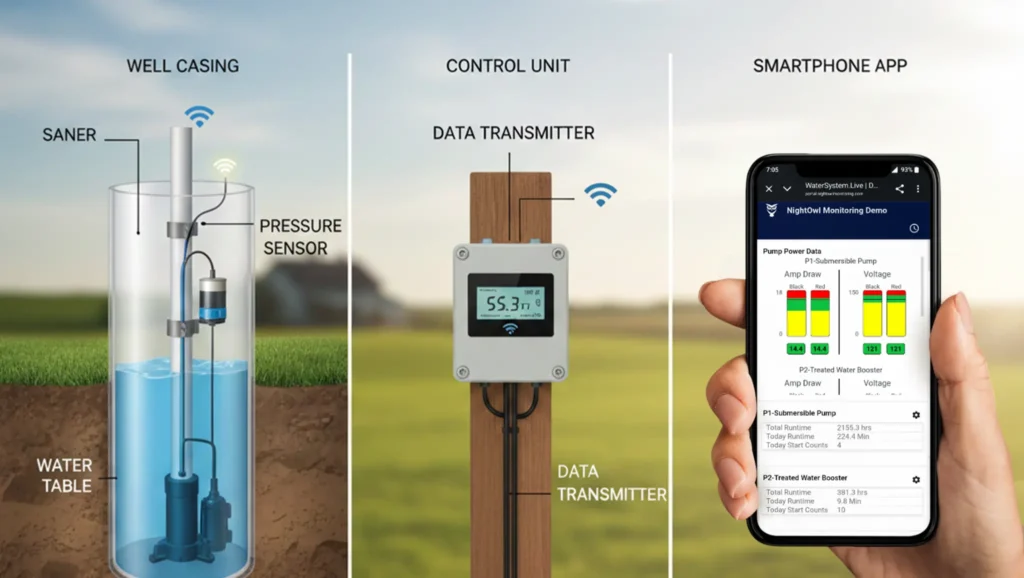
For wells that support daily use or critical operations, continuous monitoring provides a major advantage. Sensors installed in the well measure depth to water automatically and record changes throughout the day.
This approach makes it possible to:
- Track drawdown during pumping
- Observe recovery rates after pumping stops
- Identify unusual drops in water level
- Build a long-term water level history
Instead of reacting to low-water events, well owners can respond before the system is at risk.
Knowing Your Well Depth and Water Column
Well depth refers to the total depth of the well, while water depth measurement focuses on where the water level sits within that space. The difference between these two numbers determines the height of the water column.
Understanding the water column helps with:
- Proper pump placement
- Avoiding pump damage
- Estimating available water volume
- Planning future system upgrades
Without accurate depth measurement, pumps are often installed too high or too low, increasing wear and reducing efficiency.
Common Problems Caused by Poor Monitoring
When water levels are not monitored regularly, small issues can turn into major repairs. Pumps may run dry, cycle excessively, or operate under stress without any warning.
Other risks include:
- Reduced water pressure
- Shortened pump lifespan
- Unexpected system shutdowns
- Emergency service calls
Most of these problems are preventable with consistent water level measurement.
How NightOwl Monitoring Helps
NightOwl Monitoring provides smart well water monitoring solutions designed to make water level tracking simple, accurate, and reliable. Our systems deliver real-time visibility into well conditions without the need for constant site visits or manual checks.
With NightOwl Monitoring, well owners can:
- Monitor water levels remotely
- Track static water level trends
- Receive alerts when levels drop unexpectedly
- Make informed decisions based on real data
This approach turns well management from reactive to proactive.
Final Thoughts
Learning how to monitor well water levels is not just about measurement. It is about protecting your water supply, extending the life of your equipment, and avoiding costly failures.
Whether you rely on a residential well or manage a larger system, consistent water level monitoring provides clarity and confidence. With smart monitoring technology from NightOwl Monitoring, you gain the insight needed to keep your well performing reliably today and into the future.
Frequently Asked Questions
How do I check the water level in my well?
The most common way is by using a water level tape or electric depth gauge lowered into the well until it touches water. For ongoing visibility, many well owners use sensors that monitor water levels automatically instead of relying on manual checks.
What is the static water level in a well?
Static water level is the natural level of water in the well when the pump is turned off and the water is at rest. It provides a baseline for understanding how much water is available and how the well responds to use over time.
How often should well water levels be measured?
For most private wells, checking water levels a few times a year is enough. Wells with heavy use, irrigation systems, or commercial demand benefit from continuous monitoring to catch problems early.
How can I tell if my well water level is dropping?
Signs include reduced water pressure, longer pump run times, or pumps cycling more frequently. Measuring static water level over time is the most reliable way to confirm whether the water level is declining.
How deep is the average water well?
Well depth varies widely by location, geology, and water table conditions. Some wells are less than 100 feet deep, while others extend several hundred feet. The depth of water within the well often changes seasonally.
How do I find out how deep my well is?
Well depth information is often listed in original drilling records or permits. If those records are unavailable, depth can be measured using a well depth gauge or determined with the help of a professional.
Can low water levels damage a well pump?
Yes. When water levels drop too low, pumps can run dry, overheat, or pull air, which significantly shortens their lifespan. Monitoring water levels helps prevent this type of damage.
What is the best way to monitor well water levels long term?
Continuous monitoring using well water level sensors provides the most accurate long-term data. These systems track changes automatically and alert owners when levels reach unsafe thresholds.
Do I need a monitoring well to measure water levels?
Not always. Water levels can be measured directly in a production well when the pump is off. However, monitoring wells provide more accurate readings because they are not affected by pumping activity.
Why is real-time well monitoring useful?
Real-time monitoring allows you to see changes as they happen instead of discovering problems after damage occurs. It helps protect pumps, improves water management, and reduces unexpected repair costs.