
 ChatGPT
 Perplexity
 Claude
 Gemini
 Grok
Grok
Choosing between well water and city water is a major decision for homeowners, property developers, and water system operators. Many people ask whether well water is better than city water, if well water is healthier, or whether city water is safer and more reliable. The answer depends on several factors, including water quality, cost, maintenance responsibility, and system oversight.
Whether a property relies on a private well or a municipal water supply, reliability and water quality monitoring play a key role in protecting health and preventing disruptions.
This guide compares well water vs city water in detail, covering how each system works, the pros and cons, safety considerations, costs, and what matters most for long term use.
What Is Well Water
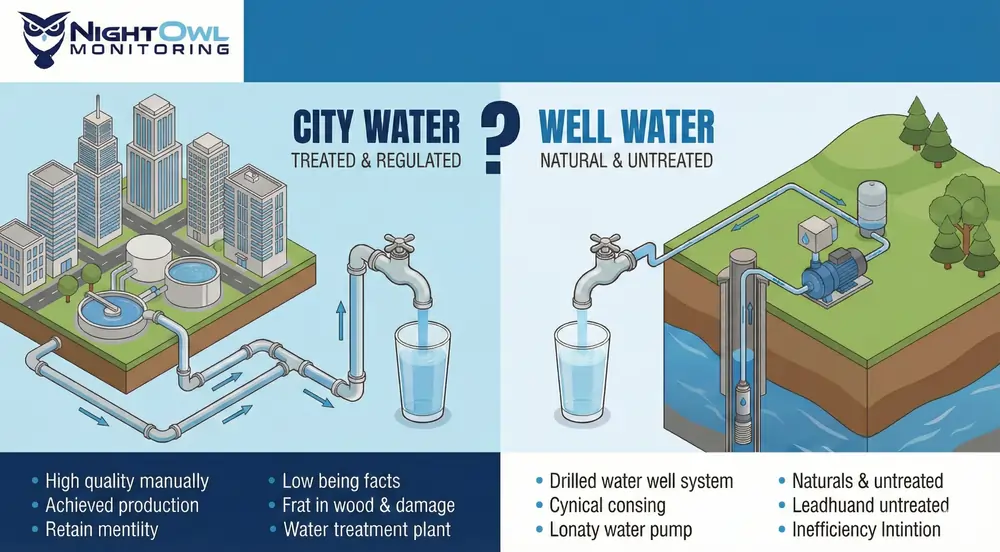
Well water comes from groundwater stored beneath the earth’s surface in aquifers. A private or residential well draws this water up through a pump system and delivers it directly to a home or facility. Well water systems are common in rural and suburban areas where municipal water lines are not available.
A well water system typically includes a drilled well, pump, pressure tank, and plumbing system. The property owner is responsible for operation, maintenance, testing, and treatment.
What Is City Water
City water, also known as municipal water or public water, is supplied by a local water utility. Water is collected from surface sources such as rivers, lakes, or reservoirs, or from large public wells. It is treated at a water treatment plant and distributed through underground pipes to homes and businesses.
Municipal water systems are regulated and monitored by local, state, and federal agencies to meet drinking water standards.
Difference Between Well Water and City Water
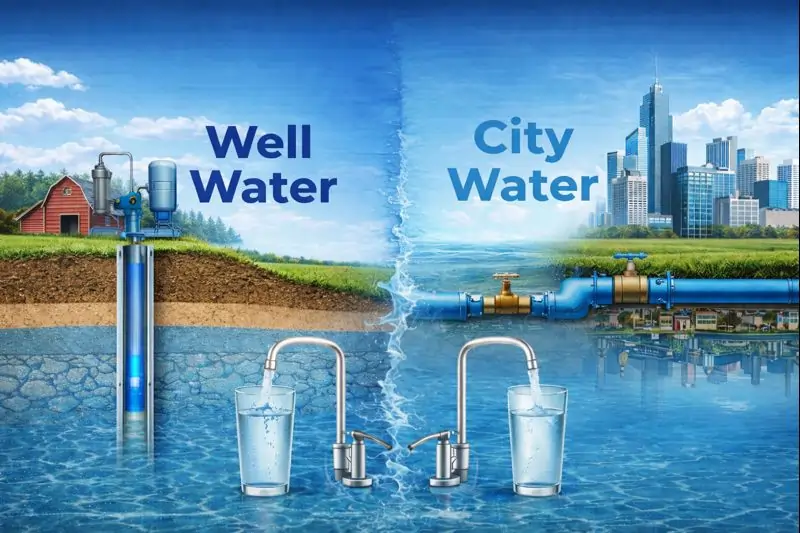
The main difference between well water and city water is ownership and responsibility. With city water, the utility manages treatment, testing, and delivery. With well water, the property owner controls the source and is responsible for maintenance and safety.
Another key difference is how water quality is managed. City water is treated with disinfectants, while well water relies on natural filtration and optional treatment systems.
Is Well Water Better Than City Water
Well water is not automatically better or worse than city water. Each has advantages and disadvantages depending on location, maintenance, and monitoring.
Well water can be excellent quality when properly maintained and tested. City water offers consistency and oversight but may contain added chemicals for disinfection.
The better option depends on reliability, safety practices, and how well the system is monitored.
Some people believe well water is healthier because it is untreated and may contain natural minerals. In many cases, well water does contain minerals such as calcium, magnesium, and iron that occur naturally in groundwater.
However, well water safety depends entirely on testing and maintenance. Without proper monitoring, well water can contain bacteria, nitrates, or contaminants that go unnoticed.
City water is treated and disinfected to reduce harmful microorganisms, but it may contain chlorine or other treatment byproducts that affect taste and smell.
Neither option is inherently healthier without proper oversight.
Is Well Water Cleaner Than City Water
Well water can be very clean, especially when drawn from a protected aquifer and maintained correctly. Natural filtration through soil and rock removes many impurities before water reaches the well.
City water is also clean and treated to meet safety standards, but treatment chemicals may affect taste and odor.
Cleanliness depends less on the source and more on testing, treatment, and monitoring.
Do You Pay for Well Water
A common question is whether you pay for well water. There is no monthly water bill for well water because the water itself is free. However, well owners pay for electricity to run the pump, maintenance, testing, and repairs.
Over time, these costs are often lower than monthly municipal water bills, but expenses can be unpredictable without monitoring.
Do You Pay for City Water
With city water, homeowners receive a monthly bill based on usage. Costs are predictable but ongoing. City water bills can increase over time due to infrastructure upgrades, water shortages, or rate changes.
Pros and Cons of Well Water
Advantages of Well Water
- No monthly water bills
- Independence from municipal systems
- Natural mineral content
- Control over filtration and treatment
- Not affected by city wide water outages
Disadvantages of Well Water
- Owner responsible for testing and safety
- Maintenance and repair costs
- Risk of contamination if not monitored
- Power outages affect water access
Pros and Cons of City Water
Advantages of City Water
- Regular testing and regulation
- Consistent supply
- No system maintenance by homeowner
- Immediate access in urban areas
Disadvantages of City Water
- Monthly water bills
- Added disinfectants
- Vulnerable to city wide outages
- Limited control over treatment
Why Monitoring Matters for Both Systems
Water systems often fail quietly. Pressure changes, pump issues, or declining water quality can develop gradually.
NightOwl Monitoring helps detect early signs of trouble such as:
- Pressure fluctuations
- Pump runtime changes
- System inefficiencies
- Abnormal usage patterns
Early detection prevents water loss, equipment damage, and safety risks.
FAQs
Is Well Water Free?
Well water is free in the sense that you are not billed per gallon. However, it is not cost free. Electricity, equipment maintenance, and monitoring are ongoing responsibilities.
Can You Have Both Well Water and City Water?
Some properties have access to both systems. In these cases, well water may be used for irrigation or backup, while city water is used for drinking. Managing dual systems requires careful plumbing design and monitoring to avoid cross contamination.
Is Well Water Safer Than City Water?
Safety depends on monitoring and maintenance. City water is regulated and tested regularly, but infrastructure issues can still cause contamination events.
Well water can be very safe when tested regularly and monitored for changes in pressure, flow, and quality. Without monitoring, problems may go unnoticed.
Which Is Better for Long Term Reliability?
Well water systems offer independence but require responsibility. City water offers convenience but relies on aging infrastructure.
For properties with reliable groundwater and proper monitoring, well water can be a dependable long term solution. For dense urban areas, city water remains the practical choice.
Final Verdict
So, is well water better than city water? The answer depends on how well the system is managed.
Well water offers independence, potential cost savings, and natural mineral content when properly monitored and maintained. City water offers convenience, oversight, and consistency but comes with ongoing costs and limited control.
In both cases, reliability and safety depend on proactive monitoring. With the right systems in place, either option can provide clean, dependable water.