
 ChatGPT
 Perplexity
 Claude
 Gemini
 Grok
Grok
Many homeowners who rely on private wells often ask does well water have chlorine and whether it is safe for everyday use. Unlike municipal water systems, most well water supplies are not treated with chlorine before reaching your home. This means the water coming from a private water well is usually natural groundwater that has not been chemically disinfected.
In most situations, well water does not contain chlorine because it is sourced from underground aquifers rather than city water treatment facilities. However, some homeowners may add chlorine intentionally to disinfect their well water system or eliminate bacteria.
Understanding how well water systems work, how groundwater is naturally filtered, and how well water compares to city water helps homeowners determine whether their well water is safe to drink.
Why Well Water Usually Does Not Contain Chlorine
Most domestic well water systems pull water directly from underground aquifers through a drilled water well. Unlike municipal water systems, private wells are not automatically treated with chlorine before distribution.
Public utilities typically add chlorine to city water to kill bacteria and microorganisms before delivering water through municipal pipelines. Because well water is privately sourced, it generally does not undergo the same chemical disinfection process.
This is why many homeowners notice that well water tastes different from city water. Without chlorine, groundwater often has a more natural taste but may contain minerals such as calcium, iron, or magnesium.
When Chlorine May Be Present in Well Water
Although natural well water does not normally contain chlorine, there are situations where chlorine may appear in a well water system.
Chlorine may be introduced when:
- A homeowner performs shock chlorination to disinfect the well
- A water treatment system uses chlorine to remove bacteria
- The well becomes contaminated and requires sanitization
- Routine maintenance is performed by well service professionals
Shock chlorination is a common procedure used to eliminate harmful bacteria after well water contamination or repairs. You can also read our guide about what is coliform bacteria in well water for knowing more about well bacteria.
How a Well Water System Works in a Home
Understanding how well water works in a house explains why chlorine is usually not present in private wells.
A typical home well system operates through the following components:
- Underground water well that reaches an aquifer
- Submersible well pump that moves water upward
- Pressure tank that regulates water pressure
- Water well plumbing system delivering water to the home
This system supplies natural groundwater directly to household plumbing, which is why it usually lacks chemical disinfectants like chlorine.
Is Well Water Safe to Drink Without Chlorine?
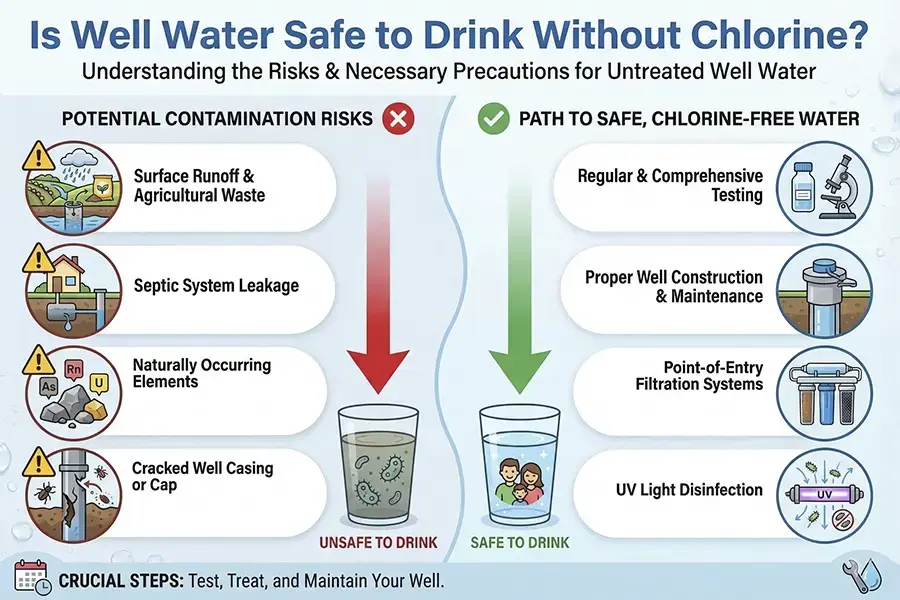
Many people wonder is well water safe to drink if it does not contain chlorine. In many cases, drinking well water is safe because groundwater naturally passes through layers of soil, sand, and rock that filter impurities. However, since private wells are not regulated like municipal water systems, homeowners are responsible for monitoring water quality.
Experts recommend testing well water at least once per year for potential contaminants such as:
- Bacteria
- Nitrates
- Heavy metals
- Agricultural chemicals
- Sediment or minerals
Regular testing ensures that well water remains safe to drink.
Well Water vs City Water: Chlorine Differences
A major difference between well water vs city water is the use of chlorine for water treatment.
| Feature | Well Water | City Water |
| Source | Underground aquifer | Municipal water supply |
| Chlorine | Usually none | Often chlorinated |
| Regulation | Homeowner responsibility | Government regulated |
| Cost | No monthly water bill | Monthly water utility bill |
Because city water is chlorinated, it may have a noticeable chemical taste, while well water typically tastes more natural.
Can Well Water Be Treated with Chlorine?
Yes, some homeowners choose to treat their well water systems with chlorine to improve water safety.
Chlorine treatment may be used for:
- Bacteria removal
- Well system disinfection
- Eliminating odors
- Treating contaminated well water
However, chlorine treatment is usually temporary or part of a filtration system rather than a permanent feature of most private wells.
Signs Your Well Water May Need Treatment
Although many wells provide clean groundwater, certain warning signs may indicate that your well water requires testing or treatment.
Possible indicators include:
- Cloudy or discolored water
- Unusual odor or taste
- Sediment or particles in water
- Changes in water pressure
- Reports of groundwater contamination in your area
If these issues occur, homeowners should contact a professional well water service provider for inspection and testing.
Conclusion
So, does well water have chlorine? In most cases, the answer is no. Natural well water usually does not contain chlorine because it comes directly from underground aquifers rather than municipal treatment facilities.
However, chlorine may occasionally be added during well disinfection or water treatment processes. While city water is typically chlorinated to remove bacteria, private wells rely on natural filtration through soil and rock layers.
With proper maintenance, regular water testing, and optional filtration systems, well water can be a safe and reliable source of drinking water for homes across the United States.
FAQs
Does well water contain chlorine naturally?
No, well water does not naturally contain chlorine. Chlorine is usually added only during disinfection or water treatment.
Is well water safe to drink without chlorine?
Yes, well water can be safe to drink, but it should be tested regularly to ensure it is free from bacteria and contaminants.
Why does well water taste different from city water?
Well water often contains natural minerals and usually lacks chlorine, which gives it a different taste compared to treated municipal water.
Can well water be chlorinated?
Yes, homeowners sometimes perform shock chlorination or install treatment systems that use chlorine to disinfect well water.
Is well water better than city water?
Both water sources have advantages. Well water is natural and chemical-free, while city water is treated and regulated by municipal systems.