 ChatGPT
 Perplexity
 Claude
 Gemini
 Grok
Grok
A water well is more than just a hole in the ground. It is a complete water delivery system that relies on geology, engineering, and mechanical components working together to provide a safe and reliable water supply. Millions of homes, farms, and community water systems depend on private and residential wells every day. Understanding how a water well works is essential for maintaining water quality, preventing downtime, and protecting long term water access.
At NightOwl Monitoring, ensuring reliable well system performance and detecting potential issues early helps prevent costly failures and downtime. Knowing how water wells function helps homeowners and operators recognize normal operation, identify warning signs early, and make smarter decisions about maintenance and monitoring.
This guide explains how a water well works, where well water comes from, how modern well systems operate, and what matters most for long term performance.
What Is a Water Well
A water well is a structure built to access groundwater stored beneath the earth’s surface. Groundwater collects in underground rock and soil formations known as aquifers. These aquifers act like natural reservoirs, holding water in tiny spaces between sand, gravel, and rock.
A well provides a controlled pathway for that groundwater to be brought to the surface and delivered to a home or facility. Unlike municipal water systems, private wells are owned and maintained by the property owner or system operator.
Where Does the Water in a Well Come From
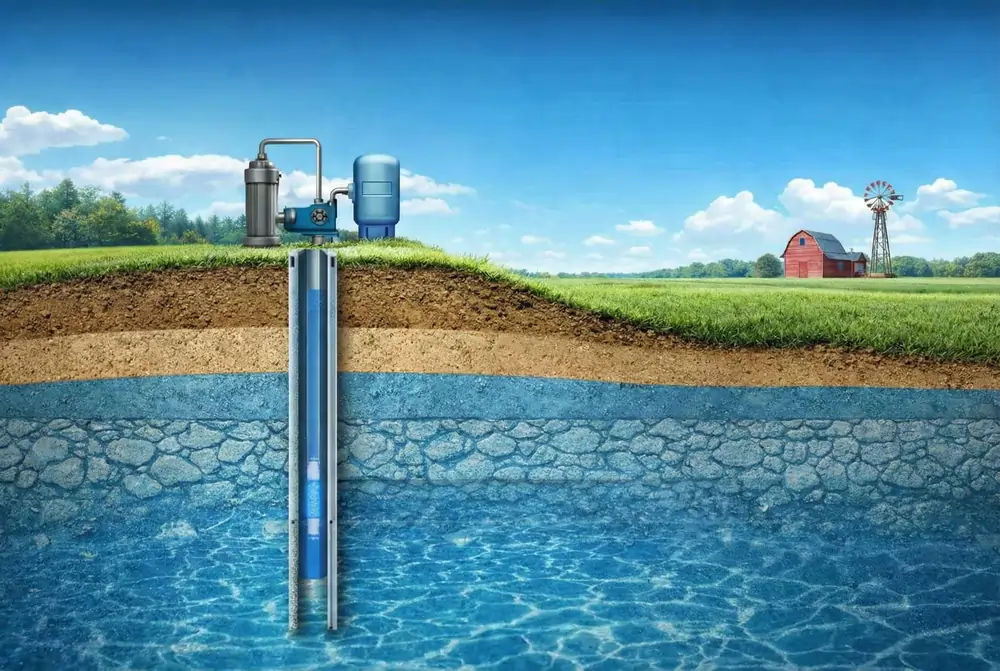
Well water comes from groundwater, not underground rivers or lakes. When rain and snow fall, some of that water infiltrates the soil and slowly moves downward through layers of earth. Along the way, it is naturally filtered by sand, rock, and sediment before reaching an aquifer.
Aquifers vary in depth and capacity depending on geography. Some wells draw from shallow aquifers close to the surface, while others access deeper, more protected groundwater sources.
How Does a Water Well Work
At its core, a water well works by combining access to groundwater with a mechanical pumping system that delivers water where it is needed.
The basic process looks like this:
- Groundwater collects in an aquifer
- A well is drilled or constructed into the aquifer
- A pump lifts water from the well
- Water flows through pipes to the home or system
- Pressure controls regulate delivery and storage
Modern wells are designed to operate automatically, turning on only when water is needed.
How Does a Residential Well Work for a Home
In a residential well system, water delivery is triggered by pressure changes. When a faucet, shower, or appliance uses water, pressure inside the system drops. This pressure drop signals the pump to activate.
The pump draws water from the well and sends it into the plumbing system. Once pressure reaches a preset level, the pump shuts off. This cycle allows consistent water pressure without constant pump operation.
Key Components of a Water Well System
Understanding the parts of a well system is essential for diagnosing issues and preventing failures.
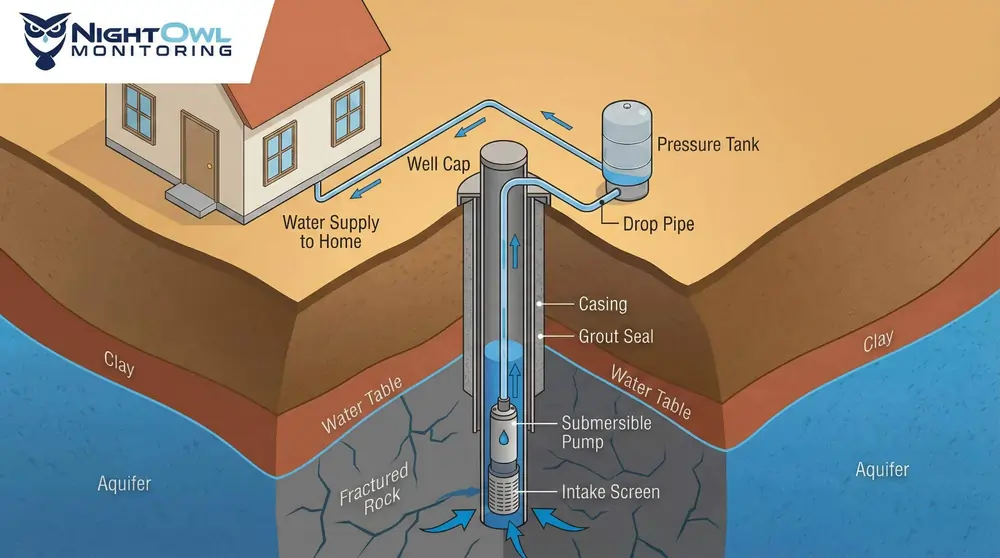
Well Bore and Casing
The well bore is the vertical hole drilled into the ground. It is lined with casing, usually steel or durable plastic, which prevents collapse and blocks surface contamination from entering the well.
Well Screen
At the bottom of the well, a screen allows water to enter while keeping sand and debris out. This protects the pump and plumbing system.
Water Well Pump
Most modern residential wells use submersible pumps that sit below the water level inside the well. These pumps push water upward rather than pulling it, which is more efficient and reliable.
Pressure Tank
The pressure tank stores water under pressure so the pump does not need to run every time water is used. This reduces wear and extends pump life.
Pressure Switch
The pressure switch controls when the pump turns on and off. It monitors system pressure and maintains a consistent range.
How Do Wells Get Water Continuously
Wells do not drain groundwater permanently. Instead, they rely on aquifer recharge. As water is drawn from the well, surrounding groundwater slowly moves in to replace it. This recharge process is driven by rainfall, snowmelt, and natural underground flow.
A properly designed well balances water use with recharge capacity so the water level remains stable even during heavy use.
Moreover, a well refill happens gradually, not instantly. The speed depends on soil type, aquifer size, and seasonal conditions. Sandy and gravel rich formations recharge faster than dense rock.
Monitoring water levels and pump behavior helps identify changes in recharge performance before problems develop.
Types of Water Wells
Shallow Wells
Shallow wells access groundwater closer to the surface. They are easier to construct but more vulnerable to contamination from surface activity.
Deep Wells
Deep wells extend further underground to reach protected aquifers. These wells provide more consistent water quality and are common in modern residential and community systems.
Sand Point Wells
Sand point wells are driven into sandy soil and are typically shallow. They are limited in capacity and mostly used for small scale applications.
How Is a Water Well Made
Modern water wells are constructed using drilling equipment designed to penetrate soil and rock safely. Once groundwater is reached, casing is installed, the well is sealed, and the pump system is added.
Proper construction is critical for long term reliability and water quality protection.
How Long Does a Water Well Last
A well structure can last several decades when properly built and maintained. However, components such as pumps, pressure tanks, and switches may require replacement over time.
Factors that affect well lifespan include:
- Water chemistry
- Pump cycling frequency
- Maintenance practices
- Aquifer conditions
Continuous monitoring helps extend system life by catching issues early.
How Does Well Water Enter the House
Once water is pumped from the well, it enters the home through underground pipes. From there, it flows through the plumbing system just like municipal water.
Many homes add filtration or treatment systems to address minerals, sediment, or bacteria, depending on local water conditions.
Is Well Water Safe
Well water can be very safe when properly maintained. Because private wells are not regulated by public utilities, testing and monitoring are the responsibility of the owner or operator.
Regular testing and real time system monitoring help ensure water remains safe and reliable.
Why Monitoring Matters for Water Wells
Water well systems often fail quietly. A pump may short cycle, pressure may drop, or water levels may decline gradually without obvious symptoms.
Monitoring systems like those supported by NightOwl Monitoring provide early warnings for:
- Pressure fluctuations
- Pump runtime changes
- Low water conditions
- System inefficiencies
Early detection prevents costly failures and service interruptions.
Common Well System Issues
Some common problems include:
- Pump cycling too frequently
- Pressure loss
- Sediment intrusion
- Declining water levels
- Electrical or mechanical pump stress
Understanding how a well works makes these issues easier to recognize and address.
Final Thoughts
Understanding how a water well works is essential for anyone who depends on private or residential well water. A well is not just a water source but a complete system that relies on groundwater, mechanical components, and pressure controls working together.
With proper construction, regular maintenance, and proactive monitoring, a water well can provide safe, reliable water for decades. Systems like NightOwl Monitoring play a key role in protecting wells by identifying issues early and supporting smarter water system management.