 ChatGPT
 Perplexity
 Claude
 Gemini
 Grok
Grok
A pressure tank for a water well is one of the most important components of a residential well water system. Many homeowners often ask, does pressure tank for water well work and why it is necessary. The pressure tank works alongside water well pumps to maintain steady water pressure in your home while preventing the pump from turning on every time you use water.
If you rely on a private well system, understanding how a well pressure tank works can help you maintain your plumbing system and avoid unnecessary pump wear. In simple terms, a water pressure tank stores pressurized water, allowing your home to receive consistent water pressure whenever you open a faucet, shower, or appliance.
Without a well pump pressure tank, the pump would need to run every time water is used, which would significantly shorten the lifespan of the well pump and pressure tank system.
What Is a Pressure Tank for a Water Well?
A pressure tank for well water is a storage tank designed to maintain pressure in a home well water system. It stores water under pressure so your plumbing system can deliver water instantly without forcing the pump to run continuously.
Common names for this system include:
- Well pressure tank
- Water well pressure tank
- Bladder tank for well
- Pressurized water tank
- Water pressure tank for well systems
Most modern systems use a well bladder tank, which separates water and air using a flexible rubber bladder. This design allows the tank to maintain stable water pressure inside the home. Read out more ways to increase water pressure in a house within our this guide.
Why Pressure Tanks Are Important in a Well Water System
A well pressure tank performs several essential functions in a well water system.
Maintains Consistent Water Pressure
The tank ensures your home receives steady water pressure when using sinks, showers, washing machines, and other appliances.
Protects the Well Pump
Without a well pump pressure tank, the pump would turn on every time water is used. The tank reduces pump cycling and extends the lifespan of water well pumps.
Stores Pressurized Water
A pressurized well tank stores water so small water demands can be met without activating the pump.
Improves System Efficiency
The tank helps regulate pressure in the water well pump and tank system, improving overall performance.
How Does a Pressure Tank for Water Well Work?
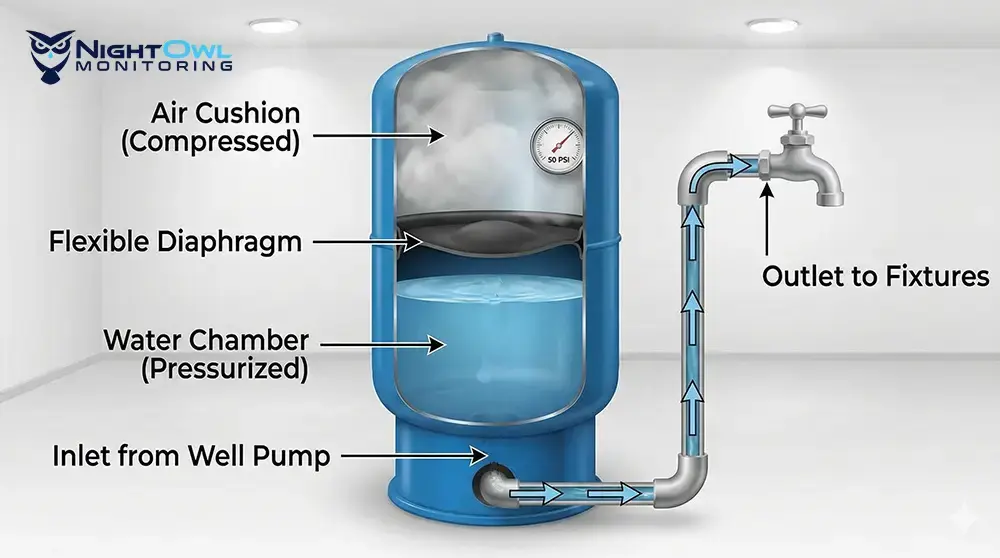
To understand how a pressure tank for a well works, it helps to look at the interaction between the well pump, water tank, and pressure switch.
The process works as follows:
- The deep well pump or submersible pump pulls water from the underground aquifer.
- Water enters the well water pressure tank.
- Inside the tank, the water compresses air inside the bladder tank.
- The compressed air creates pressure that pushes water through the plumbing system.
- When water pressure drops to a preset level, the pump turns on again to refill the tank.
This cycle allows the well pump and pressure tank to maintain consistent water pressure throughout the home.
Components of a Well Pressure Tank System
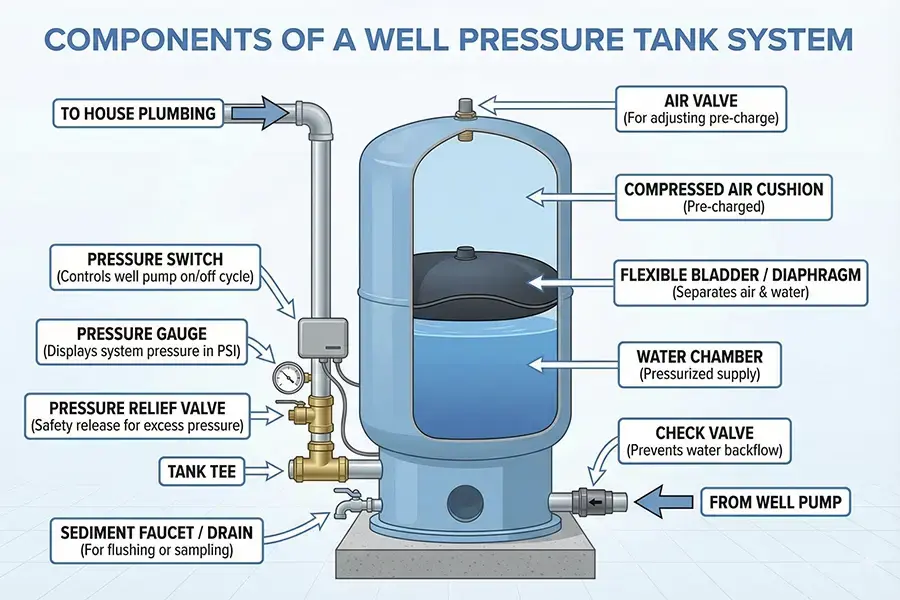
A typical well pump and pressure tank system includes several important components.
Well Pump
The water well pump draws groundwater from the well and sends it into the pressure tank.
Pressure Tank
The water pressure tank stores pressurized water and prevents frequent pump cycling.
Bladder or Diaphragm
Modern bladder tanks for wells contain a rubber bladder that separates water and compressed air.
Pressure Switch
The pressure switch controls when the pump turns on and off based on water pressure levels.
Pressure Gauge
A gauge measures the well tank pressure and ensures the system operates correctly.
What Is the Ideal Pressure for a Well Tank?
The correct pressure tank air pressure ensures proper operation of your well system.
Most residential well systems operate between:
- 40–60 PSI (pounds per square inch)
The well pressure tank PSI is typically set slightly lower than the pump cut-in pressure. For example:
- Pump turns on at 40 PSI
- Pump turns off at 60 PSI
Maintaining the proper well tank air pressure helps ensure smooth operation and stable water pressure.
Types of Well Pressure Tanks
There are several types of pressure tanks for well water systems.
Bladder Pressure Tank
The most common type is the well bladder tank, which uses a rubber bladder to separate water and air.
Diaphragm Pressure Tank
Similar to bladder tanks but uses a flexible diaphragm to create pressure.
Air-Over-Water Pressure Tank
Older systems used air-over-water pressure tanks, which require regular air adjustments and maintenance.
Today, most homeowners prefer modern bladder tanks because they require less maintenance and provide more stable pressure.
How Long Does a Well Pressure Tank Last?
The lifespan of a water well pressure tank typically ranges between 10 and 15 years, depending on maintenance and water quality.
Factors that affect lifespan include:
- Water mineral content
- System pressure settings
- Tank size and quality
- Frequency of pump cycling
Regular water well pressure tank maintenance helps extend the life of your system.
Signs Your Well Pressure Tank May Need Replacement
Like any plumbing component, a well pressure tank can eventually wear out.
Common signs of failure include:
- Rapid pump cycling
- Low or fluctuating water pressure
- Waterlogged pressure tank
- Strange noises from the tank
- Higher electricity bills due to pump overuse
If you notice these issues, it may be time for well tank replacement or professional inspection.
Pressure Tank Maintenance Tips
Proper maintenance helps ensure the well water pump pressure tank operates efficiently.
Recommended maintenance steps include:
- Check pressure tank air pressure annually
- Inspect the pressure switch and gauge
- Monitor water pressure levels
- Test system performance periodically
- Schedule professional inspections
Routine maintenance helps prevent expensive repairs and keeps your well water system running smoothly.
Closing Words
Understanding how a pressure tank for water well works is essential for homeowners who rely on private wells. The well pressure tank stores pressurized water, maintains consistent water pressure, and prevents excessive wear on the well pump.
Modern bladder tanks for wells are designed to regulate pressure efficiently while extending the lifespan of well pumps and pressure tanks. With proper maintenance and correct pressure settings, a well pressure tank can provide reliable service for many years.
For homeowners who want to better understand and monitor their well systems, resources and guides from NightOwl Monitoring can help you stay informed about maintaining a dependable and efficient water supply.
FAQs
What does a pressure tank do for a well?
A pressure tank stores pressurized water so your home receives steady water pressure without forcing the well pump to run every time water is used.
How does a well pressure tank maintain water pressure?
The tank uses compressed air inside a bladder or diaphragm to push water through the plumbing system and maintain stable pressure.
How much pressure should be in a well pressure tank?
Most systems operate between 40 and 60 PSI, depending on the pressure switch settings of the well pump.
How long does a pressure tank for a well last?
A typical well pressure tank lasts 10–15 years, though proper maintenance can extend its lifespan.
What happens if a well pressure tank fails?
If the tank fails, you may experience low water pressure, rapid pump cycling, or inconsistent water flow throughout the home.