 ChatGPT
 Perplexity
 Claude
 Gemini
 Grok
Grok
A private water well system provides a reliable source of groundwater for many homes across the United States, especially in rural areas where municipal water systems are not available. One of the most common questions homeowners ask is how long does a water well last and whether a well will continue supplying water for decades.
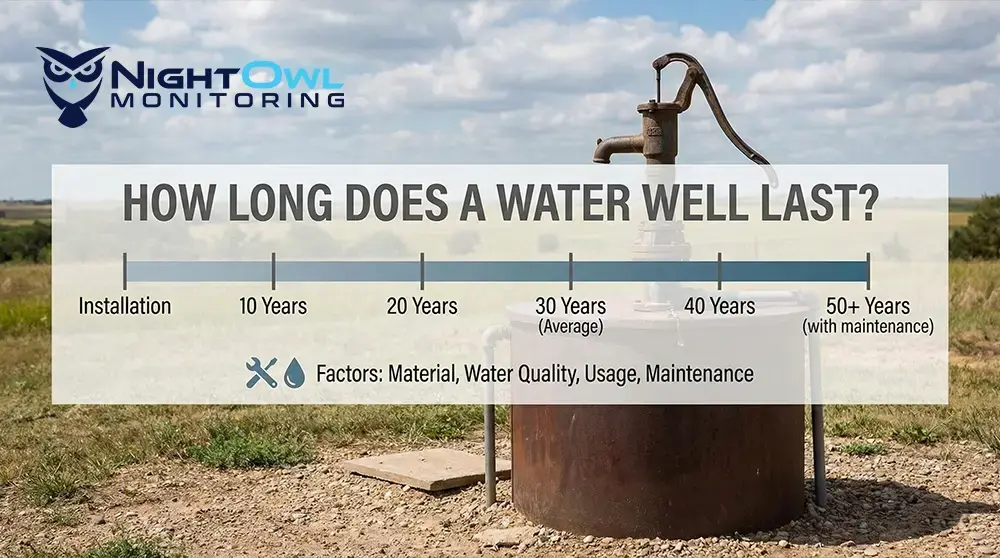
In most cases, a properly constructed residential water well can last 30 to 50 years or even longer. However, the lifespan of a well depends on several factors such as drilling quality, groundwater conditions, materials used in the well casing, and regular well maintenance services.
While the well structure itself can last decades, other components such as the well pump, pressure tank, and well screen usually need replacement earlier. Understanding how a well system works and maintaining it properly can significantly extend the life of your water well.
Understanding How a Home Water Well System Works
A residential well system draws groundwater from underground aquifers and delivers it to homes using mechanical pumping equipment. When professionals drill wells, they install several essential components that ensure clean and reliable water flow.
A typical water well system includes:
- Well casing – commonly made from PVC water well casing pipe or steel to protect the well from collapse and contamination
- PVC well screen – filters sand and sediment from groundwater
- Submersible well pump – pushes water from the aquifer into the home
- Pressure tank – maintains consistent water pressure throughout the plumbing system
- Aquifer – the underground layer that stores groundwater
These components work together to deliver a steady water supply to households that rely on well water systems.
Average Lifespan of a Water Well
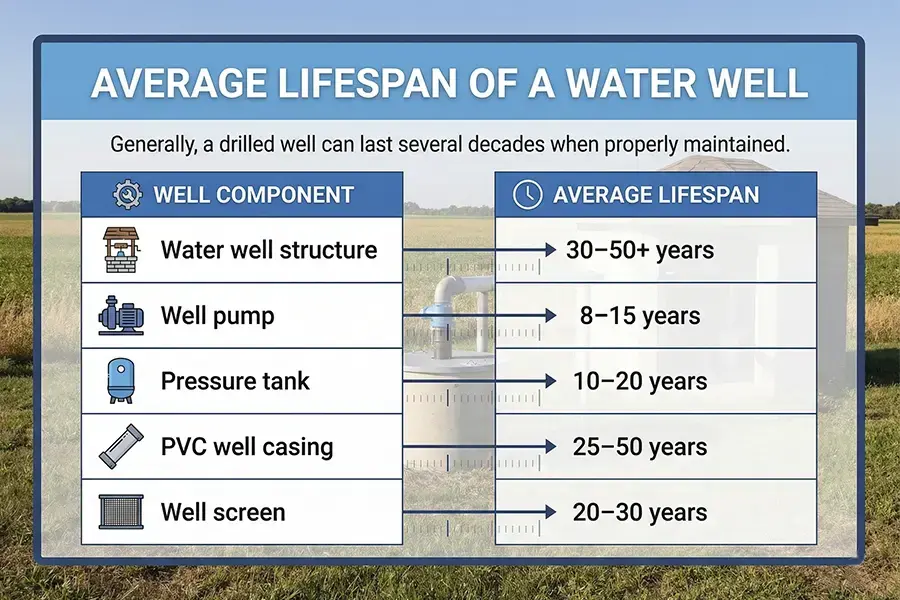
Homeowners often ask how long do wells last or how long will a water well last. The answer depends on the quality of installation and the surrounding environment.
Generally, a drilled well can last several decades when properly maintained.
| Well Component | Average Lifespan |
| Water well structure | 30–50+ years |
| Well pump | 8–15 years |
| Pressure tank | 10–20 years |
| PVC well casing | 25–50 years |
| Well screen | 20–30 years |
A well can sometimes last longer if the aquifer remains stable and the system receives regular well maintenance services. Read out the Importance of well maintenance to increase life of your well.
Factors That Affect the Lifespan of a Water Well
Several conditions determine how long a well is good for and whether it continues producing reliable groundwater.
Well Construction Quality
The longevity of a well starts with proper drilling and installation. Experienced well drilling companies use durable materials such as PVC well casing pipe and properly seal the well to prevent contamination. Poor construction can lead to early well failure.
Groundwater and Aquifer Conditions
The availability and quality of groundwater strongly influence the lifespan of a well. Aquifer depth, mineral content, and sediment levels may affect water production and system performance.
Well Pump Lifespan
The well pump life expectancy is usually shorter than the well itself. Most submersible well pumps last between 8 and 15 years, although high-quality systems may operate for up to 20 years with proper maintenance.
Maintenance and Regular Servicing
Routine inspections from professional water well repair services can help identify issues early. Regular servicing ensures the pump, pressure tank, and well screen remain in good condition.
How Long Does a Well Pump Usually Last?
The average life of a well pump depends on water quality, pump type, and how frequently the system operates.
Typical lifespans include:
- Submersible well pumps: 8–15 years
- Jet pumps: 10–15 years
- High-quality pumps: up to 20 years
Although some homeowners wonder if a well pump can last 30 years, this is uncommon. Most pumps eventually wear out due to constant use and electrical component degradation.
How Long Does a Well Pressure Tank Last?
A well pressure tank typically lasts 10 to 20 years. The tank stores pressurized water and prevents the pump from turning on every time water is used.
Over time, the internal bladder inside the tank can wear out, causing:
- Fluctuating water pressure
- Rapid pump cycling
- Reduced water flow
When these symptoms appear, professional well repair companies can inspect the system and recommend replacement.
Signs You May Need Well Repair or a New Well
Even though the well structure can last decades, problems may occur within the well water system. Recognizing the warning signs early helps prevent costly repairs.
Common signs include:
- Low or inconsistent water pressure
- Cloudy or sandy well water
- Unusual taste or odor in water
- Pump running continuously
- Increasing electricity bills
If these issues appear, contacting a professional water well repair service or well repairman can help diagnose the problem.
Can a Water Well Run Dry?
Homeowners often ask whether wells run out of water. While many wells provide a steady supply, certain conditions can reduce water availability.
Possible causes include:
- Extended drought conditions
- Aquifer depletion
- Increased groundwater usage in the area
- Sediment clogging the well screen
In some cases, professionals can deepen the well or perform well remediation to restore water production.
How Long Does It Take to Drill a Water Well?
When a well reaches the end of its life cycle, homeowners may need to drill a new well.
The drilling process typically takes one to three days depending on factors such as:
- Soil and rock conditions
- Well depth
- Equipment availability
- Local permits and regulations
Experienced well drilling companies handle the installation of the pump, casing, and pressure system to ensure long-term reliability.
How Much Does It Cost to Drill a Water Well?
The average cost of drilling a water well in the United States varies widely depending on depth and location.
Typical price ranges include:
- $5,000 to $15,000 for standard residential wells
- $15,000 to $25,000 or more for deep wells
Costs can increase if additional equipment such as pumps, pressure tanks, or water treatment systems are required.
Maintaining a Well Water System for Long-Term Performance
Proper maintenance plays a critical role in extending the lifespan of a well.
Homeowners should:
- Schedule annual well inspections
- Test water quality regularly
- Monitor pump performance
- Protect the wellhead from contamination
- Use professional well maintenance services
Regular maintenance helps keep the residential well system operating efficiently for decades.
Pros and Cons of Well Water
Many homeowners prefer well water for its independence and long-term cost savings.
Advantages
- No monthly municipal water bills
- Reliable groundwater supply
- Greater control over water quality
- Sustainable water source for rural homes
Potential Challenges
- Maintenance responsibilities
- Pump and equipment replacements
- Water testing requirements
- Possible mineral or sediment buildup
Despite these considerations, a properly maintained well system remains a dependable water solution for many households.
Conclusion
So, how long does a water well last? In most cases, a well can provide reliable groundwater for 30 to 50 years or more. While the well structure itself may last decades, components such as the well pump, pressure tank, and well screen will require replacement over time.
Routine inspections, professional water well maintenance services, and prompt repairs can significantly extend the life of your well water system. With proper care, a residential well remains one of the most reliable and cost-effective water sources for homeowners across the United States. Use NightOwl Monitoring’s water level monitoring system to keep your well running smoothly.
FAQs
How long do water wells last?
Most water wells last between 30 and 50 years when properly constructed and maintained. The well structure can last decades, but parts like pumps and pressure tanks usually require replacement sooner.
How long does a well pump last?
The average life of a well pump is typically 8 to 15 years, although some high-quality pumps may last up to 20 years with proper maintenance.
Can a well pump last 30 years?
It is possible but uncommon. Most well pumps do not last 30 years because constant use and electrical wear eventually cause the system to fail.
Do wells ever run out of water?
Yes, wells can run dry if the aquifer level drops, during drought conditions, or if groundwater demand increases in the area.
How much does it cost to drill a water well?The average cost to drill a residential water well in the United States typically ranges from $5,000 to $15,000, depending on depth, location, and drilling conditions.