
 ChatGPT
 Perplexity
 Claude
 Gemini
 Grok
Grok
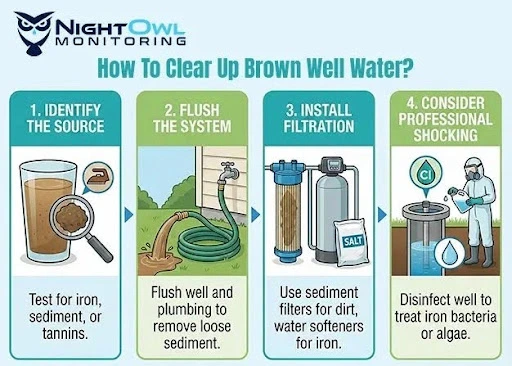
Seeing brown well water come out of the tap can be alarming, especially if your well water turned brown overnight or it happens right after a storm. In most cases, brown or murky well water is caused by sediment, iron and manganese, or changes in the well after heavy rain or heavy water use. The good news is that many brown water issues can be diagnosed quickly and fixed with the right steps.
This guide explains why your well water is brown, whether it is safe to use, and how to clear up brown well water both short term and long term. You will also see how NightOwl Monitoring helps well owners spot early warning signs like pressure drops, unusual pump cycling, and changing water behavior before a “brown water” surprise becomes a bigger problem.
Why Is My Well Water Brown?
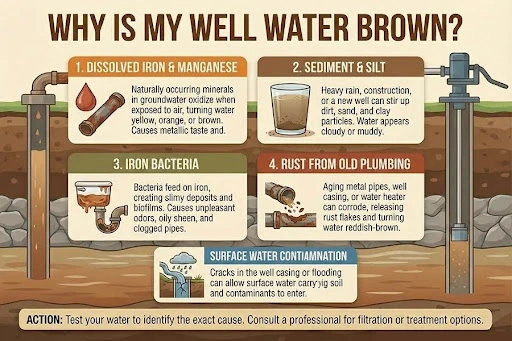
Brown water is usually a sign that something changed in the well or plumbing system. Common reasons include:
- Sediment stirred up in the well (sand, silt, clay, rust particles)
- Iron or manganese oxidizing when exposed to air
- Surface water intrusion after rain or flooding
- Corrosion in plumbing or the water heater
- A failing well component (screen, casing, seals) allowing debris in
The color can offer clues:
- Light yellow to yellowish brown water often points to iron or tannins
- Reddish brown often points to iron and rust
- Dark brown or murky brown water often points to sediment or disturbed well conditions
- Black well water can be manganese, decaying organic matter, or certain plumbing issues
Is It Safe to Bathe in Brown Well Water?
People often ask, is it safe to bathe in brown well water. The honest answer is: it depends on the cause.
- If the brown color is sediment or iron, bathing is usually not dangerous, but it can stain tubs, laundry, and skin, and it can irritate sensitive skin.
- If the brown water started after flooding, strong runoff, or you suspect bacteria contamination, avoid bathing until you test and confirm safety.
- If there is a strong sewage like odor, or you notice stomach illness in the home, treat it as urgent and stop using the water for bathing and drinking until tested.
If you have any doubt, use bottled water for drinking and cooking and contact a local well professional for guidance.
Quick Clues That Help You Diagnose Brown Water Fast
Before you try to fix it, answer these four questions. They narrow down the cause quickly.
1) Did it happen after heavy rain?
If you have brown well water after heavy rain or brown water from well after rain, the well may be taking in surface water or sediment, or the aquifer is temporarily disturbed.
2) Did it happen after heavy water use?
If you notice brown well water after heavy use, the pump may be drawing the water level down far enough to stir sediment at the bottom of the well.
3) Is the brown water only in hot water?
If your cold water is brown but hot is clear, the issue is likely in the cold water supply, filter, or well.
If hot water is brown but cold is clear, the issue is commonly the water heater (sediment, rust, failing anode rod, or corrosion).
4) Is the water cloudy, muddy, or does it have particles?
- Cloudy well water that clears in a glass can be air bubbles or fine sediment
- Muddy well water with visible grit often points to sediment intrusion or disturbed well conditions
Common Causes of Brown Well Water
Sediment and silt
Sediment is one of the most common causes of muddy well water and dirty water from well. It can enter because the well is disturbed, the water level drops, or a well screen is damaged.
Iron and rust
Iron can make water appear yellow, orange, or reddish brown. You might also notice:
- Rust stains in toilets or sinks
- A metallic taste
- Orange buildup in fixtures
If you are wondering why is my well water orange, iron is a top suspect.
Manganese and black water
Why is my well water black is commonly tied to manganese, sometimes combined with sediment or decaying organic material. Black staining can show up in toilets, tubs, or on laundry.
Surface water intrusion after storms
If you see brown tap water after heavy rain or well water suddenly brown after storms, the well may be vulnerable at the wellhead. Common issues include:
- Poor grading around the well so water pools near the casing
- A cracked or non sanitary well cap
- Improper sealing that allows runoff to enter
Plumbing corrosion
If the home has older metal pipes or fittings, corrosion can produce brown water, especially after water has been sitting in pipes overnight.
Water heater issues
If brown water in hot water is your main problem, the water heater is often the source. Sediment buildup and corrosion can discolor hot water without affecting cold water.
What To Do Immediately When Your Well Water Turns Brown
If your well water turned brown overnight or it is suddenly brown, do these steps in order.
Step 1: Stop drinking it until you identify the cause
Use bottled water for drinking and cooking until you understand what is happening. This is especially important after flooding or major storms.
Step 2: Run cold water from an outdoor spigot first
If your system has sediment, flushing through an outdoor spigot helps avoid sending heavy grit through indoor fixtures.
- Run the water for 10 to 20 minutes
- Watch if it clears or stays brown
- If it gets worse, stop and move to Step 3
Step 3: Check and replace your sediment filter
A clogged filter can make water look worse and reduce pressure. If the filter is full of rust or mud, replace it and flush the line.
Step 4: Protect your appliances
Avoid running:
- Washing machines
- Dishwashers
- Water heaters (if sediment is heavy)
- Ice makers
Sediment can clog valves and damage equipment.
Step 5: If brown water persists, test the water
At minimum, test for:
- Total coliform and E. coli (especially after storms or flooding)
- Iron and manganese
- Turbidity or sediment indicators
How To Clear Up Brown Well Water Based on the Situation
If brown water happens after heavy rain
This is a common scenario: brown well water after heavy rain or cloudy well water after heavy rain.
What to do:
- Flush from an outdoor spigot until water clears.
- Inspect the wellhead area. Look for pooling water, cracks, or an unsealed cap.
- Replace or clean sediment filters.
- If it does not clear within a day, schedule a well inspection and water test.
If it happens repeatedly after rain, the best fix is usually improving wellhead protection and correcting the pathway that allows runoff to affect the well.
If brown water happens after heavy use
If you notice brown well water after heavy use, it may mean the pump is drawing the well down far enough to disturb sediment.
What to do:
- Reduce demand for a few hours and let the well recover.
- Flush gently from an outdoor spigot.
- Check pressure behavior and pump cycling patterns.
- Consider adding storage or evaluating well yield if the issue repeats.
Repeated brown water after heavy use is a sign the well may be sensitive to drawdown. A well professional can measure recovery rate and help you find the right solution. That’s why you should monitor and measure well water levels by any professional or you can use water level monitoring system of NightOwl Monitoring.
If brown water is only hot
If your hot water is brown all of a sudden but cold is clear:
What to do:
- Turn off the water heater and let it cool.
- Flush the water heater tank to remove sediment.
- Inspect for rust flakes or heavy sediment.
- If discoloration keeps returning, have the heater inspected. A failing anode rod or internal corrosion may be the real cause.
If brown water is only cold
If why is my cold water brown is your issue, the source is usually before the water heater:
- Well
- Filters
- Main plumbing line
- Pressure tank area
Focus on flushing, filters, and well condition.
Long Term Fixes for Brown Well Water
If brown water keeps coming back, it is time to move past flushing and into proper treatment and system correction.
Install the right sediment filtration
A staged filter setup often works best:
- A coarse sediment stage to catch larger particles
- A finer stage for polishing
This protects plumbing and prevents recurring muddy water at fixtures.
Treat iron and manganese correctly
If tests confirm iron or manganese, you may need:
- An iron filter system
- Oxidation plus filtration
- Water softening in some cases (depends on iron type and levels)
Correct treatment stops stains, improves taste, and prevents discoloration.
Inspect and repair the wellhead
If storms trigger discoloration, focus on:
- A proper sanitary well cap
- Sealing and casing condition
- Grading and drainage around the well so water runs away from it
Evaluate the well screen and pump depth
If sediment is entering the system, the well screen may be damaged or the pump intake may be set too low, too close to sediment.
A professional inspection can identify mechanical causes that filters alone cannot solve.
When to Call a Professional
Call a well professional if:
- Brown water does not clear after flushing and filter replacement
- You see repeated brown water after rain events
- You get air sputtering or pressure drops along with discoloration
- You suspect flooding contamination
- The pump is cycling abnormally or running longer than usual
- You notice black water, strong odors, or sudden major changes
If the well is pulling sediment, continued pumping can accelerate wear on pumps, pressure tanks, and valves.
How NightOwl Monitoring Helps Prevent Brown Water Surprises
Brown water often shows up after a hidden change in the system, such as a leak, unusual drawdown, unstable pressure, or pump behavior shifting gradually over time.
With NightOwl Monitoring, well owners and operators can track patterns that frequently lead to brown water events, including:
- Pressure drops that suggest leaks or restrictions
- Excessive cycling that can stir sediment and stress equipment
- Unusual pump runtimes that signal drawdown or supply issues
- Water level trends that show when the well is being pulled too hard
- Alerts when conditions move outside normal operating ranges
Instead of guessing why the water turned brown, you can see what changed in the well system and respond faster.
FAQs
Why did my well water turn brown overnight?
Common causes include sediment disturbance, iron oxidation, plumbing corrosion, or a recent change in pumping behavior. If it happened after rain or flooding, treat it more seriously and test for bacteria.
What causes well water to turn brown after rain?
Stormwater can disturb the aquifer, raise turbidity, or enter the well if the wellhead is not properly protected. Sediment filters often clog quickly after these events.
What to do if water is brown in my house?
Stop drinking it until you identify the cause. Flush from an outdoor spigot, check filters, avoid running appliances, and test the water if it does not clear quickly.
Is brown well water always dangerous?
Not always. It can be sediment or iron. But if it follows flooding, smells unusual, or you suspect contamination, stop using it for drinking and test it.
Final Takeaway
If you are asking why is my well water brown, the most common answers are sediment, iron, manganese, storm related disturbance, or plumbing corrosion. Start with safe immediate steps like flushing and filter checks, then move to testing and long term treatment if it keeps happening.
If you want, I can also create the metadata for this blog post plus a tight internal linking plan that connects it to your other NightOwl Monitoring articles on pump priming, well water bacteria, sediment filtration, and increasing well water pressure.