 ChatGPT
 Perplexity
 Claude
 Gemini
 Grok
Grok
If your well pump is running but you are getting little or no water, there is a good chance the pump has lost prime. Priming a pump simply means filling the pump and suction line with water so the pump can create suction and start moving water again. This is most common with shallow well jet pumps and some other above ground pumps. Many deep well submersible pumps do not need manual priming because they sit underwater in the well.
In this guide, I will walk you through how to prime a pump for well water step by step, explain what to do if the pump is not priming, and share how NightOwl Monitoring helps you catch the early warning signs that lead to lost prime, dry running, and pump stress.
What Does “Priming a Pump” Mean?
Pump priming is the process of removing air from the pump and suction line and replacing it with water. Air cannot be pumped the same way water can, so if the pump is full of air, it cannot pull water from the well.
You may need priming a well pump when:
- The pump has been off for a while (seasonal shutdown or power outage)
- The well ran low and the pump pulled air
- There is a suction side leak letting air in
- A foot valve or check valve is not holding water in the line
- You just installed the pump or did plumbing work
Before You Prime: Quick Safety Checklist
Priming is simple, but you should treat it like any electrical and plumbing work.
- Turn off power at the breaker before opening any plugs or fittings.
- Let hot components cool if the pump has been running.
- Use clean water for priming whenever possible.
- If you are unsure about wiring, pressure switch settings, or plumbing layout, call a professional.
Which Well Pumps Need Priming?
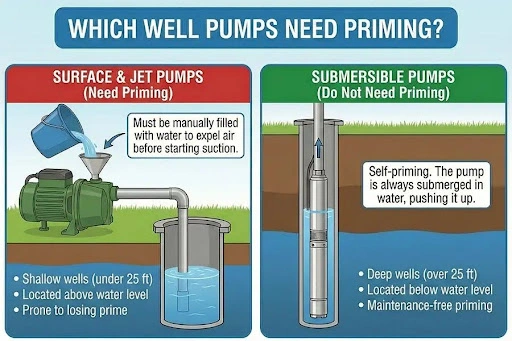
Shallow well jet pump (most common priming situation)
If you have an above ground pump near a pressure tank, you likely have a jet pump and it often needs priming after it loses prime.
Deep well submersible pump (usually no manual priming)
If the pump is down inside the well underwater, it usually does not require manual priming. If you have “no water,” the issue is more commonly power, controls, low water level, or a damaged line.
Deep well jet pump (two pipe systems)
Some deep well jet setups can require priming depending on configuration. The priming process is similar, but they can be more sensitive to air leaks and proper piping.
Tools and Supplies You Might Need to Prime a Pump
- Clean bucket or hose supply
- Funnel (optional but helpful)
- Adjustable wrench
- Teflon tape (for resealing threaded plugs if needed)
- Screwdriver (pressure switch cover if troubleshooting)
- Rag or towel
- Flashlight
How To Prime a Shallow Well Pump Step by Step
This section covers the most searched scenario: how to prime a well pump for a shallow well jet pump, including setups with a pressure tank.
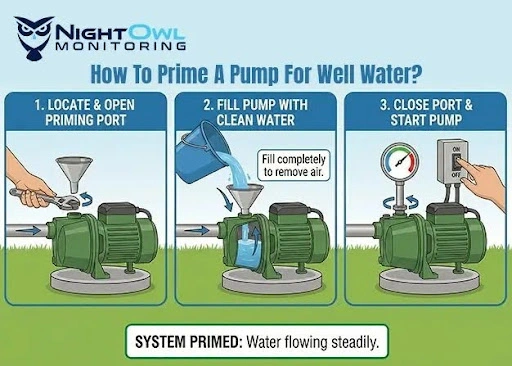
Step 1: Turn off power
Switch off the breaker to the pump. This prevents accidental start up while the prime plug is open.
Step 2: Relieve pressure
Open a faucet or hose bib near the tank to release any pressure in the system. Leave it open while you prime so trapped air has somewhere to go.
Step 3: Find the prime plug
Look on the top or front of the pump housing for a plug labeled “prime” or a removable plug on the pump casing. Some pumps also have a small priming valve or a dedicated priming port.
Step 4: Remove the prime plug
Slowly loosen it. If water comes out, your pump may still have some prime. If only air comes out, it likely lost prime.
Step 5: Fill the pump housing with water
Using a funnel or hose, pour water into the priming port until the pump casing is full. Go slowly. If water immediately drains away, that can indicate a leaking foot valve, check valve, or suction side leak.
Step 6: Replace the prime plug snugly
Do not overtighten. Make sure the gasket or sealing surface is clean. If the plug is threaded and prone to leaking, apply a small amount of thread tape.
Step 7: Turn power on and start the pump
Restore power and let the pump run. Watch the pressure gauge. Within a short time, you should see pressure build and water start flowing at the open faucet.
Step 8: If water sputters, repeat the fill
If you get bursts of air and water, shut off power, open the prime plug again, and top off the pump casing. Some pumps need two or three fills to fully purge air from the suction line.
Step 9: Close the faucet and confirm stable pressure
Once flow is steady and pressure climbs normally, close the faucet. The pump should shut off at its normal cut out pressure and hold pressure without dropping quickly.
This is the classic method for priming a shallow well pump and it also applies to many irrigation and transfer pumps that feed from a well point or shallow source.
How To Prime a Water Pump With a Pressure Tank
People often ask how to prime a water pump with pressure tank because they are not sure if the tank changes the steps. The core process is the same, but these details help:
- Prime the pump housing, not the pressure tank.
- Keep a faucet open during priming so air can escape.
- If the pump reaches pressure but cycles rapidly, the pressure tank may have an air charge issue or a waterlogged bladder.
If your pump primes but short cycles, troubleshoot the tank and pressure switch rather than re-priming repeatedly.
How To Prime a Jet Pump That Will Not Catch Prime
If you followed the steps and the pump still will not prime, it usually means one of these issues is blocking success:
1) Air leak on the suction side
Even a tiny leak on the suction line can pull in air and prevent priming. Check unions, threaded fittings, clamps, and any cracks in the suction pipe.
2) Foot valve or check valve is failing
A bad valve lets water drain back down the well when the pump stops. That makes you lose prime again and again.
3) Low water level in the well
If the well water level dropped and the pump is pulling air, it may not be able to establish suction.
4) Clogged suction line or strainer
Sediment, debris, or a blocked intake can prevent water from reaching the pump during priming.
5) Prime plug or gasket is leaking air
If the prime plug is not sealing, the pump can pull air right at the casing and never build suction.
6) Pump ran dry and overheated
Some pumps are damaged by dry running. If the pump is loud, rattling, or never builds pressure after repeated proper priming attempts, it may need service.
Pump Not Priming: Quick Troubleshooting Checklist
Use this list if you are stuck in the “pump runs, no water” situation.
- Confirm the pump is actually getting power and spinning correctly.
- Prime the pump housing fully, then top off again after the first short run.
- Make sure the suction line is airtight, especially at threaded joints.
- Check the foot valve or check valve so the line stays full between cycles.
- Look for a suction line crack above ground that leaks air in.
- Verify the water source is not empty or below the intake.
- Check pressure gauge behavior. If it never moves, you are not moving water.
- If water starts then stops, suspect air leaks or water level problems.
How Do You Prime a Deep Well Pump?
This is a common question, but it depends on what “deep well pump” means in your system.
If you have a submersible deep well pump
Most submersible pumps do not need manual priming because they are underwater. If you have no water, focus on:
- Breaker and control box (if applicable)
- Pressure switch function
- Pressure tank issues
- Low water cutoff, if installed
- Well water level
- Pipe leaks or a broken drop pipe
If you have a deep well jet pump system
Some deep well jet setups can be primed similarly to shallow pumps, but they are more sensitive to air leaks and proper piping. If you are not sure, follow the manufacturer instructions or bring in a pro because incorrect steps can waste time and sometimes damage components.
What Is “Self Priming” in Pumps?
A self priming pump is designed to handle some air in the line and restore prime more easily than a standard centrifugal pump. It can still lose prime if there is a major air leak, a failed valve, or the source runs dry, but it is generally more forgiving.
How NightOwl Monitoring Helps Prevent Lost Prime and Pump Damage
Priming is often a symptom of a bigger problem, not just a one time inconvenience. Pumps lose prime repeatedly when there is an air leak, a failing valve, or unstable well conditions.
With NightOwl Monitoring, operators can watch and alert on signals that commonly show up before a complete “no water” event, such as:
- Pressure drops that suggest leaks or suction issues
- Abnormal pump run time that indicates the pump is struggling to build pressure
- Excessive cycling that stresses pumps and pressure tanks
- Flow and level patterns that hint at drawdown or a low water event
When you catch these changes early, you reduce emergency calls, protect pumps from dry running, and avoid repeated priming problems.
FAQs
How do I prime a well pump fast?
Turn off power, open a faucet, fill the pump housing through the prime plug until full, close it, start the pump, and repeat the fill once if needed. If it will not catch prime after a couple attempts, look for air leaks or a bad valve.
What is pump prime?
Pump prime is the water inside the pump and suction line that allows the pump to create suction and move water.
Why does my well pump keep losing prime?
The most common causes are a suction side air leak, a failing foot valve or check valve, low water level, or a suction line restriction.
How to prime a shallow well pump with a pressure tank?
Prime the pump housing, keep a faucet open to vent air, then run the pump until pressure stabilizes. If cycling is rapid, check the pressure tank and switch.
Final Thoughts
Knowing how to prime a pump for well water can save you a lot of stress, especially with shallow well jet pumps and irrigation systems. The key is filling the pump housing completely, venting air, and then troubleshooting the real cause if the problem keeps coming back.
If you want, I can also create the metadata for this post (meta title, description, slug) and a short internal linking plan that connects it to your NightOwl Monitoring resources on pressure monitoring, pump protection, dry run prevention, and water level monitoring.