 ChatGPT
 Perplexity
 Claude
 Gemini
 Grok
Grok
If your home relies on a private well water system, regular testing is essential to ensure the water is safe for drinking and household use. Unlike municipal water supplies, private wells are not regulated by city water authorities, which means homeowners are responsible for monitoring well water quality.
Learning how to test well water helps identify harmful contaminants such as bacteria, nitrates, heavy metals, and chemical pollutants that may affect water safety. Regular well water testing protects your family’s health and ensures the long-term reliability of your water supply.
Whether you use a home water test kit, laboratory analysis, or professional water testing services, testing your well water is one of the most important steps in maintaining a safe private well system.
Why Testing Well Water Is Important
Private wells draw water directly from underground aquifers, which can sometimes contain contaminants. Because well water is not treated by municipal systems, testing ensures the water remains safe for drinking and household use.
Regular water quality testing helps detect:
- Coliform bacteria and harmful microorganisms
- Nitrates and nitrites from agricultural runoff
- Heavy metals such as lead or arsenic
- Mineral levels that affect water taste and hardness
- Chemical contaminants such as pesticides or PFAS
Testing well water helps homeowners identify problems early and take action before contaminants affect health or plumbing systems.
How Often Should You Test Well Water?
Experts recommend testing private well water at least once per year for bacteria and nitrates. However, additional testing may be necessary under certain conditions.
You should test well water if:
- The well is newly installed
- You notice changes in taste, smell, or color
- Flooding occurs near the well
- Plumbing repairs or well maintenance are performed
- A household member becomes ill
Regular well water testing services ensure your water supply remains safe throughout the year.
Common Contaminants Found in Well Water
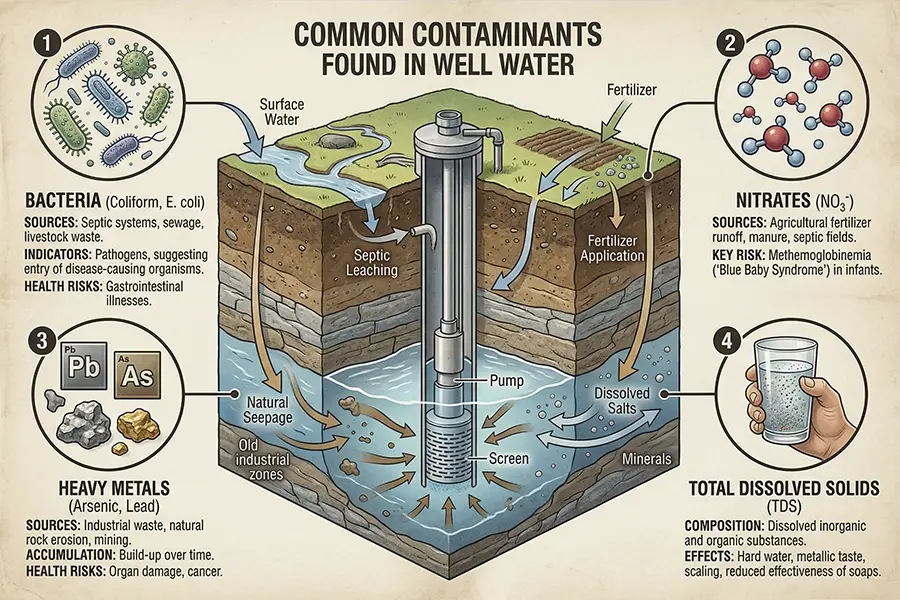
Several contaminants are commonly found in private well water systems.
Bacteria
The presence of coliform bacteria in well water may indicate contamination from surface water or septic systems. Understanding what coliform bacteria in well water is can help determine the severity of contamination.
Nitrates
Nitrates often enter groundwater through fertilizers, agricultural runoff, or nearby septic systems.
Heavy Metals
Some wells contain trace amounts of metals such as arsenic, iron, manganese, or lead.
Total Dissolved Solids (TDS)
High levels of dissolved minerals may affect water taste, odor, and hardness. In some cases, this may also lead to discoloration, which is why it helps to know how to clear up brown well water.
Testing helps identify these contaminants and determine whether water treatment is necessary.
Methods for Testing Well Water
There are several ways homeowners can perform water testing for wells.
Home Water Test Kits
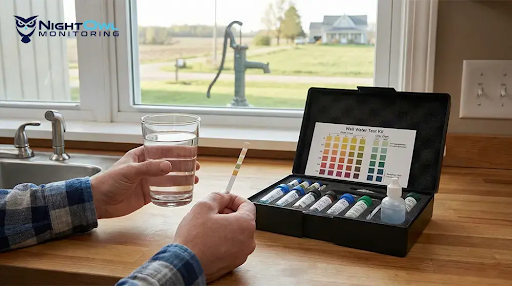
A well water test kit allows homeowners to test water quality at home. These kits can detect common contaminants such as bacteria, nitrates, and mineral levels.
Advantages of home kits include:
- Quick testing results
- Affordable cost
- Simple testing procedures
However, home kits may not detect all contaminants.
Laboratory Water Testing
Professional water testing laboratories provide detailed analysis of well water samples. Laboratory testing can detect a wide range of contaminants, including bacteria, heavy metals, and chemical pollutants.
Many homeowners search for water testing labs near me or state-certified water testing laboratories to obtain accurate results.
Professional Water Testing Services
Professional water quality testing companies offer complete water analysis services for residential wells. These services include water sampling, laboratory testing, and interpretation of results.
Professional testing ensures accurate identification of potential contaminants and provides recommendations for water treatment if necessary.
Step-by-Step Guide to Test Well Water
Testing well water involves several simple steps.
1. Collect a Water Sample
Use a clean container and collect water directly from a faucet connected to the well system.
2. Follow Sampling Instructions
If using a well water testing kit, carefully follow the instructions to avoid contamination.
3. Send the Sample to a Laboratory
For laboratory testing, submit the water sample to a certified water testing lab.
4. Review Test Results
The laboratory will provide a detailed well water analysis report showing contaminant levels.
5. Take Corrective Action
If contaminants are detected, homeowners may install water filtration systems or perform well maintenance to improve water quality.
Understanding Well Water Test Results
Interpreting well water testing results helps homeowners determine whether the water is safe for drinking.
Typical test reports include measurements for:
- Bacteria levels
- Nitrate concentration
- pH balance
- Total dissolved solids (TDS)
- Mineral content
If contaminant levels exceed recommended limits, water treatment systems may be required.
Professional Well Water Monitoring
Regular monitoring is essential for maintaining a safe well water system. Professional inspection services from NightOwl Monitoring can help homeowners track water quality, detect contamination risks, and maintain reliable water systems. Many homeowners now choose to monitor well water levels and system performance in real time for early detection of issues.
Professional services may include:
- Annual well water testing
- Water quality analysis
- Well inspection and maintenance
- Water treatment recommendations
Routine monitoring helps protect both household health and well system performance.
Conclusion
Knowing how to test well water is essential for homeowners who rely on private wells for drinking water. Because well water is not regulated like municipal water supplies, regular testing is necessary to identify contaminants such as bacteria, nitrates, and heavy metals.
Using well water testing kits, laboratory analysis, or professional water testing services ensures that your water supply remains safe and clean. Annual testing, combined with routine well maintenance, helps protect your household and maintain reliable water quality.
Professional monitoring from NightOwl Monitoring can provide expert guidance, accurate water testing, and long-term well system maintenance to ensure your water remains safe for years to come.
FAQs
How do you test well water?
Well water can be tested using home test kits, certified laboratory testing, or professional water testing services.
How often should well water be tested?
Most experts recommend testing well water at least once per year for bacteria and nitrates.
What contaminants should well water be tested for?
Common contaminants include coliform bacteria, nitrates, heavy metals, pesticides, and total dissolved solids (TDS).
Where can I get my well water tested?
Well water can be tested through local health departments, certified water testing laboratories, or professional water testing companies.
Is well water safe to drink without testing?
Testing is recommended because private wells are not regulated by municipal water systems, and contaminants may be present without visible signs.