 ChatGPT
 Perplexity
 Claude
 Gemini
 Grok
Grok
If your well water smells like rotten eggs, you are not alone. This sulfur smell is one of the most common complaints among private well owners, and it can affect everything from drinking water to showers, laundry, and cooking.
The odor is usually caused by hydrogen sulfide gas, sulfur bacteria, or a reaction inside the water heater. While the smell is often a nuisance rather than a serious health concern at low levels, it can signal a water quality issue that should be addressed quickly.
In this guide, Nightowl Monitoring explains what causes sulfur odor in well water, how to identify where it is coming from, and the most effective treatment options to remove the smell for good. You will also learn prevention tips that reduce the chances of the odor returning.
Why Well Water Smells Like Sulfur
The rotten egg smell in well water is typically associated with hydrogen sulfide gas, a naturally occurring gas that can form in groundwater. It is most common in environments with low oxygen where organic matter breaks down. In some well systems, the odor can also come from sulfur reducing bacteria that live in the well, plumbing lines, or inside filters and pressure tanks.
In addition to hydrogen sulfide and bacteria, the odor can sometimes be caused or intensified by a water heater reaction. Many water heaters use a magnesium anode rod, and in certain water conditions the rod reacts with sulfate and produces hydrogen sulfide inside the tank. That is why some households notice the smell only in hot water.
Common causes include:
- Hydrogen sulfide gas in groundwater
- Sulfur bacteria in the well or plumbing
- Water heater reactions with anode rods
- Sediment buildup that supports bacterial growth
- Poor well ventilation or stagnant water conditions
Is Sulfur Smell in Well Water Dangerous?
At low levels, hydrogen sulfide is usually not harmful, but it is unpleasant and can create secondary problems.
Sulfur odor can:
- Make drinking water and ice taste bad
- Cause corrosion in metal pipes and fixtures
- Leave stains on sinks, toilets, and laundry
- Accelerate wear on appliances that use water
If the smell is strong, persistent, or accompanied by discoloration, slime, or staining, the well should be tested. Water testing is the only reliable way to know what else might be present, such as iron bacteria, manganese, or other contaminants.
How To Identify Where the Sulfur Smell Is Coming From
Before choosing a solution, identify whether the problem is from the well water itself or a specific part of the system.
Test Hot vs Cold Water
- Smell only in hot water: likely a water heater issue
- Smell in both hot and cold water: likely well source, bacteria, or filtration issue
Check When the Smell Is Worst
- If the odor is stronger after water sits overnight, it may indicate bacterial activity in plumbing
- Odor stronger after heavy water use may indicate source water hydrogen sulfide
- Moreover, the odor strongest at one faucet may indicate localized plumbing or aerator buildup
Look for Other Signs
- Slimy buildup in toilets or tanks suggests bacteria
- Brown or black staining may indicate iron or manganese issues
- Corrosion or metallic taste may point to chemical reactions and pipe wear
Best Ways To Remove Sulfur Smell From Well Water
The right treatment depends on how much hydrogen sulfide is present, whether bacteria are involved, and whether the smell is limited to hot water.
1) Shock Chlorination
Shock chlorination is a common first step when sulfur bacteria are suspected. It disinfects the well and plumbing by circulating a strong chlorine solution through the system.
What it does:
- Kills sulfur bacteria and other nuisance bacteria
- Reduces odor temporarily or sometimes long term
- Helps clean biofilm in plumbing lines
However, the results can last weeks to months depending on the source. If sulfur bacteria return, a continuous treatment system may be needed. Also, a proper flushing is required after treatment
Shock chlorination is often effective, but it is not always a permanent solution if the groundwater itself contains hydrogen sulfide.
2) Activated Carbon Filtration
Activated carbon is a popular option when odor levels are mild and bacteria are not the main issue. Carbon media can absorb hydrogen sulfide and improve taste.
Best for:
- Low to moderate sulfur smell
- Households wanting improved taste and odor control
- Point of entry filtration for the entire home
Limitations:
- Carbon can become saturated and must be replaced
- If bacteria are present, carbon alone may not solve the root cause
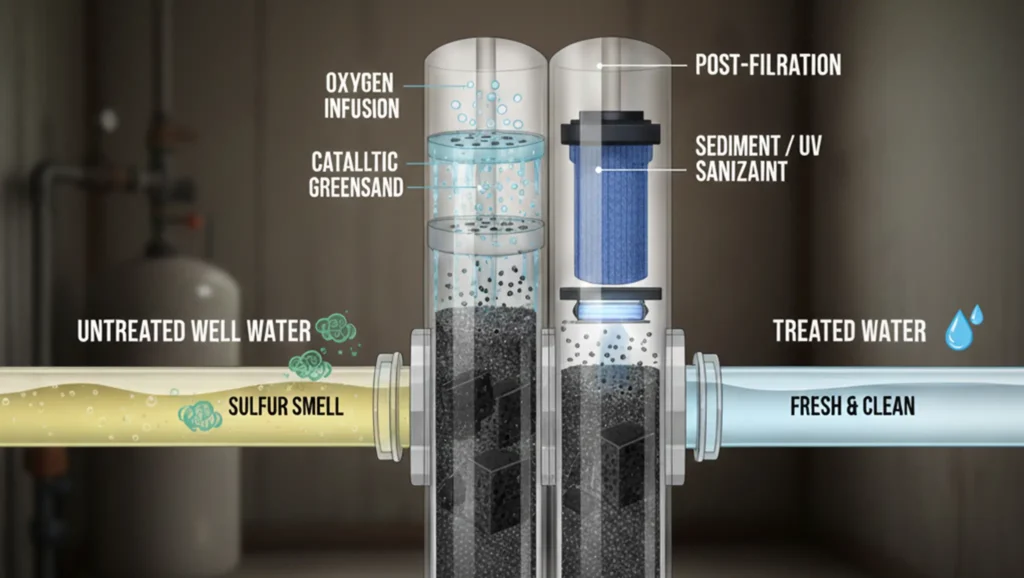
3) Oxidation and Oxidizing Filters
Oxidizing filtration converts hydrogen sulfide gas into a solid form that can be filtered out. These systems are commonly used when sulfur odor is moderate to strong. Oxidation changes dissolved gas into removable particles. The filter media captures sulfur compounds. However, many systems backwash automatically to clean the media.
Best for:
- Stronger rotten egg smells
- Whole home systems
- Homes with additional issues like iron or manganese
This approach is often one of the most reliable long term fixes.
4) Aeration Systems
Aeration removes hydrogen sulfide by releasing the gas into the air before water enters the home plumbing. The system introduces air into the water, venting gases out, then filtering remaining particles.
Best for:
- Hydrogen sulfide gas problems
- Systems where the smell is persistent and strong
- Households wanting chemical free odor reduction
Aeration is effective, especially when paired with filtration.
5) Water Heater Fixes for Hot Water Odor
If odor is only present in hot water, focus on the water heater.
What you can do, includes:
- Replacing the magnesium anode rod with an alternative material
- Flushing and cleaning the water heater tank
- Adjusting temperature settings carefully
- Adding a water heater treatment solution when recommended
A plumber or water professional can confirm whether the heater is causing the smell and recommend the safest fix.
Ongoing Prevention and Maintenance Tips
Removing the sulfur smell is often not a one time task. Preventative maintenance reduces recurrence and protects system performance.
Recommended steps:
- Test well water regularly for sulfur, iron, manganese, and bacteria
- Replace filter media on schedule
- Backwash oxidizing systems as required
- Keep well caps sealed and protected from surface contamination
- Flush unused plumbing areas to prevent stagnant water
- Maintain pressure tanks and piping to avoid biofilm buildup
How NightOwl Monitoring Helps Protect Well Water Quality
NightOwl Monitoring supports owners and service teams by giving visibility into how a well system performs over time. Monitoring water usage patterns and system behavior can help identify unusual activity that often correlates with developing well issues.
Benefits include:
- Detecting abnormal water usage that may indicate leaks
- Spotting system changes that suggest pump strain or cycling issues
- Helping owners respond faster before small issues become costly problems
While odor issues require water treatment solutions, proactive monitoring supports better well maintenance and helps reduce the conditions that allow problems to grow.
When To Call a Professional
If sulfur odor persists after basic steps, professional help is the fastest path to a permanent fix.
Call a professional if:
- Odor returns quickly after shock chlorination
- Smell is strong in hot and cold water
- Water has staining, slime, or discoloration
- You suspect iron or manganese bacteria
- You need a whole home treatment system recommendation
A professional can test water properly, confirm the root cause, and size the correct system for your home or property.
Final Thoughts
A sulfur smell in well water is typically caused by hydrogen sulfide gas, sulfur bacteria, or a reaction inside the water heater. While it is usually not dangerous at low levels, it can damage plumbing, reduce water enjoyment, and create long term maintenance issues if ignored. The best solutions include shock chlorination for bacteria, activated carbon for mild odors, oxidizing filtration for stronger odors, and aeration systems for persistent hydrogen sulfide gas.
With regular testing, ongoing maintenance, and monitoring support from NightOwl Monitoring, you can keep your well water fresh, clean, and reliable year round.