

 ChatGPT
 Perplexity
 Claude
 Gemini
 Grok
Grok
If your well water smells like sulfur or rotten eggs, you’re not alone. Many homeowners with private wells experience this unpleasant odor at some point. What causes sulfur smell in well water is usually the presence of hydrogen sulfide gas (H₂S) in the groundwater supply.
Hydrogen sulfide is a naturally occurring gas produced when sulfur bacteria break down organic matter underground. When this gas dissolves in water, it creates the strong sulfur smell in well water that many people notice when they turn on a faucet, take a shower, or run hot water.
In some cases, water contamination issues like bacteria may also be involved, making it important to understand coliform bacteria in well water.
Although the odor can be unpleasant, understanding what causes sulfur smell in well water helps homeowners determine whether the issue comes from the well itself, the plumbing system, or the water heater.
What Does Sulfur Smell Like?
Sulfur is often associated with the strong rotten egg smell many people notice in contaminated water. The odor comes from hydrogen sulfide gas, which produces a distinctive foul smell when released into the air.
Common descriptions of the sulfur smell include:
- Rotten eggs
- Sewer-like odor
- Foul or musty smell
- Strong sulfur gas odor
This smell may appear when water first flows from the tap or when hot water is used.
Hydrogen Sulfide in Well Water
The most common cause of sulfur odor in well water is the presence of hydrogen sulfide (H₂S). This chemical compound forms naturally when sulfur-reducing bacteria break down organic materials in underground aquifers.
Hydrogen sulfide can enter groundwater through:
- Natural geological formations
- Decaying organic material in soil
- Sulfur bacteria growth inside wells
- Chemical reactions within plumbing systems
When hydrogen sulfide gas escapes from water, it creates the well-known rotten egg smell in water.
Sulfur Bacteria in Well Water
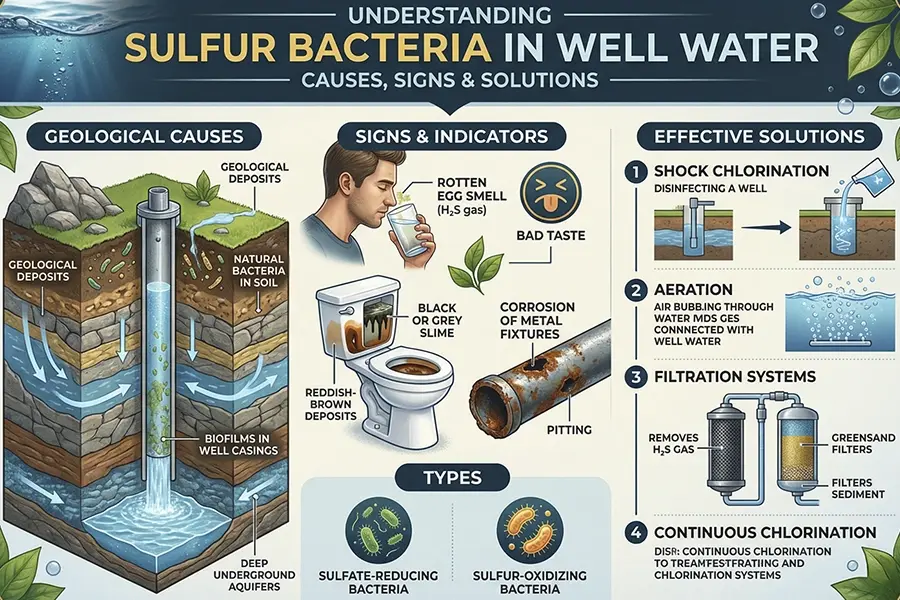
Another common cause of sulfur smell in water wells is the presence of sulfur bacteria. These microorganisms feed on sulfur compounds and produce hydrogen sulfide gas as a byproduct.
Sulfur bacteria may grow in:
- Water wells
- Plumbing pipes
- Water heaters
- Pressure tanks
While sulfur bacteria do not usually pose serious health risks, they can cause smelly well water, slime buildup, and unpleasant water taste.
Why Hot Water Smells Like Sulfur
In many homes, the sulfur odor appears only when using hot water. This often indicates that the problem is related to the water heater rather than the well.
Inside the heater, a component called the magnesium anode rod may react with sulfur compounds in the water. This reaction can increase the production of hydrogen sulfide gas, causing hot water to smell like rotten eggs.
If only hot water smells like sulfur, replacing the anode rod or flushing the heater may resolve the issue.
Other Causes of Sulfur Odor in Well Water
While hydrogen sulfide and sulfur bacteria are the most common causes, other factors may contribute to sulfur smell in well water.
Possible causes include:
Decaying Organic Material
Organic matter in groundwater can produce sulfur compounds that create unpleasant odors.
Contaminated Plumbing Systems
Old pipes, sediment buildup, or biofilm growth inside plumbing systems may trap bacteria that produce sulfur odors.
Water Heater Reactions
Chemical reactions in water heaters can produce hydrogen sulfide gas, especially in homes with high sulfur levels in groundwater.
Stagnant Water
Water that sits in pipes for long periods may develop stronger sulfur odors when first used.
Is Sulfur in Well Water Dangerous?
Many homeowners wonder whether sulfur water is safe to drink. In most cases, low levels of hydrogen sulfide are not considered harmful to health.
However, sulfur in water can cause several problems:
- Unpleasant taste and odor
- Staining on plumbing fixtures
- Corrosion of pipes and appliances
- Slime buildup caused by bacteria
Because sulfur odors may indicate other water quality issues, testing well water is recommended.
How to Remove Sulfur Smell from Well Water
Fortunately, several treatment methods can remove sulfur odor from well water. You can explore detailed methods on how to remove sulfur smell from well water for long-term solutions.
Common solutions include:
Shock Chlorination
Disinfecting the well with chlorine can eliminate sulfur bacteria temporarily.
Aeration Systems
Aeration removes hydrogen sulfide gas by exposing water to air.
Activated Carbon Filters
Carbon filters help remove odors and improve water taste.
Oxidizing Filters
Specialized filtration systems oxidize sulfur compounds and remove them from the water supply.
Whole-House Water Filtration
A whole-house sulfur water filter system provides long-term odor control for well water systems.
Preventing Sulfur Smell in Well Water
Preventative maintenance helps reduce the chances of well water odor problems. Regular system care and well maintenance practices play a key role in preventing recurring water quality issues.
Homeowners should:
- Test well water regularly
- Clean and maintain water heaters
- Inspect plumbing systems
- Install proper water filtration systems
- Schedule professional well inspections
Routine monitoring by professionals like NightOwl Monitoring helps identify water quality problems early and maintain clean well water systems.
Conclusion
The most common cause of sulfur smell in well water is hydrogen sulfide gas (H₂S) produced by sulfur-reducing bacteria or natural geological processes. This gas creates the strong rotten egg odor often noticed when water flows from taps or showers.
Although sulfur odors are usually not dangerous, they can affect water taste, damage plumbing systems, and make household water unpleasant to use. Identifying the source of the odor is the first step toward effective treatment.
Solutions such as water filtration systems, aeration treatment, and well disinfection can successfully eliminate sulfur smells and restore fresh, clean water. Professional monitoring services from NightOwl Monitoring help ensure that your well water system remains safe, reliable, and odor-free.
FAQs
What causes sulfur smell in well water?
The sulfur smell usually comes from hydrogen sulfide gas or sulfur bacteria in groundwater, which produces the familiar rotten egg odor.
Is sulfur in well water dangerous?
Low levels of sulfur are generally not harmful, but they can cause unpleasant odors, plumbing corrosion, and water taste problems.
Why does my hot water smell like rotten eggs?
Hot water odor often occurs when the water heater reacts with sulfur compounds, especially when a magnesium anode rod is present.
How do you remove sulfur smell from well water?
Common solutions include aeration systems, activated carbon filters, oxidizing filters, and whole-house water filtration systems.
Can you drink water that smells like sulfur?
In most cases it is safe, but testing the water is recommended to ensure there are no harmful contaminants present.