 ChatGPT
 Perplexity
 Claude
 Gemini
 Grok
Grok
If you rely on well water in areas like Texas or California, you may notice unexpected changes in your hair. Many people ask, what does well water do to your hair, especially when they start experiencing dryness, discoloration, or buildup.
Well water contains natural minerals that can impact hair health over time, making it important to understand both the effects and solutions.
What Does Well Water Do to Your Hair? (Quick Answer)
Well water can leave your hair dry, brittle, and discolored due to minerals like iron, calcium, and magnesium. It also creates buildup that prevents proper cleansing and moisture absorption.
What Is Well Water and Why It Affects Hair
Mineral Content in Well Water
Unlike treated city water, well water often contains:
- Iron
- Calcium
- Magnesium
- Sulfur
These elements contribute to hard water, which is a major cause of hair issues.
How Hard Water Interacts with Hair
Many people wonder what does hard well water do to your hair. The answer lies in how minerals bind to hair strands, forming a layer that:
- Blocks moisture
- Reduces shampoo effectiveness
- Leaves residue
Is Well Water Bad for Your Hair?
Yes, in most cases, is well water bad for your hair is a valid concern. High mineral content can damage hair texture and appearance over time.
However, the severity depends on:
- Water quality
- Iron levels
- Frequency of exposure
Effects of High Iron Content in Water on Hair
Iron is one of the most damaging elements found in well water.
Common Effects
- Orange or rusty tones in hair
- Dull and lifeless appearance
- Damage to color-treated hair
This explains why many users search for solutions related to well water and hair problems.
Can Well Water Cause Hair Loss?
Indirect Impact on Hair Loss
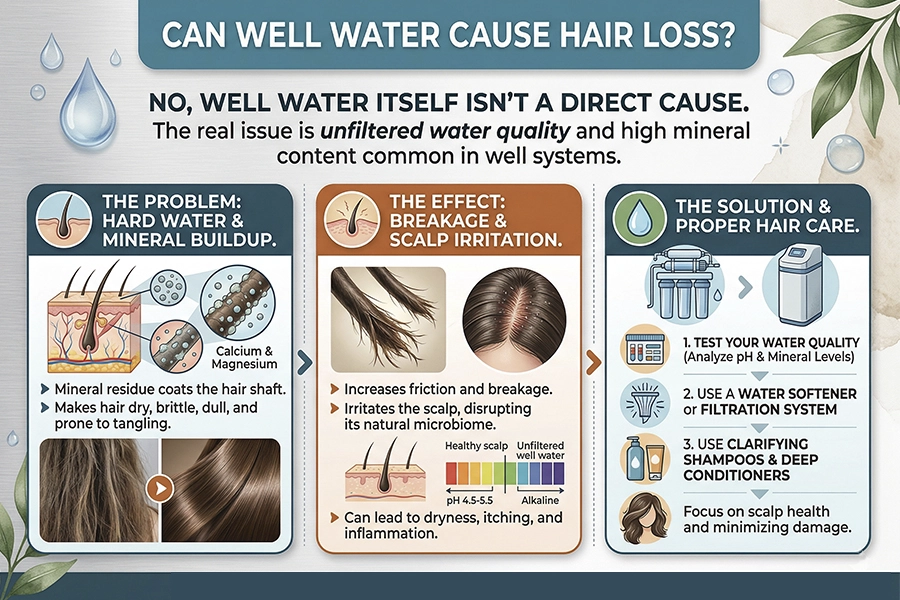
A common concern is can well water cause hair loss. While it does not directly cause permanent hair loss, it can:
- Weaken hair strands
- Increase breakage
- Cause scalp buildup
Hard Water Hair Loss Connection
The term hard water hair loss refers to hair thinning caused by mineral damage and reduced scalp health.
What Does Hard Well Water Do to Your Hair?
Understanding what does hard well water do to your hair helps explain why hair becomes difficult to manage.
Key Issues
- Hair feels rough and tangled
- Conditioner becomes less effective
- Shampoo does not lather properly
- Hair appears dull and heavy
Well Water Hair Treatment Options
Clarifying and Chelating Shampoos
Using the best shampoo for well water helps remove mineral deposits. These shampoos are designed specifically for well water hair care.
Professional Treatments
Many people explore treatments like Malibu detox solutions when dealing with severe well water hair damage.
Shower Filters
Installing a filter reduces mineral exposure and improves overall well water hair treatment results.
Best Products for Well Water Hair
Choosing the best products for well water hair can make a noticeable difference.
Recommended Options
- Clarifying shampoos
- Moisturizing conditioners
- Chelating treatments
- Deep hydration masks
These products help restore balance and improve manageability.
How Water Quality Monitoring Helps Prevent Hair Damage
Hair issues often start with poor water quality. Instead of only treating symptoms, it is important to monitor the source.
Solutions like NightOwl Monitoring help track:
- Iron levels
- Water fluctuations
- Overall water quality
This is especially valuable for homeowners, farmers, drillers, and plumbers who rely on well systems.
Preventing Well Water Hair Problems
Practical Steps
- Use a shower filter
- Rotate clarifying shampoos
- Deep condition regularly
- Test water quality
- Monitor mineral levels
Prevention is more effective than repeated treatments.
Conclusion
Understanding what does well water do to your hair is essential for maintaining healthy hair, especially if you rely on untreated groundwater.
From dryness and discoloration to buildup and breakage, well water can create multiple challenges. However, with the right combination of hair care, filtration, and water monitoring, these issues can be effectively managed.
Focusing on water quality not only improves hair health but also benefits your overall home system.
FAQs (People Also Ask)
Is well water good for your hair?
In most cases, no. High mineral content makes well water harmful to hair unless properly treated.
What is the best shampoo for well water hair?
The best option is a clarifying or chelating shampoo designed to remove mineral buildup.
Can iron rich water damage hair?
Yes, iron can cause discoloration, dryness, and long-term damage to hair.
How do you remove well water buildup from hair?
Using clarifying shampoos, professional treatments, and filters can effectively remove buildup.
Why does my hair feel sticky after washing with well water?
Mineral residue from hard water creates a coating on the hair, making it feel sticky or waxy.