
 ChatGPT
 Perplexity
 Claude
 Gemini
 Grok
Grok
If you’ve ever replaced a “high-quality” sediment filter and still ended up with cloudy water, weak showers, or a filter that plugs up way too fast, you’re not alone. Most well-water filtration problems aren’t because filtration doesn’t work, they’re because the micron rating is wrong for the job, or the filters are installed in the wrong order.
This guide breaks everything down: what are microns, what a water filter micron rating really means, how to compare 5 micron vs 20 micron, when 1 micron filtration makes sense, and the most practical answer to the big question:
What micron filter is best for well water?
For most homes: start with a coarse pre-filter (often 20–50 micron), then step down to a 5 micron filter, and only add 1 micron (or 0.5) if your water and pressure can support it.
Micron filtration basics (what are microns?)
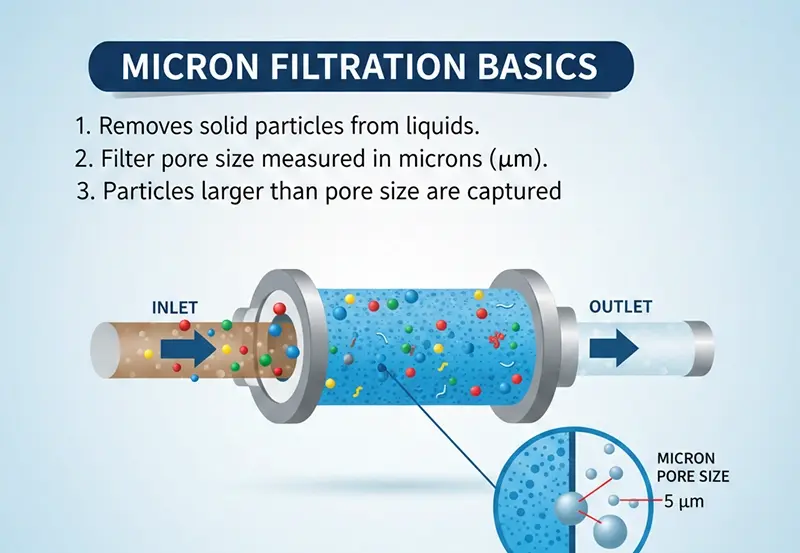
A micron (also written as µm) is a tiny unit of measurement used in micron filtration. The smaller the number, the smaller the particles your filter can catch. One micron is 1/25,000th of an inch (0.001 mm) — and the key idea is that smaller micron = finer filtration.
Micron rating meaning (and why “smaller” isn’t always “better”)
A micron filter rating tells you the approximate particle size the filter is designed to remove. But here’s the catch: using a super-fine filter on sandy well water can cause clogging and pressure drop fast. That’s why sequencing matters more than “smallest number wins.”
The simple micron water filter chart (well-water friendly)
Here’s a practical micron rating chart / micron filter chart concept you can actually use:
- 50 micron: big visible grit like dirt/silt/debris, it is great as a first defense when you have heavy sediment.
- 25 micron filter: still “coarse,” but catches smaller particles than 50 and often used as a prefilter.
- 20 micron: common well-water pre-filtration size that helps stop sand/rust before they wreck finer cartridges.
- 10 micron filter: finer sediment control, but can clog sooner depending on the well.
- 5 micron filter: a very popular “workhorse” for whole-house sediment filtering.
- 1 micron water filter cartridge: better for very fine particulates, but more flow restriction and faster clogging if used too early.
- 0.5 micron: often used for point-of-use drinking water (not always whole-house) depending on pressure and goals.
Before picking microns: test your water (don’t guess)
Well water can contain a mix of sediment, bacteria, metals, and organics. However, the best micron setup depends on what’s actually in your water. A whole-house filtration guide for well water recommends starting with a water test so you can match filtration to the contaminants you have.
5 micron vs 20 micron (which is better?)
This is the most common comparison for wells:
- 20 micron is often better as a first stage when your well has sand, grit, or visible sediment. It protects your plumbing and prevents a fine filter from plugging instantly.
- 5 micron is often better as a second stage to improve clarity and protect downstream equipment.
A common best practice for wells is starting with a 20-micron pre-filter and then using a 5-micron filter to handle most situations without restricting flow too much. So if you’re wondering which is better? In well systems, it’s usually both, in the right order.
1 micron vs 5 micron water filter (when should you go finer?)
Rule of thumb
- Choose 5 micron when you want strong sediment protection without killing flow.
- Add 1 micron when you’re doing “polishing,” after you’ve already removed the heavy sediment with a coarser stage.
A common multi-stage pattern recommended in micron-filter selection guides is:
20–50 micron (or spin-down) → 5 micron → 1 micron → optional 0.5 micron point-of-use.
Is 5 micron better than 10?
Think of it this way:
- Bigger numbers (50, 100) = coarse filter = less clogging, more flow.
- Smaller numbers (10, 5, 1) = fine filtration = clearer water, but more pressure drop and more frequent cartridge changes.
Flow rate, water pressure, and why filters “kill” your shower
Micron ratings don’t exist in a vacuum. Flow rate and pressure drop matter just as much, especially for a whole-house setup.
- finer filtration (smaller microns) = more pressure drop
- multiple stages add pressure drops together
- heavy sediment load clogs filters faster, reducing flow over time
Mesh vs micron
Mesh is not the same as micron. Mesh refers to the number of openings per inch of screen, while micron refers to pore size in filter media. Mesh is commonly used for large particle pre-filtration like spin-down filters and strainers.
So… what micron filter is best for well water?
Here are practical “starter” recommendations (adjust after testing):
1) Typical residential well (some sediment, not extreme)
- 20 micron sediment filter (prefilter)
- 5 micron whole house filter (main sediment stage)
2) Sandy well / heavy sediment / frequent clogging
- 50–100 micron screen (spin-down)
- 20 micron
- 5 micron
3) You want extra polishing for drinking water
- Whole-house stops at 5 micron (or 10 micron if pressure is limited)
- Add a 1 micron or 0.5 micron point-of-use filter at the kitchen sink
Where NightOwl fits (and why monitoring matters)
Filtration isn’t “set it and forget it.” Filters clog gradually, pressure drops slowly, and pump runtime changes. Most people don’t notice until the system is already struggling.
That’s where NightOwl Monitoring purpose becomes part of the filtration conversation: helping well professionals and operators see system behavior early and act before a small restriction becomes downtime.
Even if your immediate issue is “what micron filter should I buy?”, the bigger win is being able to detect:
- a clogged sediment cartridge (flow changes)
- unusual pump cycling (restriction or demand change)
- rising pump runtime (system working harder than normal)