 ChatGPT
 Perplexity
 Claude
 Gemini
 Grok
Grok
Water management has become one of the biggest challenges in modern agriculture. Farmers today are under constant pressure to reduce water waste, improve crop yields, lower operational costs, and maintain efficient irrigation farming practices across large properties. Traditional irrigation methods often rely on manual inspections, delayed maintenance, and guesswork, which can lead to equipment failures, uneven watering, and rising expenses.
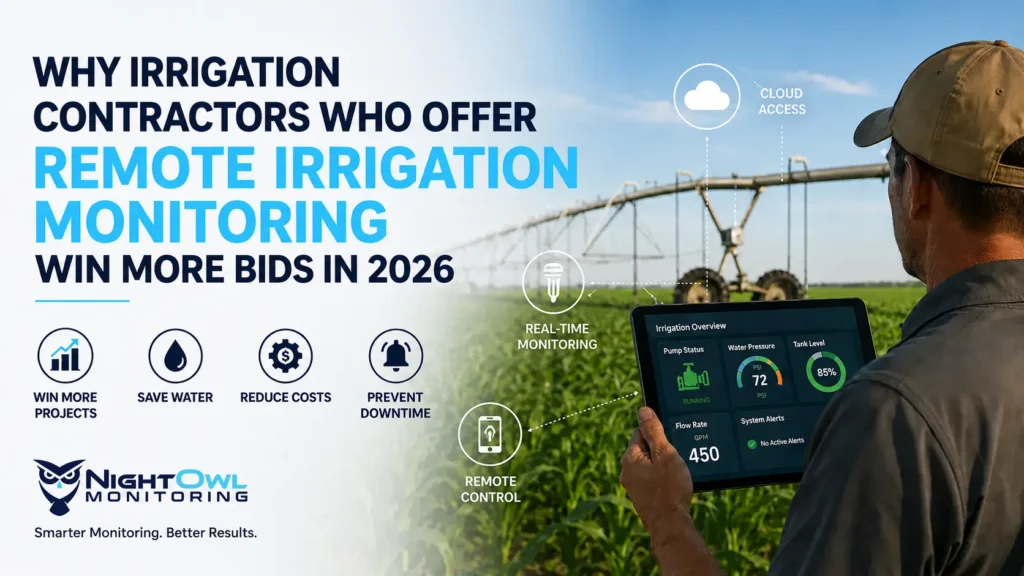
This is where remote irrigation monitoring is transforming the future of agricultural irrigation systems. With advanced telemetry, smart sensors, and cloud-based monitoring platforms, farmers can now monitor pumps, tank levels, pressure systems, and irrigation schedules remotely in real time. A modern remote irrigation monitoring and control system gives operators complete visibility into irrigation performance without needing to visit every field manually.
From crop irrigation systems to center pivot irrigation companies and sprinkler irrigation methods, smart irrigation technology is helping agricultural operations become more efficient, data-driven, and sustainable.
What Is Remote Irrigation Monitoring?
Remote irrigation monitoring is the process of using connected sensors, telemetry devices, and cloud software to track and manage irrigation systems from a remote location.
A modern irrigation monitoring system can monitor:
- Water flow
- Pump activity
- Pressure levels
- Tank levels
- Leak detection
- Valve operations
- Energy usage
- Soil moisture conditions
Using cellular or wireless communication, a remotely monitored irrigation system sends real-time data to dashboards, mobile devices, or desktop applications. This allows farmers and irrigation operators to identify issues early and make operational adjustments quickly.
Unlike traditional irrigation examples that require constant physical inspections, smart monitoring systems provide continuous visibility across the entire agricultural irrigation system.
Why Remote Irrigation Monitoring Matters in Modern Agriculture
Agriculture depends heavily on reliable water distribution. Even a small irrigation failure can damage crops, reduce yields, or increase water costs significantly.
Many farming irrigation systems still rely on outdated monitoring practices, including:
- Manual pump inspections
- Fixed irrigation schedules
- Delayed leak detection
- Reactive maintenance
- Inconsistent watering
Modern remote irrigation monitoring solves these problems by enabling proactive management and real-time alerts.
Are You a Farm Owner, Irrigation Professional, or Water System Provider?
Monitor wells, pumps, tanks, and irrigation systems remotely to catch problems early and reduce site visits.
Irrigation professionals can also offer NightOwl monitoring to customers and create recurring service revenue.
Reduces Water Waste
Water efficiency irrigation strategies are becoming increasingly important in areas facing drought conditions and rising water costs.
A smart irrigation control system can identify:
- Overwatering
- Broken sprinkler heads
- Pipe leaks
- Pressure drops
- Unusual flow patterns
This allows operators to reduce unnecessary water consumption while improving crop irrigation consistency.
Prevents Pump Failures
A remote pump monitoring system helps farmers detect issues before they become major equipment failures.
Monitoring systems can identify:
- Excessive pump runtime
- Pressure irregularities
- Electrical faults
- Low water levels
- Flow disruptions
Early alerts reduce emergency repairs and costly downtime.
Improves Labor Efficiency
Managing multiple irrigation zones manually takes significant time and labor.
A remote irrigation monitoring and control system allows farmers to:
- Monitor systems remotely
- Adjust schedules
- Control pumps
- Receive alerts instantly
- Reduce field inspections
This improves operational efficiency across large agricultural properties.
How Remote Irrigation Monitoring Systems Work
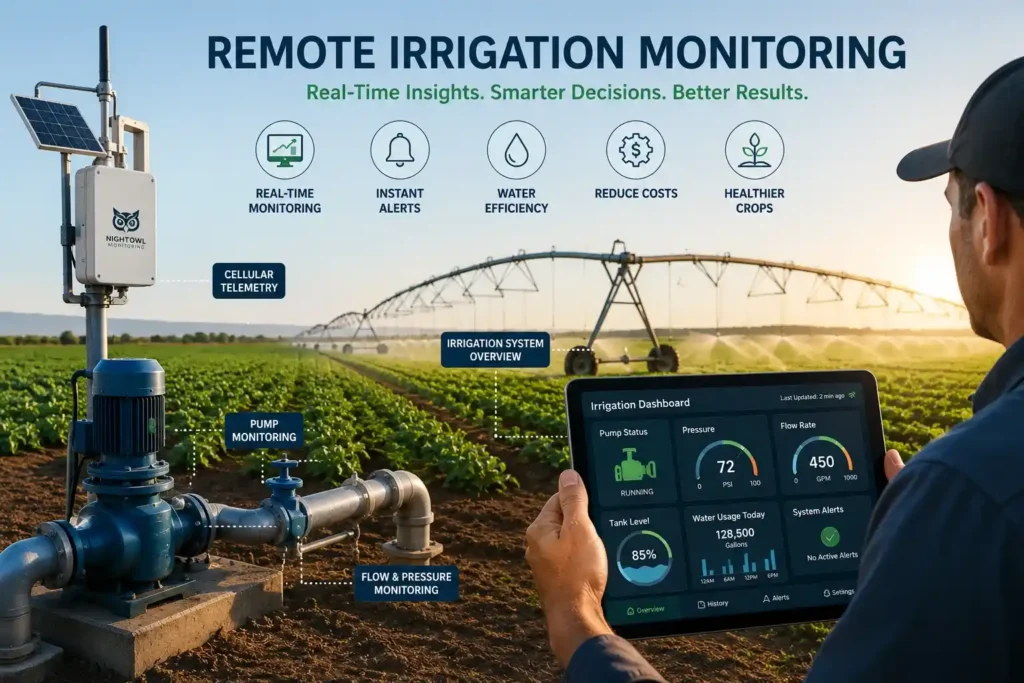
A modern irrigation monitoring and controlling system combines hardware, connectivity, and cloud software into one integrated platform.
Sensors and Field Devices
Field sensors collect real-time operational data, including:
- Tank levels
- Pressure readings
- Water flow
- Soil moisture
- Pump status
These sensors act as the foundation of the irrigation monitoring system.
Telemetry and Connectivity
Telemetry devices transmit field data using:
- Cellular networks
- Wireless communication
- Satellite systems
- Radio communication
This allows remote visibility even in rural agricultural locations.
Cloud-Based Dashboards
Data collected from the field is displayed through online dashboards accessible from:
- Smartphones
- Tablets
- Desktop computers
Operators can monitor farm irrigation systems in real time from virtually anywhere.
Automated Alerts and Controls
Smart irrigation technology services can automatically notify operators when:
- Pressure drops occur
- Water levels become critical
- Pumps stop unexpectedly
- Flow anomalies appear
Advanced systems may also support:
- Remote valve control
- Pump automation
- Irrigation scheduling
- Emergency shutdowns
Types of Irrigation Systems That Benefit From Remote Monitoring
Remote monitoring can improve nearly every type of irrigation agriculture operation.
Sprinkler Irrigation Systems
The sprinkler irrigation method is widely used for crop irrigation across farms in the USA.
Monitoring systems help operators:
- Detect pressure loss
- Identify blocked nozzles
- Optimize watering schedules
- Improve water distribution efficiency
Center Pivot Irrigation Systems
Center pivot irrigation companies increasingly rely on telemetry and remote controls to improve operational visibility.
Remote monitoring helps:
- Track pivot movement
- Monitor flow rates
- Detect shutdowns
- Reduce manual inspections
Drip Irrigation Systems
Drip systems require accurate pressure and flow management to operate efficiently.
Monitoring platforms help maintain:
- Consistent water delivery
- Leak prevention
- Uniform crop irrigation
Hose Reel Systems
A hose reel system can also benefit from remote monitoring by improving scheduling and detecting water delivery issues.
Common Problems Solved by Remote Irrigation Monitoring
Modern farming operations face several irrigation challenges that remote monitoring helps solve.
Uneven Water Distribution
Poor irrigation coverage can damage crop quality and reduce yields.
Monitoring systems help identify:
- Pressure inconsistencies
- Blocked lines
- Flow irregularities
High Water Costs
Water waste increases operational expenses.
Remote irrigation control helps improve water efficiency irrigation by ensuring water is only used when needed.
Equipment Downtime
Unexpected pump failures can interrupt irrigation during critical growing periods.
A remote pump monitoring system allows operators to respond quickly before failures escalate.
Limited Visibility Across Large Farms
Large agricultural irrigation systems can be difficult to monitor manually.
Remote dashboards provide centralized visibility across multiple irrigation zones and properties.
Smart Irrigation Technology and the Future of Farming
SmartFarm technology is rapidly changing how irrigation cultivation is managed worldwide.
Today’s farmers are increasingly adopting:
- IoT monitoring
- Automated irrigation schedules
- Soil moisture sensors
- Predictive maintenance systems
- Cloud-based analytics
As water conservation becomes more important, remote irrigation monitoring will continue playing a major role in sustainable agriculture.
Benefits of Remote Irrigation Monitoring for Farmers
Better Crop Performance
Consistent irrigation improves crop health and reduces stress caused by under or overwatering.
Faster Problem Detection
Real-time alerts allow operators to respond quickly to leaks, failures, or abnormal conditions.
Reduced Operational Costs
Automated monitoring lowers:
- Labor costs
- Water waste
- Emergency maintenance expenses
- Equipment damage risks
Improved Water Conservation
Smart irrigation systems support sustainable water management and long-term agricultural efficiency.
Choosing the Right Remote Irrigation Monitoring System
Not all irrigation monitoring systems offer the same capabilities.
When selecting a solution, farmers should evaluate:
Remote Accessibility
The platform should provide reliable access from mobile and desktop devices.
Real-Time Alerts
Immediate notifications are critical for preventing irrigation failures.
Scalability
The system should support:
- Multiple fields
- Pumps
- Tanks
- Sensors
- Irrigation zones
Integration Compatibility
Modern systems should support:
- Flow meters
- Pressure sensors
- Tank monitors
- Pump controls
- Existing agricultural irrigation equipment
Reliability in Rural Areas
Strong cellular or telemetry connectivity is essential for remote farming operations.
How NightOwl Monitoring Supports Smarter Irrigation Operations
Modern agricultural operations require more than basic irrigation timers. Farmers need real-time visibility into the performance of pumps, tanks, and water delivery systems.
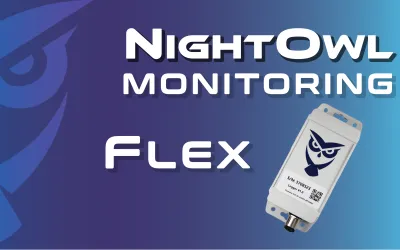
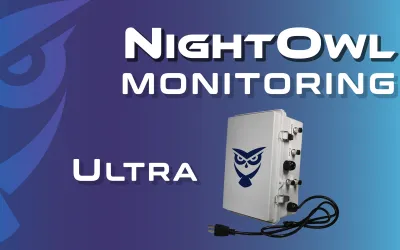
Solutions from NightOwl Monitoring help irrigation operators remotely monitor critical infrastructure through advanced telemetry and cloud-based monitoring tools.
With remote monitoring capabilities, agricultural users can:
- Track water levels
- Monitor pump performance
- Receive instant alerts
- Reduce water waste
- Improve irrigation efficiency
- Detect operational issues early
For farms managing multiple irrigation systems, remote telemetry provides better operational control while reducing manual oversight requirements.
The Growing Importance of Water Efficiency in Agriculture
Water availability continues to shape the future of agriculture worldwide.
As irrigation systems in America continue evolving, farmers are investing more heavily in:
- Smart irrigation control systems
- Automated water management
- Predictive maintenance
- Remote monitoring technologies
The most efficient irrigation method is no longer just about water delivery. It is about visibility, automation, and intelligent decision-making.
Remote irrigation monitoring gives farmers the tools needed to operate more efficiently while protecting both crops and water resources.
Conclusion
Modern agriculture depends on reliable and efficient irrigation systems. Traditional monitoring methods often leave farmers reacting to problems after damage has already occurred.
Remote irrigation monitoring changes that approach completely.
By combining telemetry, sensors, cloud dashboards, and real-time alerts, farmers gain continuous visibility into irrigation operations while improving water conservation, reducing downtime, and increasing operational efficiency.
Whether managing sprinkler irrigation systems, crop irrigation systems, or large agricultural irrigation systems, remote monitoring technology is becoming an essential part of modern farming infrastructure.
As agriculture continues moving toward smarter and more sustainable operations, remote irrigation monitoring and control systems will play a critical role in helping farmers protect crops, conserve water, and improve long-term productivity.
Frequently Asked Questions
What is remote irrigation monitoring?
Remote irrigation monitoring uses connected sensors and telemetry systems to monitor irrigation equipment, pumps, and water usage remotely in real time.
How does a remote irrigation monitoring and control system work?
The system collects field data through sensors and sends it to cloud dashboards where operators can monitor and control irrigation equipment remotely.
What are the benefits of irrigation monitoring systems?
Benefits include reduced water waste, improved crop irrigation, faster problem detection, lower maintenance costs, and better operational efficiency.
Can remote irrigation monitoring help reduce water usage?
Yes. Smart irrigation systems detect leaks, pressure issues, and overwatering conditions, helping improve water efficiency irrigation practices.
What types of irrigation systems support remote monitoring?
Remote monitoring works with sprinkler irrigation systems, drip irrigation systems, center pivot irrigation systems, and other agricultural irrigation equipment.
Is remote irrigation monitoring suitable for large farms?
Yes. Large farming irrigation systems benefit significantly from centralized monitoring, automation, and remote visibility across multiple irrigation zones.
Why is smart irrigation technology important in modern farming?
Smart irrigation technology helps farmers conserve water, improve crop yields, reduce labor costs, and manage irrigation systems more efficiently.