
 ChatGPT
 Perplexity
 Claude
 Gemini
 Grok
Grok
Obtaining a water well drilling license is one of the first and most important steps for anyone looking to enter the water well industry. Whether you’re becoming a driller for the first time, expanding your business into a new state, or exploring opportunities as a licensed water well contractor, understanding licensing requirements can help you avoid costly delays and compliance issues.
The challenge is that licensing requirements vary significantly across the United States. Some states require extensive field experience, examinations, and continuing education, while others have different permit and registration requirements. In this guide, we’ll explain how water well drilling licenses work, common requirements contractors can expect, typical licensing costs, and what drillers should know when moving from one state to another.
What Is a Water Well Drilling License?
A water well drilling license is a state-issued authorization that allows qualified individuals or companies to legally construct, alter, repair, deepen, or abandon water wells according to state groundwater regulations.
In many states, the license may also be referred to as:
- Well drilling license
- Well drillers license
- Water well contractor license
- Drilling contractor license
- Licensed water well contractor certification
Licensing requirements exist to protect groundwater resources, public health, and environmental quality. Improper drilling practices can contaminate aquifers, damage water supplies, and create long-term safety concerns.
For this reason, most states require contractors to demonstrate technical competency before receiving a license to drill.
Why Licensing Requirements Vary by State
Unlike many professions regulated federally, water well drilling is primarily governed at the state level.
States develop their own regulations based on factors such as:
- Groundwater conditions
- Aquifer protection programs
- Geological differences
- Environmental regulations
- Water management policies
- Public health standards
As a result, a contractor who holds a well drilling license in one state may not automatically qualify to drill wells in another.
This is particularly important for contractors relocating their businesses or expanding into neighboring states.
Who Typically Needs a Water Well Contractor License?
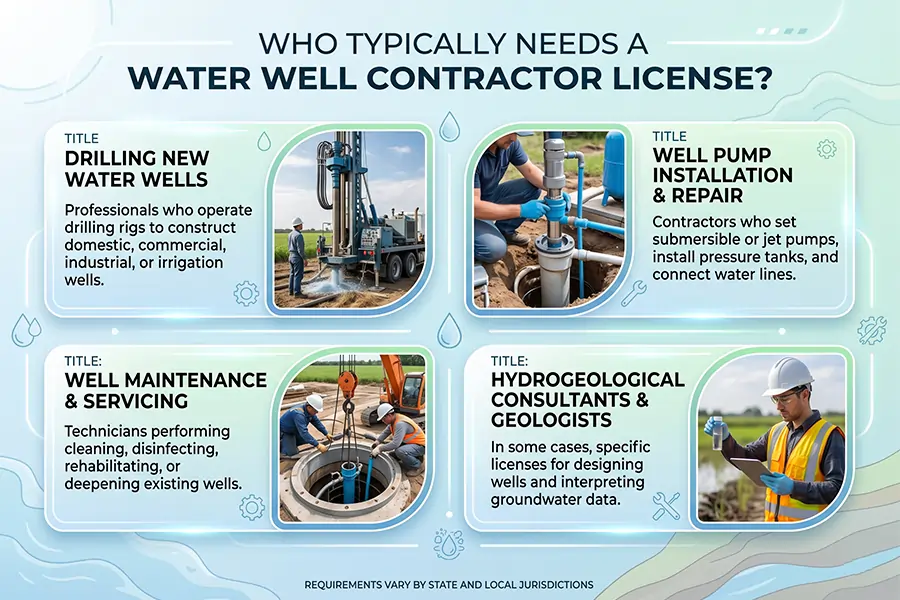
Most states require licensing for individuals or companies involved in:
- Water well drilling
- Well construction
- Well repair
- Well deepening
- Well abandonment
- Groundwater extraction systems
- Certain pump installation services
Depending on the state, separate licenses may exist for:
- Drillers
- Pump installers
- Water well contractors
- Monitoring well contractors
- Geotechnical drilling contractors
Before starting operations, contractors should verify local water well contractor requirements with the appropriate state regulatory agency.
Common Requirements for Obtaining a Water Well Drilling License
Although requirements vary, many states share similar qualification standards.
Experience Requirements
Most licensing agencies require applicants to demonstrate practical field experience before receiving a water well drilling license.
Experience requirements may include:
- Apprenticeship programs
- Work under a licensed well driller
- Documented drilling hours
- Contractor sponsorship
Some states require multiple years of verifiable experience before applicants can sit for licensing exams.
Well Driller Exam Requirements
Many states require candidates to pass a well driller exam covering topics such as:
- Groundwater protection
- Drilling methods
- Well construction standards
- State regulations
- Safety procedures
- Environmental compliance
Examinations help ensure that licensed contractors understand both technical drilling practices and legal requirements.
Insurance and Bonding
Many states require contractors to maintain:
- General liability insurance
- Workers’ compensation coverage
- Surety bonds
Insurance requirements vary depending on the state and project type.
Business Registration
Applicants operating a company often must:
- Register a business entity
- Obtain tax identification numbers
- Secure local business licenses
- Maintain contractor registrations
These requirements may exist in addition to the individual driller license.
Continuing Education Requirements
Several states require ongoing education to maintain a licensed well driller status.
Continuing education topics may include:
- New drilling technologies
- Groundwater regulations
- Safety standards
- Environmental protection
- Industry best practices
Failure to complete required training may affect license renewal eligibility.
Moving to Another State? What Drillers Need to Know
One of the most common licensing questions comes from contractors relocating their operations.
Unfortunately, holding a well drillers license in one state does not automatically grant permission to drill in another state.
Before moving, contractors should research:
- Reciprocity agreements
- State examination requirements
- Experience verification rules
- Insurance requirements
- Business registration procedures
Some states recognize previous experience, while others require applicants to complete portions of the licensing process again.
The safest approach is to contact the state licensing agency directly before assuming your existing credentials will transfer.
Typical Costs of Getting a Water Well Drilling License
Many new contractors ask about licensing expenses.
The total cost of obtaining a water well drilling license can vary significantly depending on location and business structure.
Potential expenses may include:
| Requirement | Typical Cost Range |
| Application Fees | $50 – $500 |
| Licensing Exams | $100 – $500 |
| Insurance Coverage | $500 – $5,000+ annually |
| Surety Bonds | $100 – $2,000+ annually |
| Continuing Education | $50 – $500 annually |
| Business Registration | $50 – $500 |
Actual costs vary by state and should always be verified with local agencies.
Examples of State Licensing Approaches
While requirements vary, some states maintain particularly structured licensing programs.
Texas
Texas requires licensing for water well drillers through state regulatory agencies.
Applicants typically must:
- Meet experience requirements
- Submit applications
- Pass examinations
- Comply with renewal requirements
Texas remains one of the most active drilling markets in the country.
Florida
Florida regulates water well contractors through state and local programs.
Requirements often include:
- Experience verification
- Testing
- Business registration
- Continuing education
Because regulations can vary by region, applicants should verify requirements with local authorities.
Arizona
Arizona maintains specific groundwater protection standards and licensing requirements for drilling contractors.
California
California regulates well construction heavily due to environmental and groundwater management concerns.
Washington
Washington has established licensing and continuing education programs for water well professionals.
How to Verify Current Well Drilling Requirements
Because regulations change periodically, contractors should always verify requirements through official sources.
Recommended resources include:
- State licensing boards
- Groundwater management agencies
- Environmental protection departments
- Water resource commissions
- Contractor licensing agencies
This helps ensure compliance with the latest well drilling regulations and permit requirements.
Building a Long-Term Career as a Licensed Well Driller
Obtaining a water well drilling license is only the beginning.
Successful contractors often focus on:
- Technical excellence
- Regulatory compliance
- Customer relationships
- Safety programs
- Continuing education
- Technology adoption
As the industry evolves, contractors are increasingly expected to provide more than drilling services alone.
Customers today want visibility into their water systems, improved reliability, and proactive maintenance solutions.
How Modern Drilling Contractors Are Expanding Beyond Drilling
Many drilling companies are expanding into:
- Pump services
- Water system maintenance
- Tank monitoring
- Remote telemetry
- Pump diagnostics
- Water infrastructure monitoring
This creates opportunities for recurring revenue while helping customers avoid costly water outages.
Instead of only responding when systems fail, contractors can offer proactive monitoring services that improve long-term system performance.
Why Remote Monitoring Creates New Opportunities for Licensed Well Drillers
One of the fastest-growing opportunities in the water industry involves remote monitoring technology.
Solutions from NightOwl Monitoring help drilling contractors monitor:
- Tank levels
- Pump activity
- Pressure conditions
- Runtime performance
- System alerts
By offering monitoring services alongside drilling projects, contractors can strengthen customer relationships while creating additional service revenue.
This approach aligns with broader industry trends toward preventive maintenance and smarter water infrastructure management.
Conclusion
Obtaining a water well drilling license is an essential step for anyone planning to enter the water well industry or expand operations into a new state.
Although licensing requirements vary significantly, most states require a combination of experience, examinations, business registration, insurance, and continuing education.
Contractors who understand licensing requirements early can avoid delays, remain compliant, and position themselves for long-term success.
As the industry continues evolving, many licensed drilling contractors are also embracing monitoring technologies and proactive service models to provide greater value to customers while creating new business opportunities.
Frequently Asked Questions
How to get a water well drilling license?
Most states require applicants to meet experience requirements, submit an application, pass a licensing exam, maintain insurance, and comply with state drilling regulations.
How to get a water well drilling license in Florida?
Florida typically requires experience verification, licensing applications, and compliance with state and local water well contractor regulations. Requirements should be verified with Florida licensing authorities.
How to get a water well drilling license in Texas?
Texas generally requires applicants to meet experience standards, submit licensing paperwork, pass required examinations, and maintain compliance with state regulations.
How much does a water well drilling license cost?
Costs vary by state but often include application fees, exam fees, insurance costs, bonding requirements, and continuing education expenses.
Can I use my well drilling license in another state?
Not always. Many states have different licensing requirements and may not automatically recognize licenses issued elsewhere.
Do water well drillers need continuing education?
Many states require continuing education to maintain licensing and stay current with industry regulations and best practices.