 ChatGPT
 Perplexity
 Claude
 Gemini
 Grok
Grok
A private water well can provide a reliable and independent source of groundwater for homes, farms, and rural properties. Many homeowners ask how to drill your own water well to reduce reliance on municipal water systems and gain access to natural groundwater. While water well drilling may sound complicated, it is possible in some areas with the right tools, preparation, and understanding of local regulations.
Drilling a well requires locating groundwater, selecting the proper well drilling equipment, installing a well screen, and setting up a well pump system to deliver water to the home. Before starting any DIY water well drilling project, it is important to understand the drilling process, required equipment, and legal considerations in your state.
Is It Legal to Drill Your Own Water Well?
Before attempting to drill your own well, check local and state regulations. In many parts of the United States, including Texas, homeowners are allowed to drill private wells on their property, but permits may still be required.
Local authorities may regulate:
- Well depth and location
- Distance from septic systems
- Water quality testing requirements
- Registration of private wells
Checking these rules ensures your residential water well drilling project complies with local guidelines.
How Water Wells Work
Understanding how wells work helps homeowners better plan the drilling process.
A typical water well system includes:
- Drilled well or borehole reaching underground aquifers
- Well casing to protect the well structure
- Well screen that filters sediment from groundwater
- Submersible or shallow well pump to move water to the surface
- Pressure tank to maintain water pressure in the home
The well pump pulls groundwater from the aquifer and delivers it through plumbing to supply clean water for household use.
Tools and Equipment Needed for DIY Well Drilling
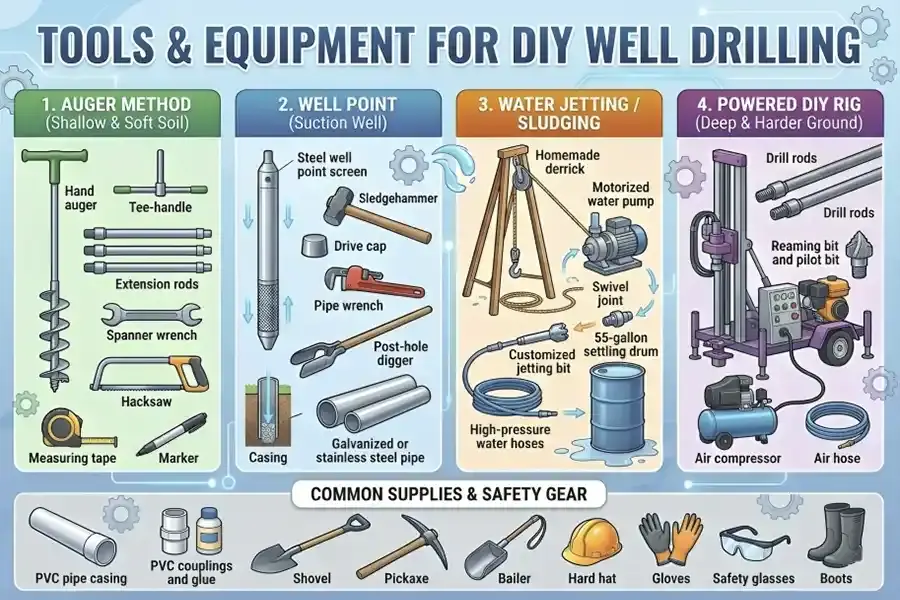
Drilling a well requires specialized water well drilling tools and equipment. The type of equipment depends on soil conditions, groundwater depth, and drilling method.
Common well drilling equipment includes:
- Water well drilling machine or portable drilling rig
- Auger drill bit for digging through soil
- Drill pipe and casing
- Well screen for sediment filtration
- Water well pump system
- DIY water well drilling kit
Some homeowners rent well drilling equipment or use portable rigs designed for small residential wells.
How to Find Water Before Drilling a Well
One of the most important steps in drilling a water well is locating groundwater.
Methods used to identify groundwater sources include:
- Reviewing geological maps
- Consulting local well drilling companies
- Checking nearby wells in your area
- Using groundwater surveys
- Evaluating soil and rock conditions
Understanding how to locate water for a well helps increase the chances of drilling a successful water source.
Step-by-Step Process to Drill Your Own Water Well
1. Choose the Well Location
Select a safe location away from septic systems, drainage areas, and potential contamination sources.
2. Start Drilling the Borehole
Using a water well drill or auger, begin drilling through soil and rock layers until reaching the groundwater table.
3. Install the Well Casing
A well casing pipe protects the well from collapse and prevents surface contaminants from entering the groundwater.
4. Install the Well Screen
The water well screen allows water to enter the well while blocking sand and sediment.
5. Develop the Well
Well development removes drilling debris and improves groundwater flow into the well.
6. Install the Well Pump
After drilling is complete, install a well pump system such as a shallow well pump or deep well pump depending on well depth.
7. Test the Water Supply
Finally, test the well to ensure it produces enough water and meets safety standards for household use.
How Deep Should a Water Well Be?
The depth of a drilled water well depends on local groundwater conditions. Some shallow wells reach water at 25 to 50 feet, while deeper wells may extend 100 to 400 feet or more.
Factors affecting well depth include:
- Aquifer depth
- Soil and rock formations
- Local groundwater levels
- Water demand for the property
Professional well drilling companies often conduct geological surveys to determine optimal well depth.
Cost of Drilling a Water Well
Many homeowners attempt DIY well drilling to reduce costs. However, professional drilling services may still be necessary depending on well depth and soil conditions.
Typical costs include:
- $15 to $30 per foot for professional drilling
- $3,000 to $15,000 for a complete residential well system
Costs can vary depending on drilling difficulty, equipment, and pump installation. You can visit our detailed Guide of Cost to Drill a Water Well.
Safety Tips for DIY Water Well Drilling
If you plan to drill your own well, follow these safety guidelines:
- Use proper well drilling equipment
- Avoid drilling near septic tanks or drainage fields
- Wear protective gear during drilling
- Follow local well construction regulations
- Test groundwater for contamination
These precautions help ensure a safe and reliable water well installation.
When to Hire Professional Well Drilling Services
Although DIY water well drilling is possible, many homeowners choose professional services for deeper wells or difficult soil conditions.
Professional well drilling companies near you can:
- Conduct geological surveys
- Use advanced drilling machines
- Install well pumps and pressure systems
- Ensure the well meets safety regulations
Professional drilling also improves long-term reliability of the well water system.
Conclusion
Learning how to drill your own water well can provide homeowners with an independent water source and reduce reliance on municipal water systems. The process involves locating groundwater, drilling a borehole, installing casing and well screens, and setting up a pump system to deliver water to the home.
While DIY water well drilling may be suitable for shallow wells, deeper wells often require professional equipment and expertise. Proper planning, safety precautions, and compliance with local regulations are essential for building a reliable well system.
For homeowners seeking professional assistance with water wells, monitoring, or system inspections, NightOwl Monitoring provides expert support to help maintain safe and reliable well water systems.
FAQs
Can you drill your own water well?
Yes, in many areas homeowners can drill their own wells, but local permits and regulations may apply depending on your state or county.
How deep do you need to drill a water well?
Well depth varies depending on groundwater levels. Some wells are 25–50 feet deep, while others may reach 100–400 feet or more.
How long does it take to drill a water well?
Drilling a residential water well usually takes 1 to 3 days, depending on soil conditions and well depth.
What equipment is needed to drill a water well?
Common tools include well drilling rigs, auger drills, drill pipes, well casing, well screens, and water well pumps.
How much does it cost to drill a water well?
The cost of drilling a water well typically ranges from $3,000 to $15,000, depending on depth, location, and equipment used.