 ChatGPT
 Perplexity
 Claude
 Gemini
 Grok
Grok
Low water pressure in a home that relies on a well water system can be frustrating and inconvenient. When faucets produce weak flow or the shower loses pressure, many homeowners begin asking what causes low water pressure on a well and how the problem can be fixed.
In most cases, low water pressure from a well is caused by issues with the well pump, pressure tank, pressure switch, or plumbing system. These components work together to move groundwater from the well to your home while maintaining consistent water pressure. To better understand this process, it helps to learn how a water well works.
If one part of the system fails or becomes inefficient, it can result in poor water pressure in the house, sudden drops in pressure, or even no water pressure at all. Understanding the most common causes can help homeowners identify problems and restore normal water flow.
How a Well Water System Maintains Water Pressure
A typical well water system uses several components to maintain consistent pressure throughout the home.
Key parts include:
- Well pump that pulls groundwater from the well
- Pressure tank that stores pressurized water
- Pressure switch that regulates pump operation
- Well pressure gauge that monitors pressure levels
- Household plumbing system that distributes water
When water pressure drops below a preset level, the well pump turns on and refills the pressure tank. This process ensures stable water pressure for sinks, showers, and appliances.
Common Causes of Low Water Pressure on a Well
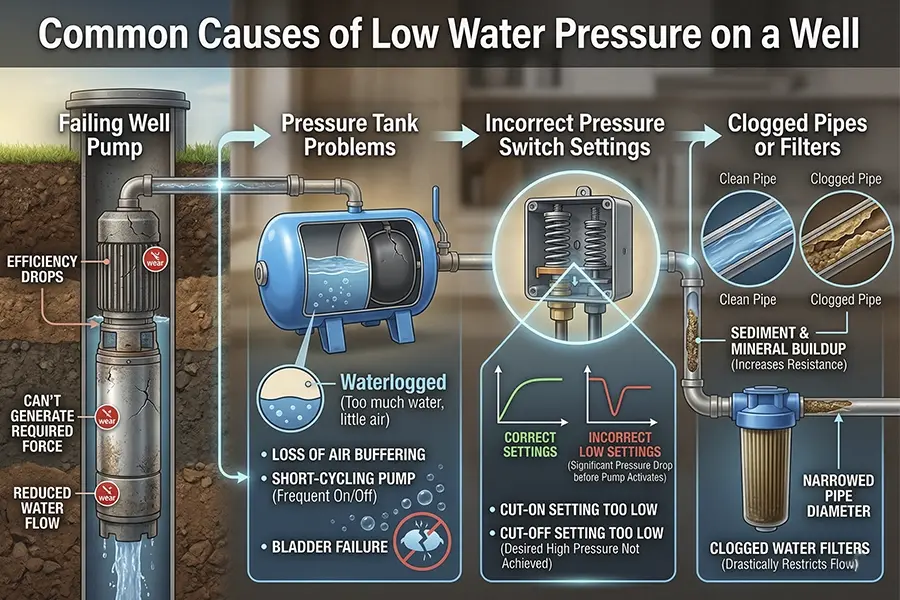
Several issues can cause low well water pressure or sudden drops in household water pressure.
Failing Well Pump
A well pump that is worn out or malfunctioning is one of the most common causes of pressure problems. If the pump cannot generate enough force to move water from the well, you may experience weak water pressure or no water flow.
Signs of a failing pump include:
- Pump running continuously
- Pump not building pressure
- Sudden loss of water pressure in the house
In many cases, a professional well pump repair service near you may be required.
Pressure Tank Problems
A water pressure tank stores pressurized water and helps regulate pressure levels. Understanding how a pressure tank for a water well works can help diagnose pressure-related issues more effectively. If the tank becomes waterlogged or loses air pressure, the system may struggle to maintain consistent pressure.
Symptoms of a faulty pressure tank include:
- Rapid pump cycling
- Low water pressure throughout the house
- Pressure fluctuating frequently
Regular well pressure tank maintenance can prevent these issues.
Incorrect Pressure Switch Settings
The pressure switch controls when the well pump turns on and off. If the switch is set too low or becomes faulty, it may cause low pressure from the well system.
Most residential wells operate between 40 and 60 PSI, though settings may vary depending on the home’s plumbing system.
Clogged Pipes or Filters
Mineral buildup, sediment, or debris inside pipes can restrict water flow and cause low water pressure in the home with well water.
Common causes of clogs include:
- Hard water mineral deposits
- Sediment from groundwater
- Dirty water filters or screens
Cleaning or replacing filters can often restore normal water pressure.
Leaks in the Plumbing System
Hidden leaks in the plumbing system can also lead to sudden low water pressure in the house. When water escapes through damaged pipes, less pressure reaches faucets and fixtures.
Signs of a plumbing leak include:
- Higher water usage
- Damp areas near pipes
- Constant pump cycling
Professional plumbing inspection can help locate and repair leaks.
Well Running Low on Water
In some cases, low water pressure from a well occurs because the well is running low on water. If this happens, it’s important to know what to do when your water well runs dry to prevent further system damage.
This may happen due to:
- Seasonal drought conditions
- Overuse of water from irrigation systems
- Declining groundwater levels
If the well cannot refill fast enough, the pump may struggle to maintain pressure.
How to Increase Water Pressure from a Well
If you are experiencing low water pressure in a house with a well, several solutions may help improve performance. You can also explore proven methods on how to increase water pressure from a well for more detailed solutions.
Possible fixes include:
- Adjusting the pressure switch settings
- Checking the air pressure in the well pressure tank
- Replacing clogged filters
- Repairing plumbing leaks
- Installing a constant pressure well pump system
In some situations, upgrading the well pump may be necessary to achieve better water flow.
When to Call a Professional Well Service
While some pressure issues can be fixed through basic troubleshooting, more serious problems require professional help.
Homeowners should contact experts like NightOwl Monitoring if they experience:
- Sudden loss of water pressure
- No water from the well
- Pump running continuously
- Pressure dropping and returning repeatedly
Professional well technicians can inspect the well pump, pressure tank, and plumbing system to identify the exact cause of the pressure problem. For long-term reliability, many homeowners choose to monitor well performance in real time to detect issues early and prevent costly failures.
Conclusion
Understanding what causes low water pressure on a well can help homeowners diagnose problems and maintain a reliable water supply. The most common causes include failing well pumps, faulty pressure tanks, clogged plumbing, incorrect pressure switch settings, or declining groundwater levels.
Regular maintenance of the well water system, including checking pressure tank settings and inspecting the pump, can prevent many pressure problems. If pressure issues continue, professional inspection from NightOwl Monitoring can help restore proper system performance and ensure consistent water pressure throughout the home.
FAQs
Why is my well water pressure suddenly low?
Sudden low pressure may be caused by a failing well pump, pressure tank problems, clogged filters, or plumbing leaks.
What should water pressure be for a well system?
Most residential well systems operate between 40 and 60 PSI for normal household water pressure.
How do you increase water pressure from a well?
You can increase pressure by adjusting the pressure switch, checking tank air pressure, cleaning filters, or upgrading the well pump.
How do I know if my well pressure tank is bad?
Signs include rapid pump cycling, fluctuating pressure, and weak water flow throughout the home.
Can a well running low cause low water pressure?
Yes. If groundwater levels drop, the pump may struggle to supply water, causing low or inconsistent water pressure.