 ChatGPT
 Perplexity
 Claude
 Gemini
 Grok
Grok
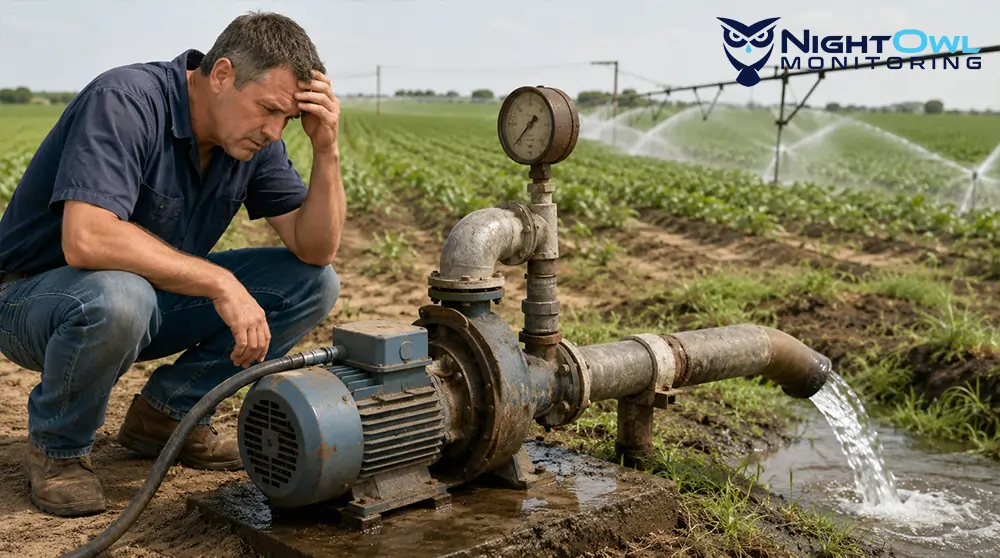
An irrigation pump is the heart of every irrigation system. Whether it’s supplying water to crop fields, commercial landscapes, golf courses, or livestock operations, the entire system depends on the pump operating efficiently. When performance begins to decline, even small issues can reduce water pressure, interrupt irrigation schedules, and increase operating costs.
The good news is that most pump failures don’t happen without warning. Many signs of water pump failure appear days or even weeks before a complete breakdown, giving operators time to diagnose the problem and schedule maintenance. Recognizing these early warning signs can help prevent costly downtime, extend equipment life, and keep irrigation systems operating reliably.
In this guide, we’ll cover the most common signs of water pump failure, why they occur, how to diagnose them, and how modern monitoring technology helps identify developing problems before irrigation is affected.
What Is Water Pump Failure?
Water pump failure occurs when one or more components within the pumping system can no longer maintain normal performance or deliver the required flow and pressure.
A failure doesn’t always mean the pump stops working completely.
In many cases, the pump continues operating while gradually losing efficiency due to worn mechanical components, electrical issues, or hydraulic problems.
An irrigation pump consists of several critical components working together, including:
- Electric Motor
- Pump Impeller
- Pump Shaft
- Mechanical Seal
- Pump Bearings
- Pump Housing
- Suction Line
- Discharge Line
- Check Valve
- Foot Valve
- Pressure Switch
- Pump Controller
When any of these components begins to wear or malfunction, the entire irrigation system can experience performance issues.
Understanding these water pump failure symptoms allows operators to respond before small problems develop into complete system failures.
Why Irrigation Water Pumps Fail
Every irrigation pump experiences wear over time.
However, most failures result from a combination of operating conditions, maintenance practices, and environmental factors rather than simple age.
Common causes include:
- Dry running
- Pump cavitation
- Worn bearings
- Mechanical seal wear
- Damaged pump impeller
- Voltage fluctuations
- High motor current
- Sand abrasion
- Sediment buildup
- Corrosion
- Air leaks
- Frozen pipes
- Blocked filters
- Clogged intake lines
- Improper installation
Without regular inspections, these conditions gradually reduce pump efficiency until noticeable pump performance issues begin affecting irrigation.
Small Problems Become Expensive Repairs
Many irrigation operators assume a pump will suddenly stop working.
In reality, failure is usually progressive.
For example:
- Bearings begin wearing.
- Vibration increases.
- Motor current rises.
- Pump efficiency decreases.
- Water pressure drops.
- Flow rates decline.
- Eventually, the pump fails.
Recognizing these warning signs early often prevents emergency repairs and unexpected irrigation downtime.
List of 12 Signs of Water Failure in Irrigation
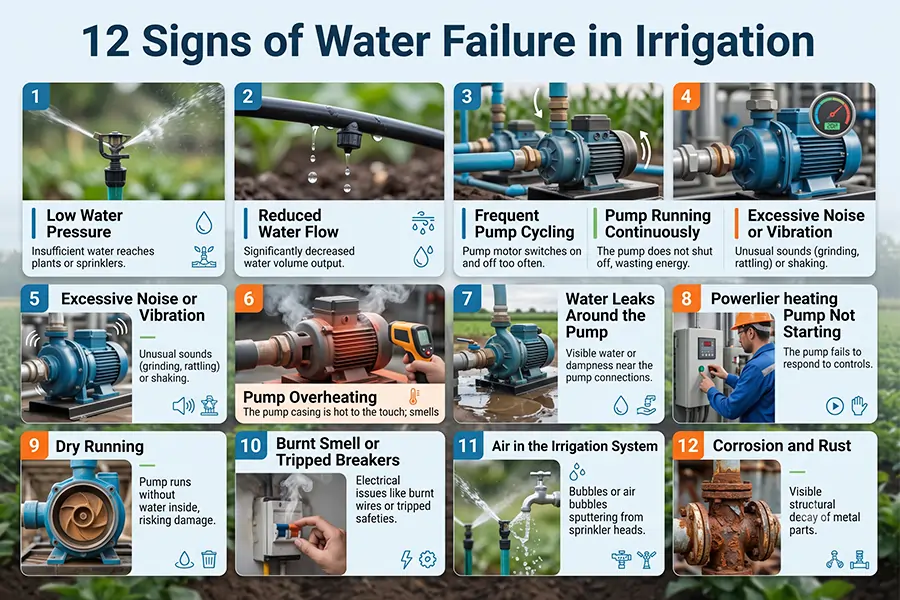
1. Low Water Pressure
One of the earliest and most common signs of water pump failure is a noticeable reduction in water pressure.
If sprinklers no longer provide full coverage or irrigation zones receive inconsistent water delivery, the pump may no longer be producing sufficient pressure.
Low water pressure may result from:
- Worn impellers
- Seal failure
- Air entering the suction line
- Pressure switch problems
- Cavitation
- Internal wear
Although pressure loss may initially appear minor, it often becomes progressively worse if left unresolved.
Why Pressure Matters
Consistent pressure is essential for maintaining:
- Uniform irrigation coverage
- Proper flow rate
- Pump efficiency
- Equipment performance
Even moderate pressure loss can reduce irrigation effectiveness across large agricultural systems.
How to Diagnose Low Pressure
Pressure testing should include:
- Pressure gauge readings
- Suction pressure
- Discharge pressure
- Flow meter measurements
- Water level verification
Comparing current performance with historical operating data often helps identify developing pump problems.
2. Reduced Water Flow
Flow rate often decreases before complete pump failure occurs.
Operators may notice:
- Slower irrigation cycles
- Reduced sprinkler performance
- Longer watering times
- Uneven crop irrigation
Although pressure may appear normal initially, declining flow often indicates internal pump wear.
Possible causes include:
- Damaged impeller
- Clogged intake
- Blocked filter
- Sediment buildup
- Air leaks
- Pump cavitation
Monitoring both pressure and flow provides a more accurate picture of overall pump performance.
Why Flow Rate Is Important
A pump may still be operating while delivering significantly less water than intended.
Reduced flow affects:
- Crop health
- Irrigation efficiency
- Water distribution
- Overall pump capacity
Flow testing should be included as part of every preventive maintenance program.
3. Frequent Pump Cycling
Another important signs of water pump failure indicator is frequent pump cycling.
Normally, pumps start and stop based on system demand.
If the pump repeatedly cycles on and off within short periods, it may indicate:
- Pressure switch problems
- Water leaks
- Check valve failure
- Pressure tank issues
- Air leaks
- Electrical faults
Frequent starts and stops place additional stress on both the electric motor and mechanical components.
Increased Start Counts Reduce Pump Life
Every startup creates mechanical and electrical stress.
Excessive pump start count increases wear on:
- Motor windings
- Bearings
- Pump shaft
- Electrical controls
Over time, this accelerates component failure.
Monitoring startup frequency helps identify abnormal operating conditions early.
4. Pump Running Continuously
A pump that rarely shuts off is another common water pump failure symptoms warning sign.
Continuous operation may indicate:
- Low water levels
- Pressure leaks
- Damaged pressure switch
- Worn impeller
- Excessive irrigation demand
- Pump efficiency loss
Besides increasing electricity costs, continuous operation also raises motor temperature and accelerates mechanical wear.
Watch Pump Runtime Carefully
Pump runtime is one of the best indicators of overall system health.
Unexpected increases often suggest:
- Developing leaks
- Pressure problems
- Reduced pump capacity
- Mechanical wear
- Flow restrictions
Comparing runtime over weeks or months helps operators identify gradual performance changes that would otherwise go unnoticed.
5. Excessive Noise or Vibration
Healthy irrigation pumps operate with relatively consistent sound and vibration levels.
When unusual noises begin appearing, they often indicate developing mechanical problems.
Common warning sounds include:
- Grinding noise
- Squealing noise
- Knocking
- Rattling
- Cavitation noise
These sounds may be caused by:
- Bearing failure
- Broken shaft
- Impeller damage
- Cavitation
- Loose components
- Mechanical seal wear
Likewise, excessive vibration often signals that internal components are becoming worn or misaligned.
Ignoring these warning signs can lead to catastrophic pump failure if corrective action isn’t taken.
Vibration Often Appears Before Mechanical Failure
Many signs water pump is failing become noticeable through changes in vibration before operators observe visible performance loss.
Routine vibration analysis is widely used as part of predictive maintenance programs because it identifies mechanical wear at an early stage.
6. Pump Overheating
An overheating pump is one of the clearest water pump failure symptoms and should never be ignored. While pumps naturally generate heat during operation, excessive motor temperature often indicates an underlying mechanical or electrical issue.
Common causes of overheating include:
- Pump running continuously
- Low water levels
- Dry running
- High motor current
- Voltage fluctuations
- Worn bearings
- Restricted water flow
- Poor ventilation around the motor
If left unresolved, excessive heat can damage the electric motor, shorten insulation life, and eventually result in complete motor failure.
Monitor Motor Temperature
Tracking motor temperature over time provides valuable insight into overall pump health.
A gradual increase in operating temperature often signals that maintenance is needed before the pump experiences a major failure.
7. Water Leaks Around the Pump
Visible water leaks are another common signs of water pump failure indicator.
Leaks may occur around:
- Mechanical seals
- Pump housing
- Pipe connections
- Flanges
- Valves
- Gaskets
Although a small leak may appear insignificant, it can reduce pump efficiency, introduce air into the system, and increase wear on internal components.
Mechanical Seal Failure
Mechanical seals naturally wear over time.
Common symptoms include:
- Water dripping beneath the pump
- Moisture around the motor
- Loss of system pressure
- Increased pump cycling
Replacing worn seals early can prevent larger mechanical failures and reduce repair costs.
8. Pump Not Starting
If an irrigation pump fails to start, the issue may not always be the pump itself.
Several components should be inspected before assuming complete pump failure.
Possible causes include:
- Tripped breaker
- Pressure switch failure
- Faulty pump controller
- Burnt motor windings
- Electrical faults
- Damaged capacitor
- Low supply voltage
A complete electrical inspection should be performed before replacing expensive pump components.
Check the Electrical System First
Inspect:
- Supply voltage
- Motor current
- Breakers
- Pressure switch
- Pump controller
- Electrical connections
Many startup problems originate in the electrical system rather than the pump assembly itself.
9. Dry Running
Dry running occurs when the pump operates without sufficient water.
This is one of the fastest ways to damage an irrigation pump.
Without water flowing through the pump, internal components lose lubrication and cooling.
Potential damage includes:
- Mechanical seal wear
- Impeller damage
- Bearing failure
- Motor overheating
- Shaft damage
Dry running frequently occurs because of:
- Low water levels
- Broken suction lines
- Foot valve problems
- Air entering the system
Preventing dry running significantly extends pump lifespan.
10. Burnt Smell or Tripped Breakers
A burnt smell should always be treated as a warning sign.
It often indicates:
- Motor overheating
- Electrical short circuits
- High amperage
- Damaged insulation
- Overloaded circuits
Likewise, repeatedly tripped breakers may suggest the motor is drawing excessive current.
Ignoring these symptoms can result in complete motor failure.
Monitor Electrical Performance
Electrical inspections should include:
- Voltage
- Motor current
- Frequency
- Amperage
- Breaker condition
Unexpected increases in motor current often appear before complete electrical failure.
11. Air in the Irrigation System
Air trapped inside the irrigation system can reduce pump performance and affect water distribution.
Operators may notice:
- Sputtering sprinklers
- Inconsistent pressure
- Reduced flow
- Air bubbles in discharge lines
- Pump losing prime
Common causes include:
- Air leaks in the suction line
- Loose fittings
- Damaged foot valve
- Low water level
Correcting these issues restores system efficiency while reducing unnecessary stress on the pump.
12. Corrosion and Rust
Outdoor irrigation pumps operate in challenging environments.
Over time, moisture and environmental exposure may lead to:
- Rust
- Corrosion
- Metal deterioration
- Damaged fittings
- Weakened pump housing
Corrosion also increases the likelihood of leaks and structural damage.
Routine inspections help identify these issues before they compromise pump performance.
Common Causes of Irrigation Pump Failure
Understanding what causes pump failures makes it easier to prevent them.
The most common causes include:
- Worn bearings
- Damaged impeller
- Mechanical seal wear
- Pump cavitation
- Dry run condition
- Voltage fluctuation
- Sand abrasion
- Sediment buildup
- Blocked intake
- Improper installation
- Frozen pipes
- Corrosion
- Overloading
- Air leaks
Most irrigation pumps experience multiple contributing factors rather than a single point of failure.
How to Diagnose Pump Problems
Early diagnosis reduces repair costs and minimizes irrigation downtime.
A complete pump diagnostics process typically includes several inspections.
Pressure Testing
Pressure testing evaluates:
- Discharge pressure
- Suction pressure
- Pressure stability
Pressure readings help identify restrictions, leaks, and declining pump performance.
Flow Testing
Flow testing measures whether the pump is delivering its designed flow rate.
Declining flow often indicates:
- Internal wear
- Clogged intake
- Damaged impeller
- Pump efficiency loss
Vibration Analysis
Abnormal vibration frequently appears before mechanical failure.
Routine vibration analysis helps detect:
- Bearing wear
- Shaft misalignment
- Impeller imbalance
- Cavitation damage
Identifying these conditions early supports predictive maintenance.
Thermal Inspection
Thermal inspections identify excessive heat within:
- Electric motors
- Bearings
- Electrical panels
- Pump controllers
Infrared temperature measurements often reveal developing issues that cannot be seen during a visual inspection.
Electrical Inspection
Electrical testing verifies the condition of:
- Pressure switches
- Wiring
- Breakers
- Motor current
- Voltage
- Frequency
Stable electrical performance is essential for maintaining long-term pump reliability.
Preventive Maintenance Extends Pump Life
Waiting for equipment to fail almost always results in higher repair costs and longer irrigation downtime.
Instead, a preventive maintenance program should include:
- Routine pump inspections
- Pressure testing
- Flow testing
- Leak detection
- Motor testing
- Bearing inspection
- Electrical inspection
- Cleaning filters and intake screens
- Monitoring pump runtime
- Checking vibration levels
Regular maintenance improves pump efficiency, extends equipment lifespan, and helps prevent unexpected breakdowns during peak irrigation periods.
More importantly, many developing issues become visible long before complete failure occurs, allowing operators to schedule repairs instead of responding to emergencies.
How Modern Monitoring Detects Pump Problems Before Failure
Traditional pump maintenance depends heavily on scheduled inspections and operator observations. While these methods remain important, they often identify problems only after pump performance has already declined.
Modern IoT water monitoring systems continuously monitor pump performance, making it possible to identify developing issues long before they result in irrigation downtime.
Instead of relying on visible symptoms alone, connected monitoring systems track operational data such as:
- Pump runtime
- Pump start count
- Motor current
- Voltage
- Frequency
- Water pressure
- Flow rate
- Water level
- Vibration
- Equipment alarms
By monitoring these performance attributes in real time, irrigation operators can detect abnormal trends and schedule maintenance before a complete pump failure occurs.
Pump Performance Changes Before It Fails
Many irrigation pump failures develop gradually rather than suddenly.
For example, operators may notice:
- Motor current slowly increasing
- Water pressure gradually decreasing
- Pump runtime becoming longer
- Pump cycling more frequently
- Flow rates declining
- Vibration increasing
These changes may begin days or even weeks before the pump stops working.
Continuous monitoring makes these trends visible, allowing maintenance teams to respond proactively instead of waiting for equipment to fail.
Remote Pump Monitoring Improves Irrigation Reliability
A remote pump monitoring system gives irrigation contractors and farm operators continuous visibility into pump performance without requiring routine site visits.
Instead of driving to inspect equipment manually, operators can remotely verify whether pumps are operating normally and quickly investigate abnormal conditions when alerts are triggered.
Remote monitoring also supports:
- Faster troubleshooting
- Better maintenance planning
- Reduced equipment downtime
- Improved irrigation reliability
- Lower operating costs
This approach helps irrigation systems remain productive while reducing unnecessary service calls.
Real-Time Alerts Help Prevent Unexpected Breakdowns
One of the biggest advantages of modern monitoring is receiving immediate notifications when operating conditions change.
Instead of discovering problems during the next scheduled inspection, operators receive real-time alerts as soon as abnormal conditions are detected.
Typical alerts include:
- Low water pressure
- High motor current
- Excessive runtime
- Pump shutdown
- Tank level changes
- Communication loss
- Electrical faults
Many platforms also provide SMS alerts and email alerts, ensuring operators can respond quickly regardless of their location.
Continuous Monitoring Supports Predictive Maintenance
Traditional maintenance is often based on fixed schedules.
Predictive maintenance uses actual equipment performance to determine when service is needed.
Continuous monitoring provides valuable information for:
- Runtime monitoring
- Current monitoring
- Pressure monitoring
- Flow monitoring
- Vibration monitoring
- Water level monitoring
Instead of replacing parts based on time alone, maintenance decisions can be based on real operating conditions.
This approach reduces unnecessary repairs while improving equipment reliability.
A Cloud Dashboard Makes Irrigation Management Easier
Managing multiple irrigation pumps across different farms or properties can become challenging without centralized visibility.
A cloud dashboard brings together operational data from every monitored location into a single interface.
Operators can quickly review:
- Pump status
- Tank levels
- Water pressure
- Flow conditions
- Alarm history
- Equipment runtime
Instead of traveling between sites, irrigation managers can evaluate system performance remotely and focus attention where it is needed most.
How NightOwl Monitoring Helps Prevent Pump Failures
While routine inspections remain an important part of irrigation maintenance, continuous monitoring provides another layer of protection by identifying developing problems before they interrupt operations.
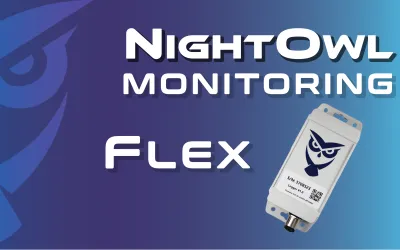
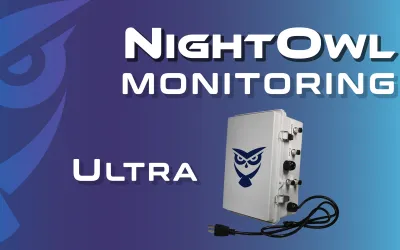
NightOwl Monitoring combines field-ready monitoring hardware with a cloud-based platform that gives irrigation contractors, farms, and water system operators real-time visibility into critical equipment.
The platform can monitor:
- Pump runtime
- Pump start count
- Water pressure
- Flow rate
- Water levels
- Motor current
- Tank levels
- Alarm history
Instead of waiting for complete equipment failure, operators receive early warnings when performance begins to change.
This proactive approach helps reduce unnecessary downtime, improve maintenance planning, and keep irrigation systems operating more reliably throughout the growing season.
Rather than replacing traditional maintenance, remote monitoring enhances it by providing continuous operational insight between site visits.
Conclusion
Recognizing the signs of water pump failure early can prevent costly repairs, reduce irrigation downtime, and extend the life of your pumping equipment. Warning signs such as low water pressure, reduced flow, overheating, excessive vibration, frequent pump cycling, and unusual noise often appear well before complete failure.
While routine inspections remain essential, modern monitoring technology makes it possible to detect many of these changes automatically through continuous tracking of pump performance, pressure, flow, runtime, vibration, and motor current.
By combining preventive maintenance with real-time monitoring, irrigation contractors and farm operators can identify problems earlier, improve system reliability, and keep water flowing when it’s needed most.
Frequently Asked Questions
What are the first signs of water pump failure?
The earliest signs of water pump failure often include reduced water pressure, lower flow rates, unusual noise, excessive vibration, longer pump runtime, and frequent pump cycling.
What causes an irrigation water pump to fail?
Common causes include worn bearings, damaged impellers, seal failure, cavitation, dry running, voltage fluctuations, clogged intake lines, sediment buildup, corrosion, and poor maintenance.
Can a water pump fail without warning?
Complete failures are uncommon without warning. Most pumps develop gradual performance changes before failing, making early detection possible through routine inspections or continuous monitoring.
How do I know if my irrigation pump is losing efficiency?
Signs include declining water pressure, reduced flow, increasing motor current, higher energy consumption, longer irrigation cycles, and extended pump runtime.
How often should an irrigation pump be inspected?
Most irrigation systems should be visually inspected throughout the season and receive a comprehensive inspection at least once a year. Pumps operating in demanding agricultural environments may require more frequent maintenance.
Can remote monitoring detect pump problems early?
Yes. A remote pump monitoring system can identify changes in pressure, flow, vibration, motor current, runtime, and water levels, allowing operators to schedule maintenance before equipment failure occurs.
What is the best way to prevent irrigation pump failure?
The most effective approach combines preventive maintenance, routine inspections, pressure and flow testing, electrical testing, and continuous monitoring to detect developing problems early.
Why is pump runtime important?
Pump runtime helps identify changes in system performance. Unexpected increases often indicate leaks, pressure loss, reduced pump efficiency, or developing mechanical problems that require inspection.