 ChatGPT
 Perplexity
 Claude
 Gemini
 Grok
Grok
Water is one of the most valuable resources in agriculture, yet many irrigation systems still rely on manual inspections and reactive maintenance. Without real-time visibility into pumps, water levels, pressure, and flow, small issues can quickly become expensive problems that affect crop health, water efficiency, and operating costs.
The Importance of Water Monitoring System technology has grown significantly as farms, irrigation contractors, and commercial operations look for smarter ways to manage water resources. Modern monitoring solutions combine sensors, telemetry, and cloud-based dashboards to provide real-time insight into irrigation performance, helping operators detect problems early, reduce water waste, and make more informed decisions.
In this guide, we’ll explore why water monitoring has become an essential part of modern irrigation management and how connected monitoring systems are helping improve efficiency, reliability, and long-term sustainability.
What Is a Water Monitoring System?
A water monitoring system is a combination of sensors, communication devices, and software that continuously tracks the performance of a water system in real time.
Depending on the application, these systems can monitor:
- Water levels
- Pump activity
- Water pressure
- Flow rates
- Tank levels
- Water usage
- Equipment runtime
- System alarms
- Water quality
Instead of relying on manual inspections, operators receive live information through a cloud-based water monitoring dashboard, mobile devices, or desktop applications.
Modern systems often use IoT-based irrigation monitoring technology, allowing irrigation managers to monitor multiple sites from virtually anywhere.
The Importance of Water Monitoring System in Modern Irrigation
Today’s irrigation systems are far more complex than they were just a decade ago.
Growing operations often include:
- Multiple wells
- Storage tanks
- Booster pumps
- Drip irrigation networks
- Center pivot systems
- Remote fields
- Automated valves
Managing all of this infrastructure manually becomes increasingly difficult.
This is where the Importance of Water Monitoring System becomes clear.
A modern irrigation water management system provides continuous visibility into every critical component of the irrigation network, allowing operators to identify developing issues before they affect crops or interrupt irrigation schedules.
Instead of reacting after equipment fails, contractors and farm managers can make proactive decisions based on real-time system data.
Why Traditional Irrigation Monitoring Falls Short
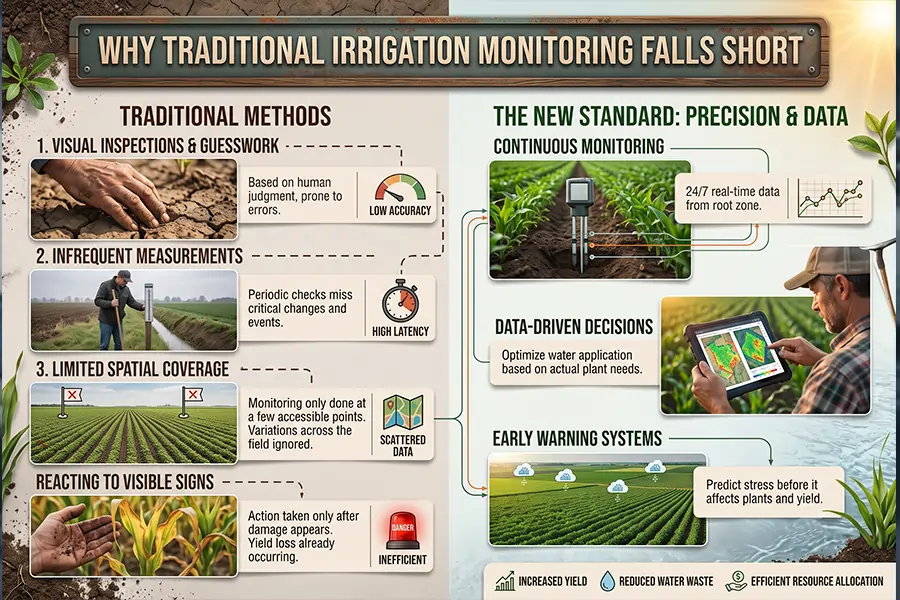
Many irrigation operations still depend on periodic site visits to check pumps, tanks, and water pressure.
Although this approach has worked for years, it creates several challenges.
Problems may remain unnoticed for hours or even days until someone physically visits the site.
During that time, issues such as:
- pressure loss,
- pump failures,
- overflowing tanks,
- leaking pipes,
- or low water levels
can continue affecting irrigation performance.
Traditional monitoring also requires:
- more labor,
- more travel,
- slower response times,
- and greater operational costs.
As irrigation systems expand across larger properties, manual monitoring becomes increasingly inefficient.
1. Improves Water Efficiency
Water conservation has become one of agriculture’s biggest priorities.
Every gallon wasted through leaks, overwatering, or inefficient scheduling increases operating costs while placing unnecessary demand on water resources.
A smart irrigation monitoring system helps operators understand exactly how water is being used throughout the irrigation network.
With continuous water usage monitoring for farms, operators can identify:
- excessive consumption,
- abnormal flow patterns,
- inefficient watering schedules,
- and unnecessary water loss.
Instead of relying on estimates, irrigation decisions become data-driven.
Better Irrigation Scheduling
Modern monitoring systems work alongside precision irrigation technology to improve watering schedules.
By combining sensor data with irrigation scheduling, operators can:
- reduce overwatering,
- improve crop consistency,
- and maximize available water resources.
This supports long-term water waste reduction in agriculture while improving irrigation performance.
2. Detects Pump Problems Before They Become Failures
Pumps are among the most critical components of any irrigation system.
A single pump failure can interrupt irrigation across multiple fields, delay watering schedules, and increase repair costs.
A remote pump monitoring system continuously monitors:
- pump operation,
- runtime,
- pressure,
- flow,
- and alarm conditions.
Instead of discovering failures after crops begin showing signs of water stress, operators receive early notifications when system performance changes.
Pump Runtime Tracking
Continuous pump run time tracking for irrigation helps identify:
- excessive runtime,
- abnormal cycling,
- equipment wear,
- and declining performance.
These insights allow contractors to schedule maintenance before a complete breakdown occurs.
3. Provides Real-Time Water Level Visibility
Storage tanks play an essential role in many irrigation systems.
Running a tank dry or allowing it to overflow can disrupt operations and waste valuable resources.
Modern systems use wireless water tank level monitoring and water level sensor for storage tanks technology to provide continuous visibility into tank conditions.
Operators can view water levels remotely through a dashboard or mobile application without visiting the site.
Remote Field Monitoring
Large farms often have tanks spread across multiple locations.
With remote field water monitoring, operators can manage several irrigation sites from one centralized platform.
This reduces travel while improving operational efficiency.
4. Monitors Water Pressure Continuously
Water pressure directly affects irrigation performance.
Low pressure can reduce sprinkler coverage, while excessive pressure may damage equipment and increase water waste.
Continuous water pressure monitoring for irrigation helps maintain consistent system performance by identifying:
- pressure drops,
- blocked lines,
- leaks,
- clogged filters,
- or failing pumps.
Rather than discovering pressure issues after crop performance declines, operators receive alerts as conditions change.
This supports more reliable irrigation while reducing unexpected equipment failures.
Real-Time Alerts Improve Response Time
Modern systems can send automated water alerts for irrigation whenever abnormal conditions occur.
Examples include:
- pressure loss,
- low tank levels,
- pump shutdowns,
- high runtime,
- or unexpected flow changes.
These water system alert notifications allow irrigation contractors to respond quickly before minor issues become costly repairs.
5. Supports Smart Irrigation Monitoring and Automation
Modern irrigation systems are becoming increasingly intelligent. Instead of relying solely on timers or manual operation, many farms now combine sensors, telemetry, and automated controls to optimize water delivery based on real-time conditions.
A smart irrigation monitoring solution continuously collects operational data from across the irrigation network, allowing operators to make informed decisions rather than relying on assumptions.
When integrated with an automated irrigation control system, monitoring data can help optimize:
- Irrigation schedules
- Pump operation
- Tank management
- Water distribution
- Pressure regulation
- System efficiency
Rather than reacting to problems after they occur, operators can manage irrigation proactively.
Automation Improves Operational Efficiency
Automation reduces the need for constant field visits while helping irrigation managers maintain consistent performance across multiple sites.
By combining monitoring with automated controls, irrigation systems become more responsive to changing field conditions, reducing labor while improving overall efficiency.
6. Enables Data-Driven Irrigation Management
One of the greatest advantages of connected monitoring systems is access to historical operational data.
Instead of making irrigation decisions based solely on experience, operators can use real performance metrics to improve efficiency.
A data-driven irrigation management strategy allows contractors and farm managers to analyze:
- Water consumption trends
- Pump performance
- Pressure history
- Tank usage
- Runtime patterns
- Seasonal demand
Historical reporting helps identify recurring issues and improve future irrigation planning.
As irrigation operations continue expanding, data becomes one of the most valuable management tools available.
7. Supports Precision Irrigation Technology
Every crop has different watering requirements.
Applying the same irrigation schedule across an entire property often results in overwatering some areas while underwatering others.
This is where precision irrigation technology provides significant value.
By combining sensor data with irrigation scheduling, operators can better match water application to actual field conditions.
Benefits include:
- Improved crop consistency
- Better water utilization
- Reduced runoff
- Healthier root systems
- Lower operating costs
Rather than applying water uniformly, precision irrigation allows resources to be used where they are needed most.
8. Helps Detect Water Waste Before It Becomes Expensive
Water loss isn’t always obvious.
Small leaks, malfunctioning valves, pressure problems, or damaged pipelines can waste thousands of gallons before anyone notices.
Continuous water flow monitoring for irrigation helps identify unusual usage patterns that may indicate:
- Underground leaks
- Broken pipes
- Stuck valves
- Excessive flow
- Equipment malfunctions
Early detection allows irrigation contractors to correct problems before they increase water bills or affect crop performance.
This proactive approach supports long-term farm water conservation monitoring while reducing unnecessary operating expenses.
9. Improves Groundwater and Water Resource Management
Groundwater remains the primary water source for many agricultural operations.
Understanding how groundwater resources are being used is becoming increasingly important as regulations evolve and water availability changes.
Modern groundwater monitoring for irrigation helps operators better understand:
- Water withdrawal patterns
- Well performance
- Seasonal fluctuations
- Pump demand
- Long-term water availability
When combined with remote monitoring, groundwater management becomes more efficient and supports sustainable irrigation practices.
10. Simplifies Irrigation Management Across Multiple Sites
Many irrigation contractors manage more than one property.
Likewise, farms often operate multiple wells, storage tanks, booster stations, and irrigation zones spread across large geographic areas.
Without centralized monitoring, managing these assets requires constant travel and manual inspections.
A wireless irrigation monitoring system allows operators to monitor multiple locations through a single dashboard.
Instead of driving from site to site, irrigation managers can quickly review:
- Tank levels
- Pump status
- Pressure conditions
- Water usage
- Active alarms
This significantly improves operational efficiency while reducing travel time.
Mobile Access Improves Response Times
Today’s irrigation professionals rarely spend the entire day in an office.
Modern monitoring platforms include mobile app water system monitoring, allowing users to check system status directly from smartphones or tablets.
Whether visiting customers, working in the field, or traveling between job sites, operators maintain visibility into their irrigation systems.
Immediate access to system information also improves response times when alerts occur.
Water Monitoring for Different Irrigation Applications
The importance of monitoring extends well beyond traditional farming operations.
Modern irrigation monitoring solutions support a wide range of industries.
Agricultural Farms
Large farms rely on continuous water availability throughout the growing season.
Monitoring systems help improve:
- Irrigation efficiency
- Pump reliability
- Water conservation
- Crop consistency
Drip Irrigation Systems
Drip irrigation water management requires accurate pressure and flow control to ensure uniform water delivery.
Remote monitoring helps identify pressure changes and equipment issues before they affect crop performance.
Commercial Landscaping
Landscape contractors managing commercial properties can remotely monitor irrigation systems instead of performing routine manual inspections.
This improves service quality while reducing labor costs.
Golf Courses and Sports Fields
Maintaining healthy turf requires consistent irrigation.
Real-time monitoring allows maintenance teams to identify issues before irrigation problems become visible on the course or field.
Vineyards and Orchards
Permanent crops depend on reliable irrigation throughout the growing season.
Monitoring systems help operators maintain consistent water delivery while reducing unnecessary water usage.
Preventive Maintenance Starts With Better Visibility
Most irrigation failures do not happen without warning.
Equipment often shows early indicators such as:
- Increasing pump runtime
- Pressure fluctuations
- Flow irregularities
- Declining tank levels
- Electrical abnormalities
Without monitoring, these warning signs may remain unnoticed until equipment fails completely.
This is why preventive maintenance for irrigation pumps increasingly depends on continuous system monitoring.
Instead of repairing equipment after failure, contractors can schedule maintenance based on actual operating conditions.
This reduces downtime while extending equipment life.
IoT Sensors Are Changing Irrigation Management
The growth of IoT sensors for water management has transformed how irrigation systems are monitored.
Today’s sensors provide continuous information about:
- Water levels
- Pressure
- Flow
- Pump operation
- Tank status
- Environmental conditions
Combined with cloud software, these sensors create a complete view of irrigation system performance.
Rather than relying on periodic inspections, irrigation professionals receive continuous operational intelligence that supports better decision-making.
Choosing the Right Water Monitoring System for Your Irrigation Setup
Not every monitoring solution offers the same level of visibility or functionality. The right system should do more than display water levels it should provide the operational data needed to improve irrigation performance and reduce downtime.
When evaluating an irrigation water management system, consider these key features:
- Real-time water level monitoring
- Remote pump monitoring capabilities
- Wireless sensor connectivity
- Water pressure and flow monitoring
- Automated alerts and notifications
- Cloud-based dashboard access
- Mobile app compatibility
- Historical reporting and analytics
- Scalability for multiple irrigation sites
- Easy integration with existing irrigation infrastructure
Choosing a solution that supports both current operations and future growth helps protect your investment while making irrigation management more efficient.
How NightOwl Monitoring Supports Modern Irrigation Operations
Modern irrigation systems generate valuable operational data—but that data is only useful if it’s accessible and actionable.
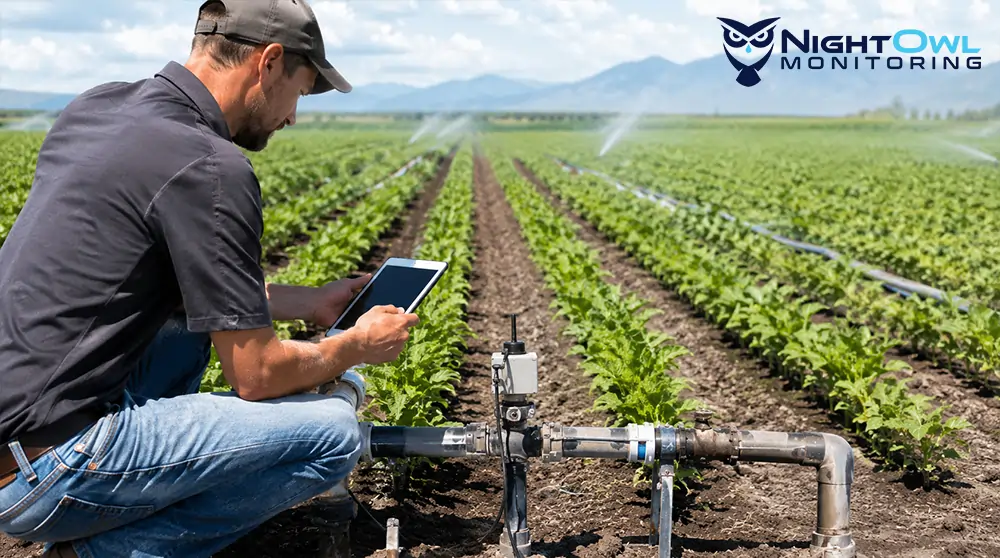
NightOwl Monitoring combines rugged field hardware with a cloud-based SaaS dashboard to give irrigation contractors, farm owners, and water system managers real-time visibility into critical infrastructure.
Using remote monitoring technology, users can monitor:
- Water storage tank levels
- Well water systems
- Pump activity
- Water pressure
- Equipment runtime
- Water flow
- System alarms
Instead of relying on manual inspections, operators can view system performance remotely through a centralized dashboard and receive automated alerts when abnormal conditions occur.
This proactive approach helps reduce unnecessary site visits, improve response times, and support more efficient irrigation management across one or multiple locations.
For irrigation contractors, it also creates an opportunity to provide ongoing monitoring services as part of their long-term customer support strategy, delivering additional value beyond installation projects.
Why Water Monitoring Will Continue to Shape the Future of Irrigation
Agriculture is becoming increasingly data-driven.
Rising water costs, changing environmental conditions, labor shortages, and growing sustainability expectations are encouraging irrigation professionals to adopt smarter technologies.
Future irrigation systems will rely more heavily on:
- Remote monitoring
- IoT-connected sensors
- Cloud-based analytics
- Automated alerts
- Predictive maintenance
- Precision irrigation management
The farms and irrigation businesses that embrace these technologies today will be better equipped to improve water efficiency, reduce operating costs, and maintain reliable irrigation systems in the years ahead.
Conclusion
The Importance of Water Monitoring System technology extends far beyond simply tracking water levels. It gives irrigation contractors and farm operators the visibility they need to improve water efficiency, reduce equipment downtime, detect problems early, and make smarter operational decisions.
Whether managing a single irrigation system or multiple remote sites, modern monitoring solutions help replace reactive maintenance with proactive management. By combining real-time data, automated alerts, and cloud-based monitoring, businesses can conserve water, protect valuable equipment, and operate more efficiently.
Solutions like those from NightOwl Monitoring make it easier to bring these capabilities into everyday irrigation operations, helping contractors and property owners build more reliable, data-driven water management systems.
Frequently Asked Questions
Why is a water monitoring system important for irrigation?
A water monitoring system provides real-time visibility into water levels, pressure, flow, and pump performance, helping operators improve irrigation efficiency, reduce water waste, and detect problems before they become costly failures.
What is smart irrigation monitoring?
Smart irrigation monitoring uses sensors, telemetry, and cloud software to monitor irrigation systems remotely, allowing operators to make data-driven decisions and respond quickly to changing conditions.
How does an irrigation water management system improve efficiency?
An irrigation water management system continuously tracks water usage, pump activity, and pressure conditions, enabling better scheduling, reduced water consumption, and improved system performance.
Can remote monitoring reduce irrigation maintenance costs?
Yes. Remote monitoring identifies developing issues such as pressure loss, excessive pump runtime, and abnormal flow before they lead to expensive equipment failures or emergency repairs.
What types of irrigation systems benefit from water monitoring?
Water monitoring systems can be used with drip irrigation, sprinkler systems, center pivots, agricultural wells, storage tanks, commercial landscapes, golf courses, vineyards, orchards, and municipal irrigation systems.
Can I monitor multiple irrigation sites from one dashboard?
Yes. Most modern cloud-based water monitoring dashboards allow users to manage multiple wells, pumps, tanks, and irrigation systems from a single web or mobile interface.
What features should I look for in a water monitoring system?
Look for features such as real-time water level monitoring, remote pump monitoring, water pressure tracking, wireless sensor connectivity, automated alerts, mobile access, historical reporting, and scalable cloud-based management.
Is a water monitoring system only useful for large farms?
No. Water monitoring systems provide value for operations of all sizes, including small farms, commercial landscaping companies, golf courses, orchards, vineyards, irrigation contractors, and large agricultural operations.