 ChatGPT
 Perplexity
 Claude
 Gemini
 Grok
Grok
Texas Data Center Sustainable Water Management
Texas data centers consume massive volumes of water for cooling infrastructure, creating a pressing need for strict operational oversight. Achieving sustainable water management requires transitioning from manual tracking to real-time, automated data collection. Recent industry shifts highlight that meeting stringent environmental standards is no longer just a regulatory hurdle but a core financial imperative. Facilities must deploy advanced remote monitoring solutions to measure their cooling water footprint accurately and eliminate costly inefficiencies.
During a recent presentation for the City of San Marcos, industry experts highlighted consumer willingness to pay for premium resource protection. Visualizing the financial stakes is simple when you imagine hands counting dollar bills wasted through undetected leaks or equipment failure. Decision-makers demand precise metrics, relying on futuristic computer screens and live smartphone applications to display critical pump data. This level of visibility transforms abstract utility costs into actionable financial strategies.
The True Cost of Operations
Water is a critical asset, and its mismanagement directly erodes profitability. Data centers must account for every gallon used in their cooling towers to prevent utility budget overruns. Failing to track consumption accurately leads to massive financial blind spots and potential regulatory penalties. Operators can mitigate these risks by integrating smart systems that deliver real-time data directly to their mobile devices.
To explore the broader implications of facility consumption, reviewing protecting groundwater from data center water usage provides vital context. Advanced sensor technology enables facility managers to track exact draw rates and identify anomalies before they become critical failures. This proactive approach ensures operations remain fully compliant with state and local usage restrictions.
Remote Monitoring Systems in Action
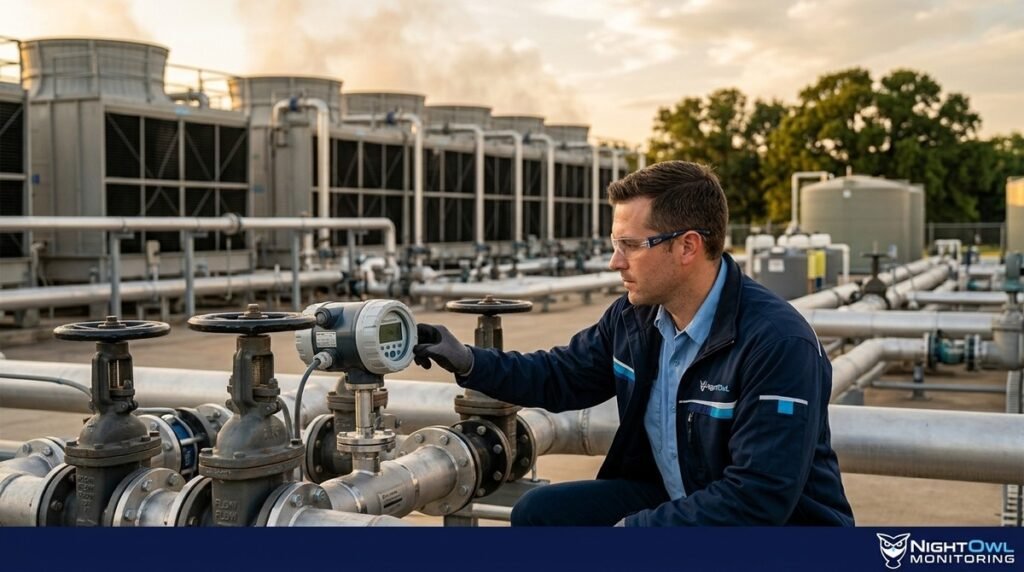
The San Marcos event also showcased specific water monitoring capabilities essential for high-demand facilities. Presenters demonstrated how personnel can review critical data on a tablet, tracking metrics like Total Dissolved Solids (TDS) and chlorine levels remotely. These metrics are vital for preventing scale buildup in data center cooling systems, which can severely degrade equipment efficiency. Maintaining precise chemical balances reduces the need for frequent maintenance and extends the lifespan of expensive infrastructure.
Beyond chemical composition, environmental factors play a massive role in system reliability. Remote systems continuously track temperature and humidity, alerting operators to emergencies such as a pump house heater failure before freezing conditions damage pipes. You can learn more about catching signs of well pump failure remotely to safeguard your facility. By anticipating these mechanical issues, data centers avoid catastrophic downtime and costly emergency repairs.
Live Analytics and System Performance
Delivering exactly what clients need means providing continuous, reliable access to operational health metrics. Modern applications display a live water system monitoring dashboard, allowing technicians to scroll through real-time metrics such as pump power, voltage, and amp draw. Monitoring these electrical characteristics provides an immediate diagnostic picture of the motor and pump condition. If a pump begins to draw excess amperage, it signals impending wear or blockages that require immediate attention.
Utilizing this electrical data transforms reactive maintenance into a predictable, scheduled process. Facilities utilizing these smart networks experience a drastic reduction in unpredicted mechanical failures and associated operational waste. For a deeper dive into performance tracking, monitoring pump efficiency is crucial for smart well management. This analytical approach guarantees that cooling systems operate at peak performance while consuming the minimum required resources.
Achieving Sustainability Standards
Texas data centers operate under intense scrutiny regarding their environmental impact and resource consumption. Implementing a comprehensive strategy ensures compliance with strict sustainability frameworks while bolstering the bottom line. Accurate reporting generated from remote telemetry proves to stakeholders that the facility is actively reducing its environmental footprint. These verifiable metrics are essential for passing audits and securing future operational permits.
Connecting facility operations to broader regional conservation efforts strengthens corporate responsibility profiles. Organizations that lead in efficiency often align their practices with authoritative guidelines to validate their results. Reviewing resources from NGWA on groundwater management offers a clear framework for industry best practices. By adopting these rigorous standards, technology facilities prove that high-performance computing can coexist with responsible environmental stewardship.
Securing Future Infrastructure
The ultimate solution for modern data infrastructure relies entirely on robust, real-time remote monitoring. Upgrading to intelligent sensor networks eliminates the guesswork associated with traditional manual inspections and legacy equipment. Decision-makers who prioritize these technological investments secure a definitive competitive advantage through lowered operating costs and enhanced reliability. The integration of advanced telemetry is no longer optional for facilities aiming to scale operations safely.
Taking decisive action to protect critical water resources requires partnering with proven technological leaders. Upgrading your infrastructure ensures your operations remain resilient against both mechanical failure and regulatory shifts. You can review the full suite of control solutions by visiting NightOwl Monitoring to secure your operations. Implementing these intelligent networks today guarantees long-term profitability and strict adherence to sustainability mandates.