 ChatGPT
 Perplexity
 Claude
 Gemini
 Grok
Grok
Groundwater Monitoring Equipment: 3 Mistakes Districts Make
The monitoring well is rarely what goes wrong. A properly built well can serve a district for decades, which leaves data collection as the place where most problems start.
“Districts don’t call us about monitoring wells unless they want to drill a new one. They install and maintain their own monitoring equipment and don’t need drillers help with that. And typically, there is nothing about the well that goes bad. The casing and cement will last for over 50 years in most cases.”
Jim Blair, co-founder and CEO of NightOwl Monitoring and owner of BeeCave Drilling
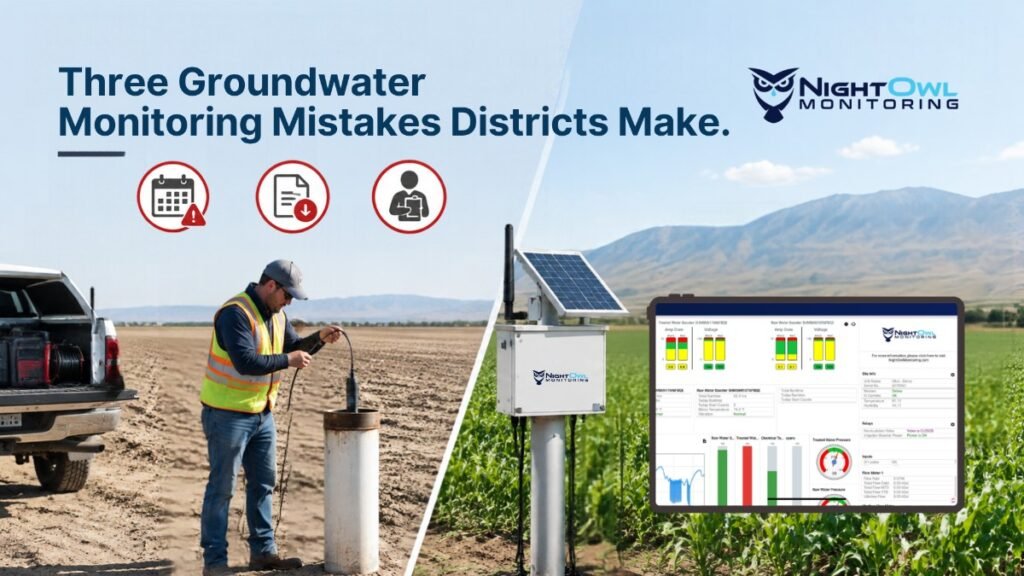
NightOwl asked Jim where district monitoring networks fall short. His answers point to three mistakes, and none of them involve the well. All three are about how water level data is measured, retrieved, and handled once the well is in the ground.
- Mistake 1: Measuring too rarely
- What it cost: Daily readings can skew the numbers
- The Fix: Hourly water level measurement
- Mistake 2: Retrieving too rarely
- What it cost: Changes can sit unseen for weeks
- The Fix: Hourly upload through the cloud
- Mistake 3: Collecting data by hand
- What it cost: Monthly drives to every site
- The Fix: Data delivered without a site visit
Measuring Water Levels Too Rarely
“Daily readings instead of hourly readings. This (daily) can skew the numbers quite a bit.”
Jim Blair
A district looking at one reading per day sees a single moment. Water levels in a monitoring well move through the day as nearby wells cycle on and off and the aquifer responds. Hourly measurements capture that movement, so staff can see how a well behaves across a full day instead of guessing from one point.
NightOwl measures water level every hour and sends each reading through the cloud. Hourly records give district staff more to work with when they review trends, compare wells across the network, or answer questions from their board.
Retrieving Data Only Once a Month
“Data is currently gathered each month. Aquifer conditions can change rapidly and most districts could benefit from daily or hourly updates.”
Jim Blair
This is a different problem from the first one. A logger can record often and still leave staff looking at old data, because nobody sees the readings until someone downloads them. With monthly retrieval, a stretch of heavy irrigation pumping or a recharge event after a big rain can be weeks old before it shows up in district records.
When readings upload every hour, the gap between what happens in the aquifer and what the district sees shrinks from weeks to about an hour. Staff can look at a well the same day conditions shift, not at the next scheduled download.
Spending Staff Time Collecting Data
“District staff spend too much time gathering the data. Our system sends the data directly to them through the cloud rather than the staff having to go to the site monthly and download the data.”
Jim Blair
Monthly downloads mean driving to every monitoring site in the district, often across long distances, then making the same trip again the next month. Those hours come out of the same staff time needed to review the data, maintain the network, and work with well owners and permit holders.
When readings arrive through the cloud, the drive is no longer part of data collection. Site visits still happen for maintenance and inspection, but they happen because a well needs attention, not because the calendar says it is time to download.
The Texas Water Development Board already works this way on its own recorder network. Its recorder wells send readings by satellite telemetry, and some groundwater conservation districts use cellular networks for the same job (Texas Water Development Board, Water Data for Texas).
Frequently Asked Questions
How often should a monitoring well be read?
Hourly. Jim Blair’s view is that daily readings can skew the numbers quite a bit. Hourly measurement shows how a well behaves across a full day, not just at one moment.
How often should a district retrieve monitoring well data?
More often than once a month. Aquifer conditions can change quickly, and monthly downloads mean a change can sit unseen for weeks. NightOwl uploads water level readings every hour through the cloud.
Does cloud delivery replace site visits?
It replaces the trips made only to download data. Wells still need visits for maintenance and inspection, but those visits happen because a well needs attention.
Is the monitoring well itself usually the problem?
Rarely. Jim Blair notes that the casing and cement will last over 50 years in most cases. Problems usually come from how the data is measured, retrieved, and collected.
Matching the Data to the Well
A well that lasts 50 years deserves a data method that keeps up with it. The fixes for all three mistakes come down to the same thing: readings taken every hour, delivered without a site visit, and in front of staff while conditions are still current. That is the approach behind well monitoring systems created by water well professionals, built by people who have spent their careers around the wells districts depend on.
To see what hourly water level data looks like in practice, view the live sample data on the NightOwl demo dashboard.