 ChatGPT
 Perplexity
 Claude
 Gemini
 Grok
The Guide to Water Well Power Monitoring
Table of Contents
- Why Water Well Power Monitoring Matters
- Tracking Amperage to Measure Motor Effort
- Understanding Voltage and Electrical Pressure
- Frequency and Variable Frequency Drives
- Monitoring Run Times and Start Counts
- Frequently Asked Questions
My name is Jim Blair, and I have spent thirty years in the well-drilling industry. During this time, customer expectations have shifted significantly as technology makes information instantly accessible. In the past, clients were understanding when repairs took a week, but modern demands require that we shift from a reactive approach to a proactive service model. Incorporating water well power monitoring is the most effective action you can take to secure your water system health.
Why Water Well Power Monitoring Matters
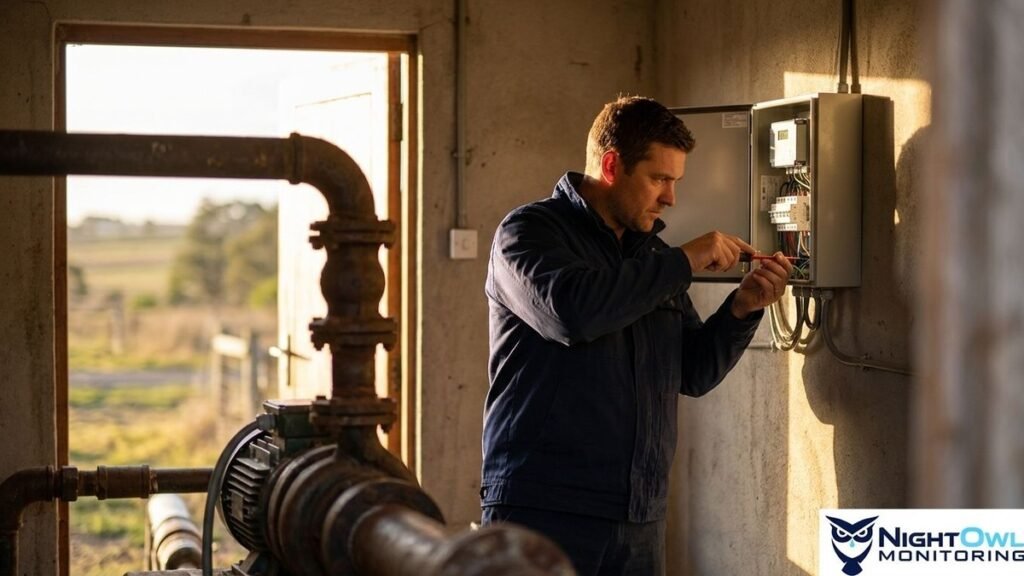
By watching the amps, volts, and frequency of a motor alongside run times and start counts, we can prevent future damage and predict failures in critical components. Water well power monitoring acts as the frontline defense for your entire pumping system. Tracking the electrical behavior of your equipment allows you to identify underlying mechanical issues before they result in a total breakdown. As I often tell my clients, monitoring your electrical data provides the highest return on investment for long-term system stability. This data allows service providers to step in early, effectively preventing hidden water system failures and securing the water supply.
Tracking Amperage to Measure Motor Effort
Amperage is the measurement of the volume of electricity that the pump consumes. It is an indication of how much effort a motor is using to turn a pump, much like monitoring your own blood pressure. If the motor uses too much effort and draws high amps, it will severely shorten its operational life. High amp draw can be caused by motor winding damage, bearing failure, or a pump operating outside of its designed limits for pressure or flow. Additional factors like low voltage starving the pump or run capacitor failure can also force the motor to work harder than necessary.
Conversely, if the motor uses too little effort and draws low amps, it indicates a different set of mechanical issues. High voltage can damage motor windings and cause the motor to draw fewer amps over time. Broken or worn impellers will fail to grab water properly, resulting in less load on the motor and a corresponding drop in amperage. A clogged suction screen, a broken pump shaft, or dangerous cavitation from restricted suction conditions will all cause the pump to draw low amperage. Tracking these fluctuations is essential to catch signs of well pump failure remotely before they lead to emergency callouts.
Understanding Voltage and Electrical Pressure
Voltage is a measurement of the electrical pressure that the pump receives from the power supply. All motors are designed to work within a specific range of voltage, and deviating from this range introduces destructive heat. If the voltage is too low, the motor will respond by pulling more amps, which leads to increased heat as the metal expands and contracts. Low voltage often stems from too much demand on the power supply, such as intermittent brownouts, or from electrical conductors that are too small for the required load. When wires restrict the flow of electricity, they heat up and increase impedance, creating a destructive cycle that can burn out the system.
High voltage presents its own set of dangers, often arriving in the form of sudden spikes from lightning strikes. A single lightning strike can easily burn up a motor, especially in submersible pumps where copper wires running into groundwater provide an easy path for the surge. High voltage can also originate from the power provider if your meter is located close to a power substation. Because power companies adjust transformer output regularly, you cannot rely on a one-time reading taken at startup. Continuous oversight is required to protect your equipment and simplify remote well monitoring for the long term.
Frequency and Variable Frequency Drives
Frequency is a measurement of how fast the electricity cycles, which directly determines the rotational speed of the motor. In North America, normal power is 60Hz, meaning it cycles up and down sixty times per second to turn a standard motor at high speeds. The water well industry has increasingly adopted Variable Frequency Drives, which adjust the frequency of the power to match the speed of the pump to current demand. These drives act like cruise control for your pump, slowing it down when the demand is less than its total capacity.
When a Variable Frequency Drive slows the pump, the motor will naturally draw less amperage from the electrical supply. It is crucial to realize that low amperage in this context might simply be caused by the drive slowing the pump to meet demand rather than a mechanical failure. Without this critical piece of information, a technician might interpret a low amperage situation as a problem when it is actually the result of normal operation. The rules regarding amperage and voltage variances should only be applied when the pump is turning at full speed. Correctly interpreting this data is a major step forward for the NGWA community and groundwater professionals everywhere.
Monitoring Run Times and Start Counts
Run time is a calculation we make by watching the amp draw of the pump over a specific period. The longer a motor runs, the more wear and tear accumulates on the entire system. Extended run times are the number one indicator for leak detection, signaling that you either have increased demand or reduced capacity. Leaks can go unnoticed for long periods of time, and capturing this data early is critical for monitoring pump efficiency. We must inform clients before problems cause system shutdowns, and tracking run time is the perfect tool for proactive communication.
The start count tracks how many times your pump cycles on and off throughout the day. Increased starts can occasionally be caused by higher demand, but they are more frequently the result of decreased tank capacity. Most pressurized water systems utilize air as a pressure buffer, and if the air pressure is too low, the pump will rapidly cycle. Startups are the hardest part of any pump motor operation and should be limited to as few as possible. If a bladder bursts in a pressure tank, the owner might not realize the pump has been rapid cycling for months until the motor finally burns up.
Frequently Asked Questions
How does monitoring voltage protect a water system?
Monitoring voltage ensures that the motor is receiving the correct electrical pressure for safe operation. If the voltage drops too low, the motor pulls more amps and overheats, while high voltage spikes can instantly burn out the windings. Continuous tracking prevents these hidden electrical issues from causing catastrophic damage to your equipment.
What causes a pump motor to draw low amperage?
Low amperage indicates the motor is using very little effort to turn the pump. This can be caused by a broken pump shaft, worn impellers, a clogged suction screen, or severe cavitation inside the system. It can also occur normally if a Variable Frequency Drive has slowed the pump to meet reduced demand.
Why is tracking pump start counts important?
Startups place the most physical and electrical stress on a pump motor and its internal components. An unusually high start count usually indicates a loss of pressure buffer in the system, such as a burst bladder in a pressure tank. Catching this rapid cycling early saves the motor from premature failure and extends the life of the well.