 ChatGPT
 Perplexity
 Claude
 Gemini
 Grok
Grok
A pitless adapter is a fitting installed on the well casing below ground that connects the pump drop pipe to the horizontal water line running to your house. It creates a watertight, frost-proof connection that prevents freezing, protects water quality, and makes pump service easier. The adapter sits below the frost line, typically 3 to 6 feet deep depending on your climate.
This guide explains what a pitless adapter is, how it works, the types available, installation basics, and answers to the questions well owners ask most.
Key Takeaways:
- Pitless adapters connect the drop pipe to the service line below ground
- They sit below the frost line to prevent freezing
- Two main types: slide style and spool style
- Installation requires professional experience
- A pitless adapter tool makes pump service easier
What Is a Pitless Adapter

A pitless adapter is a special connection fitted to the well casing below ground that allows water to move from the submersible pump inside the well into the underground service line that carries water to your house, barn or yard hydrant. The adapter creates a watertight and frost proof path for the water line so it does not freeze in cold weather.
This setup replaces the older well pit design by placing the water connection safely underground without the need for an open pit or vault. The pitless adapter for well systems improves water quality, extends the life of components, and makes maintenance easier.
How Pitless Adapters Work
A pitless adapter connects the vertical drop pipe that comes from the well pump to the horizontal water delivery pipe. The adapter sits below the frost line in the ground. This prevents freezing and protects the connection point from temperature changes.
When the pump runs, water travels up the drop pipe and through the pitless adapter into the service line. Because the connection is buried and sealed, water stays clean and protected from surface water, dirt, and pests. To see how the full system delivers water to your house, read our guide on how does well water work in a house.
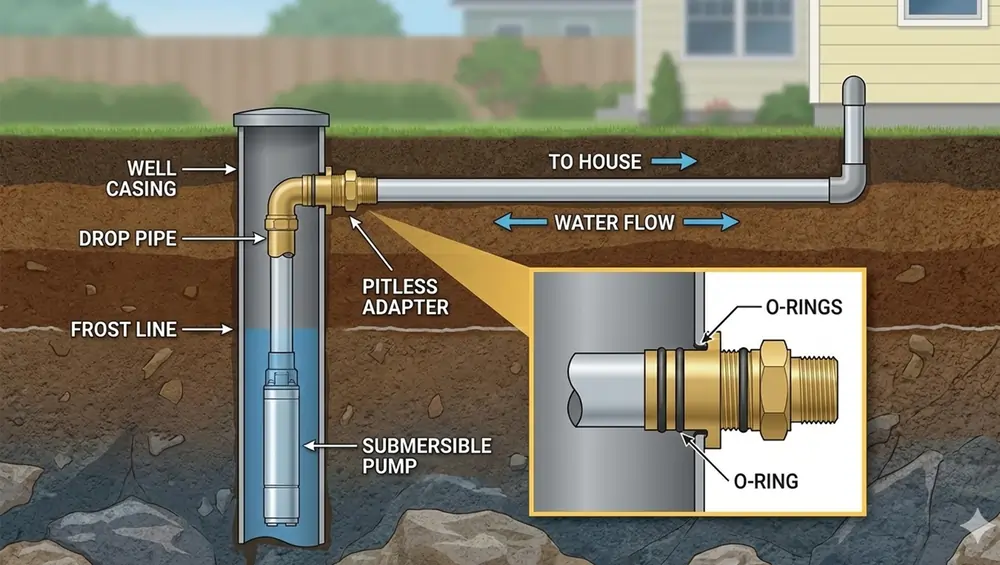
Pitless Adapter Diagram: How the Connection Works
A simple way to picture the pitless adapter is to follow the water path.
Water flow from well to house:
Well pump → Drop pipe → Pitless adapter (below frost line) → Horizontal service line → Pressure tank → House plumbing
Key parts shown in a pitless adapter diagram:
- Well casing
- Pitless adapter body (inside the casing)
- Drop pipe connection
- Service line connection
- O-ring seal
- Frost line level
The adapter sits below the frost line so the water line never freezes. The connection is sealed with O-rings or compression fittings, which is why a properly installed adapter stays watertight for years.
Looking for images? We include detailed diagrams in our well system guides. Contact us for a visual reference specific to your well configuration.
Benefits of Using a Pitless Adapter for Water Wells
Using a pitless well adapter provides several advantages:
Reduced risk of freezing: The water line stays below the frost line so freezing water and burst pipes are not a problem.
Safer and cleaner connection: There is no open casing or pit that can fill with water or debris.
Easier access for maintenance: Pulling the well pump is possible with a pitless adapter tool, making service simpler and faster.
Improved system durability: Well pitless adapters designed for modern wells last many years and reduce wear on the well pump and casing.
A sealed connection also protects water quality. If you want to confirm your water stays safe, our guide to how to test well water covers what to check and how often.
Types of Pitless Well Adapters
Well owners may encounter different styles of pitless adapters. The main types include:
Slide Type Pitless Adapter
This is the most common style. It slides through a hole drilled in the well casing and uses compression seals to make a watertight connection with the water line. This type allows easy removal of the pump for maintenance.
Spool Style Pitless Adapter
This adapter is installed between the well casing and a discharge housing. It provides a clear-way access inside the well casing, making it easier to pull piping and tools inside the well without obstruction. Many well professionals prefer spool style for certain well configurations.
Both types serve the same basic purpose of moving water from the well to the service line, but they differ in installation method and internal clearance.
How Deep Does the Pitless Adapter Go?
The pitless adapter for well systems should be installed below the frost line. The frost line depth depends on your location and climate conditions. Placing the adapter below this depth ensures water lines remain unfrozen year round.
Installing the pitless adapter too high can expose the line to cold temperatures and risk freezing or system failure.
Typical frost line depths:
| Region | Frost Line Depth |
|---|---|
| Northern states | 4 to 6 feet |
| Mid-Atlantic | 2 to 3 feet |
| Southern states | 1 to 2 feet |
| Coastal areas | 1 to 2 feet |
Installing a Pitless Adapter
Proper installation of a pitless adapter requires experience with well systems. The process involves cutting the well casing at the correct depth, installing the adapter components, sealing the connection, and hooking the underground water line to the adapter.
Installation steps:
- Excavate around the well casing to the required depth
- Cut the casing at the correct point
- Install the pitless adapter body
- Seal the connection with O-rings or compression fittings
- Connect the drop pipe from the pump
- Connect the horizontal service line
- Pressure test the connection
- Backfill and compact the soil
Because the adapter must be installed below the frost level and requires precise sealing, this is typically done by a well professional or licensed installer. Correct installation ensures a long lasting, secure connection that will protect your well system for years.
Pitless Adapter Tool: What It Is and How It Works
A pitless adapter tool is a specialized wrench or pull tool that allows a technician to connect or disconnect the pump assembly from the pitless adapter without digging. This is one of the biggest advantages of the pitless design.
Types of Pitless Adapter Tools
| Tool Type | Use |
|---|---|
| T-handle pull tool | Standard pump removal |
| Wrench-style tool | Loosening adapter connections |
| Cable release tool | Specific adapter brands |
| Custom tool | Manufacturer-specific |
Why the Tool Matters
Without a pitless adapter tool, pulling a well pump would require excavation around the casing. With the right tool, a technician can:
- Pull the pump in hours instead of days
- Avoid disturbing the underground connection
- Service the system without digging
- Reduce labor cost significantly
If you are a well owner, ask your service technician whether they carry the correct pitless adapter tool for your system.
Pitless Adapter Replacement Cost
Pitless adapters themselves are not expensive. The cost is mostly labor.
| Item | Typical Cost |
|---|---|
| Pitless adapter (part) | $50 to $200 |
| O-ring or seal kit | $10 to $40 |
| Labor (if adapter only) | $200 to $600 |
| Full pump pull + adapter replacement | $500 to $1,500 |
What Drives the Cost Higher
- Well depth
- Access difficulty
- Adapter type (spool vs slide)
- Whether the drop pipe needs replacement
- Regional labor rates
If you are replacing the pitless adapter because of a leak, the O-ring is often the only part that needs replacement. That is a much cheaper fix than a full adapter replacement. If your service call turns into a pump replacement, see our full breakdown of well pump replacement cost before you approve the work.
Frequently Asked Questions
What is a pitless adapter in water wells?
A pitless adapter is a fitting that joins the pump drop pipe to your water line below ground and below the frost line, providing a watertight, frost-proof connection.
How do you pull a well pump with a pitless adapter?
A pitless adapter tool or pull pipe is attached to the drop pipe. The adapter design allows the pipe and pump to be raised up and out of the well for replacement or service without digging.
How far down is the pitless adapter?
The pitless adapter is located below the frost line. The exact depth varies by climate, soil conditions, and local requirements for frost protection. In northern states, that is usually 4 to 6 feet. In southern states, 1 to 2 feet.
How long does a pitless adapter last?
When properly installed and maintained, a pitless adapter can function well for many years. The life expectancy depends on soil conditions, material quality, and fitting durability.
What is the average cost to replace a well pump?
Replacing a well pump includes the cost of the new pump, adapters, installation labor, and any additional well components. The total cost varies widely based on pump size, well depth, and regional labor rates. Most projects run $700 to $2,800.
How deep to install a pitless adapter?
The adapter must be positioned below the frost line. This depth varies based on local climate and ground temperature patterns, but in many regions it is several feet below the surface.
What are pitless adapters made of?
Pitless adapters are available in bronze, stainless steel, and brass options. These materials resist corrosion, maintain a watertight seal, and support long-term performance.
What does a pitless adapter look like?
A pitless adapter is a metal fitting with a vertical connection for the drop pipe and a horizontal connection for the service line. It has O-rings or compression seals and sits inside the well casing below ground.
Nightowl Monitoring Recommendation
At Nightowl Monitoring, we recommend modern pitless adapters as a safe, reliable solution for any well system where frost or contamination risk is a concern. A properly installed well pitless adapter protects your water supply and helps ensure consistent water delivery. If you are planning a new well or upgrading an existing system, evaluate the best pitless adapter option for your setup.