 ChatGPT
 Perplexity
 Claude
 Gemini
 Grok
Grok
Finding experienced technicians has become one of the biggest challenges facing today’s water well drilling companies. As skilled workers retire and demand for water infrastructure continues to grow, many contractors are being asked to manage more customers with fewer field technicians. The result is longer response times, more emergency service calls, increased travel costs, and added pressure on already stretched teams.
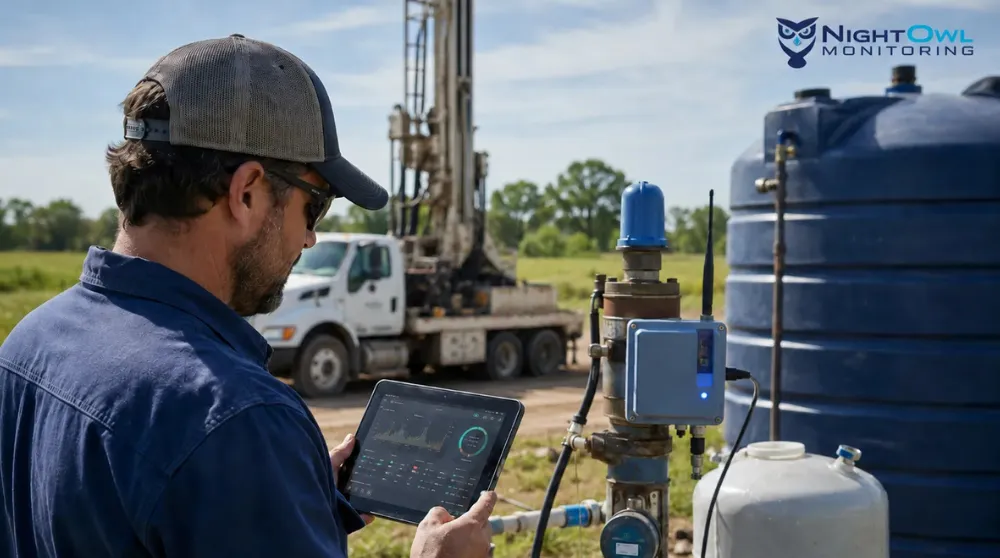
This is where IoT well monitoring is changing the way modern drilling companies operate. Rather than relying solely on routine site visits and reactive maintenance, contractors can remotely monitor pumps, tanks, water levels, and system performance in real time. This allows technicians to focus on the jobs that truly require onsite service while reducing unnecessary truck rolls and improving overall operational efficiency.
In this guide, you’ll learn how IoT well monitoring helps drilling companies overcome workforce shortages, improve technician productivity, and build a more scalable service business without simply hiring more employees.
The Labor Shortage Is Changing the Water Well Industry
The well drilling labor shortage is affecting contractors across the United States.
Many companies are experiencing:
- Difficulty hiring qualified technicians
- Longer project timelines
- Increased labor costs
- More emergency service requests
- Larger service territories
- Growing customer expectations
At the same time, experienced drillers and pump technicians are reaching retirement age, creating an ongoing workforce shortage that many businesses struggle to replace.
Simply adding more employees is becoming increasingly difficult.
Instead, successful drilling companies are looking for ways to increase the productivity of the teams they already have.
Technology is becoming one of the most effective solutions.
More Work, Fewer Technicians
Many drilling companies today are servicing:
- Residential wells
- Agricultural irrigation systems
- Municipal water infrastructure
- Commercial properties
- Storage tanks
- Booster stations
Each additional customer increases the number of assets that require inspection, maintenance, and troubleshooting.
Without better visibility, technicians often spend valuable time driving to sites simply to determine whether a problem actually exists.
This reactive service model limits growth while placing additional strain on field teams.
Why Traditional Service Models No Longer Scale
For decades, water well contractors relied on scheduled inspections and customer phone calls to identify system problems.
The process typically looked like this:
- Customer notices a problem.
- Customer calls the contractor.
- Technician is dispatched.
- System is diagnosed onsite.
- Repairs begin.
Although this approach still works, it becomes increasingly inefficient as service areas grow and labor becomes harder to find.
Every unnecessary trip consumes:
- Labor hours
- Fuel
- Vehicle maintenance
- Scheduling capacity
Even worse, technicians often arrive without knowing the actual cause of the problem.
In many cases, the issue could have been identified or even prevented before the truck ever left the shop.
What Is IoT Well Monitoring?
IoT well monitoring uses connected sensors, telemetry devices, and cloud-based software to continuously monitor water system performance in real time.
Instead of relying on periodic manual inspections, operators receive continuous visibility into critical infrastructure, including:
- Pump activity
- Water levels
- Tank levels
- Pressure
- Flow
- Equipment runtime
- Alarm conditions
The information is transmitted through secure communication networks to a centralized dashboard, allowing contractors to monitor multiple customer sites from virtually anywhere.
Unlike traditional inspections, digital well monitoring provides continuous operational intelligence instead of occasional snapshots.
More Than Just Remote Monitoring
Many people think remote well monitoring simply means checking whether a pump is running.
Modern systems provide far greater visibility.
A complete water well monitoring system can help contractors:
- Detect pressure abnormalities
- Monitor pump runtime
- Receive pump failure alerts
- Track tank levels
- Identify abnormal flow conditions
- Monitor groundwater levels
- Review historical performance trends
This information allows technicians to make better service decisions before equipment failures occur.
How IoT Well Monitoring Increases Technician Productivity
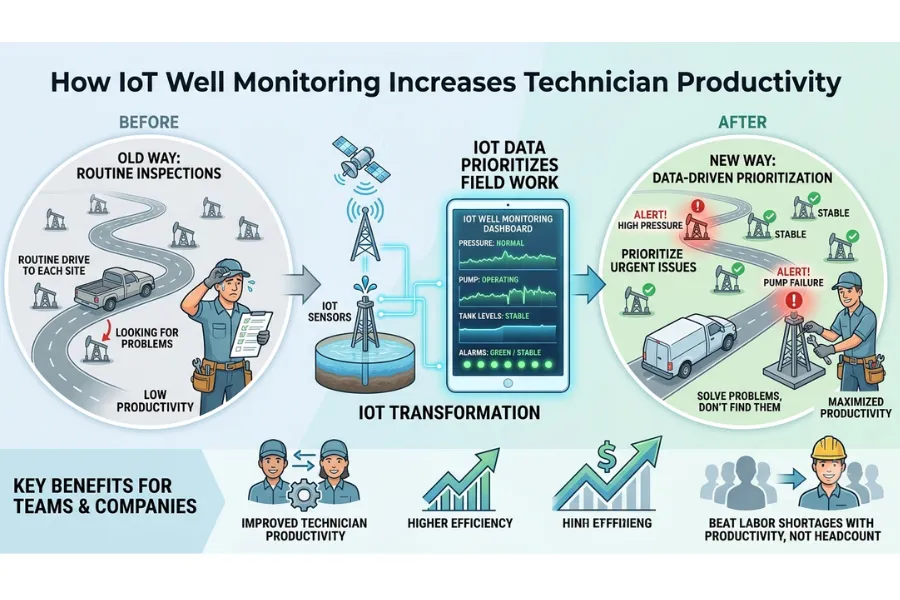
One of the biggest benefits of IoT well monitoring is that it helps technicians spend more time solving problems and less time looking for them.
Instead of driving to every site for routine inspections, field teams can prioritize locations where monitoring data indicates attention is actually needed.
This improves technician productivity by allowing crews to focus on high-value work rather than repetitive inspections.
For companies experiencing a drilling labor shortage, improving productivity often has a greater impact than simply increasing headcount.
Better Job Prioritization
Real-time monitoring gives dispatchers better information before assigning technicians.
Rather than responding to every customer concern with an immediate truck roll, service teams can review monitoring data to determine:
- Whether pressure has changed
- If the pump is operating normally
- Whether tank levels are stable
- If alarms have been triggered
This allows companies to prioritize the most urgent issues while scheduling non-critical maintenance more efficiently.
Reduce Technician Site Visits Without Reducing Service Quality
Routine site visits remain important.
However, not every inspection requires a technician to drive several hours simply to verify that everything is operating normally.
One of the biggest operational advantages of smart well monitoring is the ability to reduce technician site visits while maintaining or even improving customer service.
Instead of performing unnecessary inspections, technicians can use monitoring data to determine when onsite service is actually required.
Customers still receive reliable support, but contractors spend less time on preventive trips that reveal no actionable issues.
Improve Scheduling Efficiency
Fewer unnecessary inspections allow companies to:
- Schedule preventive maintenance more effectively
- Respond faster to priority service calls
- Reduce overtime
- Improve technician utilization
- Increase daily productivity
This becomes especially valuable as service territories expand and workforce shortages continue.
Fewer Truck Rolls Mean Lower Operating Costs
Every service vehicle dispatched represents a business expense.
Truck rolls involve:
- Fuel
- Vehicle maintenance
- Technician wages
- Insurance
- Travel time
- Opportunity cost
When multiple unnecessary trips occur each week, operating expenses increase quickly.
Using remote asset monitoring, contractors can often determine whether a site requires immediate attention before dispatching a technician.
This helps reduce truck rolls while allowing available crews to focus on work that generates greater value for both the customer and the business.
Predictive Maintenance Helps Prevent Costly Failures
One of the biggest advantages of IoT well monitoring is the ability to move from reactive repairs to predictive maintenance.
Traditionally, many contractors only discover equipment problems after a customer reports low water pressure, a pump failure, or a complete water outage. By that point, emergency service calls, overtime labor, and unexpected downtime are often unavoidable.
With continuous monitoring, contractors gain early visibility into changes in system performance that may indicate developing problems.
Examples include:
- Increasing pump runtime
- Pressure fluctuations
- Declining water levels
- Abnormal flow rates
- Frequent pump cycling
- Unexpected power interruptions
Identifying these warning signs early allows contractors to schedule maintenance before failures become emergencies, improving both customer satisfaction and equipment reliability.
Early Alerts Support Better Decision-Making
Modern real-time monitoring platforms continuously evaluate system performance and notify operators when operating conditions move outside normal ranges.
Rather than waiting for customers to call, contractors receive information that helps them determine:
- Which systems need immediate attention
- Which issues can be scheduled
- Which equipment continues operating normally
This improves service planning while reducing unnecessary emergency dispatches.
Remote Pump Monitoring Improves Service Efficiency
Water pumps are among the hardest-working components of any well system.
Unexpected pump failures often result in:
- Emergency service calls
- Customer downtime
- Crop irrigation interruptions
- Higher repair costs
- Lost technician productivity
A remote pump monitoring solution allows contractors to continuously monitor pump performance without visiting the site.
Instead of relying on customer descriptions over the phone, technicians can review operating data before leaving the office.
This allows service teams to arrive better prepared with the right equipment, replacement parts, and diagnostic information.
Pump Failure Alerts Reduce Emergency Calls
Automated pump failure alerts help contractors respond more quickly when abnormal operating conditions occur.
Alerts may be triggered by:
- Pump shutdowns
- Extended runtime
- Pressure loss
- Low tank levels
- Electrical interruptions
- Communication failures
Instead of discovering failures hours later, contractors receive immediate notifications that support faster response times and improved customer service.
Water Well Telemetry Creates Better Operational Visibility
Many drilling companies manage dozens or even hundreds of customer systems spread across large geographic areas.
Without centralized visibility, understanding the health of every installation becomes nearly impossible.
This is where water well telemetry becomes an operational advantage.
Telemetry systems collect field data from remote locations and transmit it to a centralized platform where operators can review system status in real time.
Rather than managing each site independently, contractors gain a complete operational view of their customer base.
This visibility helps improve planning while supporting smarter maintenance decisions.
Field Service Automation Reduces Administrative Work
Labor shortages affect more than technicians in the field.
Office staff also spend valuable time:
- Answering service calls
- Scheduling emergency visits
- Following up with customers
- Coordinating dispatches
- Managing technician workloads
Field service automation helps streamline many of these processes.
Instead of waiting for customers to report issues, monitoring systems automatically generate alerts that help service teams prioritize work.
This allows dispatchers to make scheduling decisions based on actual system conditions rather than assumptions.
Automation doesn’t replace technicians it helps them work more efficiently.
Better Operational Efficiency Without Hiring More Staff
Hiring experienced drilling technicians continues to be one of the industry’s biggest challenges.
For many businesses, increasing headcount simply isn’t realistic.
Improving operational efficiency often delivers better long-term results.
When contractors reduce unnecessary inspections, improve dispatch decisions, and identify failures earlier, existing teams can support more customers without sacrificing service quality.
This allows businesses to grow without increasing labor costs at the same pace.
For companies facing a drilling labor shortage, operational efficiency becomes one of the most valuable competitive advantages.
Build a More Scalable Service Business
Many drilling companies expand by purchasing additional equipment or hiring more technicians.
While both approaches can support growth, they also increase operating expenses.
Technology offers another path.
By implementing IoT well monitoring, contractors can increase the number of customer systems they manage without proportionally increasing field visits.
Remote visibility allows technicians to spend more time performing productive work instead of routine inspections and unnecessary travel.
As a result, businesses become more scalable while maintaining high service standards.
Create New Monthly Revenue Opportunities
Improving efficiency is only part of the value that IoT well monitoring provides.
It also creates opportunities for recurring revenue.
Instead of ending the customer relationship after installation, contractors can continue providing value through ongoing monitoring services.
Examples include:
- Monthly monitoring subscriptions
- Remote system oversight
- Preventive maintenance programs
- Equipment health reporting
- Performance monitoring services
These offerings generate recurring income while strengthening long-term customer relationships.
Customers receive continuous visibility into their water systems, and contractors build more predictable revenue that isn’t tied solely to new drilling projects.
Why NightOwl Monitoring Fits the Modern Drilling Business
Successful drilling companies don’t just install wells they help customers keep those systems operating reliably for years.
NightOwl Monitoring supports that goal by combining field-ready monitoring hardware with a cloud-based operational platform designed for remote water infrastructure management.
Using NightOwl, contractors can remotely monitor:
- Well pumps
- Water storage tanks
- Pressure systems
- Water levels
- Pump runtime
- Flow conditions
- System alarms
Rather than functioning as just another monitoring device, the platform gives contractors a centralized operational view of their installed systems.
This enables smarter dispatching, earlier problem detection, and improved customer support while helping businesses expand recurring service offerings without dramatically increasing labor requirements.
Instead of replacing technicians, NightOwl helps every technician become more productive.
The Future of Well Service Is Connected
The water well industry is evolving rapidly. Contractors are expected to maintain larger service territories, respond faster to customer issues, and deliver more value with smaller teams. At the same time, customers increasingly expect proactive service instead of reactive repairs.
As connected infrastructure becomes more common, IoT well monitoring will play a larger role in everyday operations. Rather than replacing technicians, it equips them with better information, helping them work more efficiently and make smarter service decisions. Contractors who adopt connected monitoring today will be better prepared to manage growing customer demands while maintaining high service standards.
Conclusion
The drilling labor shortage isn’t a temporary challenge it’s changing how successful drilling companies operate. Businesses that rely solely on reactive service and routine site visits will continue facing higher labor costs, longer response times, and increasing operational pressure.
IoT well monitoring provides a practical way to overcome these challenges by improving technician productivity, reducing unnecessary truck rolls, enabling predictive maintenance, and supporting smarter field operations. Platforms like NightOwl Monitoring help contractors monitor water systems remotely, allowing teams to focus on the work that delivers the greatest value.
As the industry continues to evolve, companies that combine skilled field expertise with connected monitoring technology will be better positioned to grow, improve customer service, and build a more resilient business.
Frequently Asked Questions
What is IoT well monitoring?
IoT well monitoring uses connected sensors, telemetry devices, and cloud-based software to monitor pumps, water levels, pressure, flow, and system performance in real time. This allows contractors to manage water systems remotely and detect issues before they become major failures.
How does IoT well monitoring help drilling companies?
It helps drilling companies improve technician productivity, reduce unnecessary site visits, receive early equipment alerts, optimize scheduling, and manage more customer systems without significantly increasing labor.
Can remote well monitoring reduce truck rolls?
Yes. By providing real-time system data and diagnostics, remote well monitoring helps contractors determine whether a site requires immediate service before dispatching a technician, reducing unnecessary truck rolls and travel costs.
What is predictive maintenance in water well systems?
Predictive maintenance uses monitoring data to identify early warning signs of equipment problems, allowing contractors to perform maintenance before failures lead to emergency repairs or water outages.
Is IoT well monitoring only useful for large drilling companies?
No. Small and mid-sized drilling companies can also benefit by improving service efficiency, reducing travel, and expanding recurring monitoring services without adding more technicians.
What equipment can be monitored remotely?
A modern water well monitoring system can monitor pumps, storage tanks, pressure systems, flow rates, water levels, electrical status, equipment runtime, and alarm conditions through a centralized dashboard.
How does remote monitoring create recurring revenue?
Drilling companies can offer managed monitoring services, monthly maintenance subscriptions, and ongoing system oversight. This creates predictable recurring revenue while strengthening long-term customer relationships.
Why are more drilling companies adopting smart well monitoring?
Growing workforce shortages, larger service territories, and increasing customer expectations are encouraging contractors to use smart well monitoring to improve operational efficiency, reduce downtime, and provide more proactive service.