 ChatGPT
 Perplexity
 Claude
 Gemini
 Grok
Grok
A drilled residential water well typically lasts 30 to 50 years, and many well maintained wells remain productive for 60 years or longer. The well pump usually lasts 8 to 15 years, and the pressure tank typically lasts 7 to 15 years. The well structure and the equipment inside it age at very different rates.
A properly constructed water well is one of the most durable pieces of infrastructure on a residential property. But when homeowners ask how long does a water well last, the real answer depends on separating the well itself from the equipment inside it. These two things age at very different rates, and mixing them up leads to unnecessary panic when something fails.
The short answer: a drilled residential water well typically lasts 30 to 50 years, and many well-maintained wells remain productive for 60 years or longer. The well pump, however, usually lasts only 8 to 15 years. The pressure tank typically lasts 7 to 15 years. Understanding which part is which, and what each one needs, is the foundation of smart well ownership.
Key Takeaways
- Most water wells can last 30 to 50 years with proper maintenance.
- Well lifespan depends on construction, water quality, usage, and maintenance.
- The pump often needs replacement before the well itself.
- Pressure tanks, pipes, and electrical components can also wear out.
- Low water pressure, cloudy water, and pump issues can signal problems.
- Regular inspections help identify well system issues early.
- Proper maintenance can extend the life of a residential well system.
- Monitoring well performance helps prevent unexpected failures.
How Long Does a Water Well Last? A Component-by-Component Breakdown
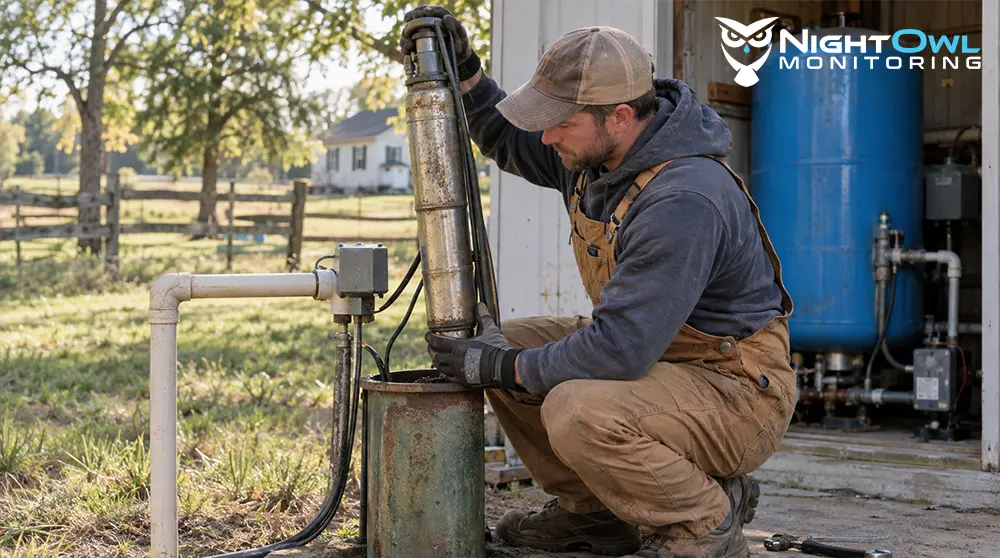
Most people talk about “the well” as a single object, but it is better understood as a system made of components with separate lifespans. Here is what each part typically delivers before replacement is needed:
| Component | Typical Lifespan |
|---|---|
| Well borehole and casing | 30 to 50+ years |
| Submersible well pump | 8 to 15 years |
| Jet pump (above-ground) | 5 to 10 years |
| Pressure tank | 7 to 15 years |
| Well screen | 20 to 30 years |
| PVC well casing | 25 to 50+ years |
| Steel well casing | 20 to 40 years (less in corrosive conditions) |
| Pitless adapter | 20 to 30 years |
The most important takeaway from this table: plan on replacing your pump at least once during the life of your well, and possibly a second time if the well lasts longer than 25 to 30 years. The borehole itself is not what typically ends a well’s useful life. Pumps, pressure tanks, and screens are the wearing parts.
What Determines How Long a Well Lasts?
Well lifespan is not fixed. The same geographic region can have wells that last 25 years and wells that are still productive at 70 years. The difference almost always comes down to the same set of factors.
Construction Quality
A well drilled by experienced contractors using proper materials and techniques lasts dramatically longer than one that was rushed or built to minimum code. Key construction factors include:
- Casing material and wall thickness: PVC casing is resistant to corrosion and long-lived in most conditions. Steel casing is strong but can corrode in acidic or highly mineralized water environments. High-quality, schedule-40 or heavier PVC consistently outperforms thinner alternatives.
- Grout sealing around the casing: A proper grout seal prevents surface water and contaminants from traveling along the outside of the casing and entering the aquifer. Poor sealing is one of the most common causes of premature well failure and contamination.
- Well depth and aquifer selection: A well that reaches a stable, deep aquifer is far less vulnerable to drought conditions, seasonal fluctuation, and surface contamination than a shallow well drawing from a near-surface water table.
Geology and Groundwater Chemistry
Wells drilled into hard, stable rock formations, such as granite or basalt, tend to last the longest because the borehole itself is structurally supported by the surrounding geology. Wells in sandy or clay-heavy soils face more risk of casing stress and sediment intrusion over time.
Water chemistry matters too. Acidic water (low pH) accelerates corrosion of steel casings, pump components, and fittings. High iron or manganese content causes buildup in screens and pump impellers. Knowing your water chemistry through regular testing helps you select the right materials and catch problems before they shorten equipment life.
Pump Sizing and Duty Cycle
The single largest factor in well pump lifespan is how often the pump cycles on and off. Every start is a stress event on the motor and electrical components. Frequent cycling increases wear on the pump motor and electrical components. An undersized or failing pressure tank can cause excessive cycling, while properly sizing and maintaining the pressure tank can reduce unnecessary starts and help extend pump life.
Proper pump sizing for the well’s yield and the household’s demand is one of the most important decisions made at installation. An undersized pump works harder than necessary. An oversized pump can deplete the well faster than it recovers, stirring sediment and creating water quality problems.
Water Quality
Sand, silt, and fine grit are the most destructive forces on a submersible pump. These abrasives work like sandpaper on the pump impellers and bearings with every gallon that passes through. Wells with high sediment content require more frequent pump maintenance and sometimes earlier replacement.
High iron and manganese levels cause buildup in the pump and well screen over time. Bacterial contamination can coat well screens and reduce flow. Water quality monitoring and treatment upstream of the pump are both well-life extenders.
Maintenance Consistency
Wells that receive annual inspections and water testing outlast wells that receive no attention until something breaks. The reason is straightforward: most well failures develop gradually and show early warning signs before they become full system failures. Annual inspections catch those signs. Without inspections, the problem is only discovered when the well stops producing water or the pump fails completely, often at a worse time and higher cost.
How Long Does a Well Pump Last?
The well pump lifespan gets more attention than any other component because pumps are the most frequent replacement in a well system’s life. Here is what the data from industry professionals shows:
- Submersible well pumps: 8 to 15 years on average, with properly maintained systems in clean water sometimes reaching 20 years.
- Jet pumps (shallow well, above-ground): 5 to 10 years on average due to higher motor wear from pulling rather than pushing water.
- Premium submersible pumps in ideal conditions: Occasionally 20 to 25 years, though this is not the norm and should not be planned around.
Can a well pump last 30 years? Technically possible, but rare. Most well owners who report 25 to 30-year pump life had favorable water quality, a properly sized pressure tank, and moderate daily water demand. Planning for pump replacement after 12 to 15 years is the realistic approach. Setting aside $1,500 to $3,500 for that replacement, depending on depth and location, prevents the financial surprise when it happens.
What shortens pump life most significantly:
- Excessive cycling caused by an undersized or failing pressure tank
- High sand or sediment content in the water
- Acidic water chemistry corroding motor components
- Running the pump against a reduced water level (drawdown beyond the pump intake)
- Electrical issues, including voltage fluctuations or wiring problems
How Long Does a Well Pressure Tank Last?
The pressure tank is the component most homeowners overlook until it fails. A pressure tank typically lasts 7 to 15 years, with many sources citing 10 years as a common average. The internal bladder is the weak point: when it fails, the tank loses its air cushion, and the pump starts rapid short-cycling to maintain pressure. This rapid cycling significantly shortens the remaining pump life.
Signs a pressure tank is failing:
- Water pressure fluctuates noticeably when running a tap or shower
- The pump runs very briefly and then stops, repeatedly
- You hear the pump clicking on and off frequently
- Waterlogging (tank fills completely with water, losing air cushion)
Catching pressure tank failure early protects the pump. These two components are worth inspecting together because a failing tank is often directly responsible for a dying pump. If a pump is replaced without addressing a failing pressure tank, the new pump’s lifespan will also be shortened.
How Long Does a Well Casing Last?
The well casing is the pipe that lines the borehole and protects your water from contamination. Casing lifespan depends on material and water chemistry.
| Casing Material | Typical Lifespan |
|---|---|
| PVC well casing | 25 to 50+ years |
| Steel well casing | 20 to 40 years |
| High quality schedule 40 PVC | 40 to 60+ years |
PVC casing is resistant to corrosion and long lived in most conditions. Steel casing is strong but can corrode in acidic or highly mineralized water. Proper grout sealing around the casing extends life and prevents contamination.
Signs your casing may be failing include sediment in water, changes in water quality, or visible cracks at the wellhead. A professional inspection with a downhole camera can assess casing integrity.
How Long Does a Well Last Without Being Used?
How long a well can sit unused is a question that comes up when a property is vacant, inherited, or under renovation. The borehole itself does not deteriorate quickly from inactivity. However, the equipment and water quality inside the well can degrade significantly.
Problems that develop in an unused well:
- Stagnant water grows bacteria: Without regular flow, the water inside the well casing can develop bacterial contamination. Wells unused for more than a year should not be used for drinking or cooking without inspection and testing.
- Pump corrosion: A pump that sits in water without running is susceptible to corrosion and seizing, especially in mineral-heavy water environments.
- Wellhead seal degradation: A well cap that is not maintained can crack or shift, allowing insects, debris, and surface water to enter.
- Sediment accumulation: Without flow to keep particles suspended and moving through, sediment settles and can clog the screen or reduce effective well depth.
If you are returning a dormant well to service after more than a year of inactivity, have it professionally inspected, shock-chlorinated, and water-tested before using it. Wells unused for several years may also require pump inspection and filter replacement before they deliver safe, usable water.
Signs Your Well Is Aging or Needs Attention
Knowing when a well is reaching its limits, versus when a component simply needs replacement, is critical for avoiding unnecessary drilling costs. The well structure itself rarely fails catastrophically. More often, these signs point to equipment wear or maintenance needs:
Signs the pump is nearing replacement:
- Water pressure has gradually dropped over months or years
- The pump runs longer than usual to maintain pressure
- Electricity bills have increased without a change in water use
- Air sputters from taps, especially after periods of heavy use
- Sand or fine sediment has appeared in water for the first time
Signs the pressure tank may be failing:
- Rapid pump cycling (pump clicks on and off very quickly)
- Pressure that spikes and drops instead of holding steady
- Water comes out in pulses rather than a smooth stream
Signs the well itself may need professional evaluation:
- The well is over 30 years old and has never had a professional inspection
- Repeated bacterial contamination that returns after treatment
- Water yield has declined significantly even when aquifer conditions are normal
- You can hear the pump straining or running continuously
Signs the well may be at end of life:
- Structural casing failure (confirmed by camera inspection)
- Persistent contamination that cannot be corrected at the source
- Aquifer depletion that cannot be addressed by deepening or rehabilitation
- Repeated rehabilitation attempts providing diminishing returns
A well professional with a downhole camera can assess casing integrity and help you determine whether rehabilitation (cleaning, screen replacement, pump repositioning) or a new well is the more cost-effective path.
What Makes a Well Last Longer: Practical Maintenance Steps
Extending well lifespan is primarily about giving the system early warning and consistent care. These are the highest-return maintenance actions for private well owners:
Annual Water Testing
The CDC recommends testing private well water at least once per year for bacteria (coliform), and retesting for minerals, nitrates, and other contaminants any time the water changes in taste, smell, or appearance. Testing is also the early-warning system for developing problems: a shift in iron levels, pH, or bacteria counts often signals a changing condition in the well before any visible symptom appears. See the guide on how to test well water for a complete walkthrough of what to test for and when.
Regular Professional Inspections
A well inspection every three to five years, or more frequently for wells over 20 years old, is the most reliable way to identify mechanical wear and structural changes before they cause system failure. A professional inspection typically covers the pump, pressure tank, wellhead seal, casing condition, and flow rate.
Proper Wellhead Protection
The wellhead (the visible top of the well) is the first line of defense against surface contamination. Keeping the well cap secure, maintaining vegetation-free clearance around the casing, and ensuring the ground slopes away from the well rather than toward it prevents runoff from entering the system. A compromised wellhead is one of the most common causes of bacterial contamination in otherwise healthy wells.
Protect the Pressure Tank and Pump Sizing
Ensuring the pressure tank is correctly sized for household water demand prevents the pump from short-cycling. If your household water use has increased (added family members, irrigation systems, additional fixtures), having a professional confirm the pressure tank and pump are still appropriately sized is worth doing. Undersizing is the most common cause of premature pump failure in otherwise healthy systems.
Monitor Pump Performance Over Time
Tracking subtle changes in pump performance is difficult without data. Most homeowners notice problems only when they become serious. Understanding why monitoring and measuring well water levels matters explains how continuous data collection reveals gradual changes that point inspections and maintenance at the right issues before they become failures.
Can a Well Last 100 Years?
The borehole of a well drilled into stable rock with a properly grouted steel or high-quality PVC casing can structurally survive well beyond 50 years, and some wells drilled into hard rock formations have remained productive for 80 to 100 years with periodic component replacement. One well drilling resource notes that modern drilled wells in favorable geological conditions can remain structurally sound for 50 to 100 years before major reconstruction is needed.
The practical limit on a well’s productive life is usually not the hole itself, but whether:
- The aquifer continues to hold sufficient water under normal and drought conditions
- The casing remains free of significant corrosion, cracking, or displacement
- The wellhead can be protected from contamination
- Component replacement (pump, screen, pressure tank) remains economical relative to drilling a new well
For most homeowners, a well that reaches 40 to 50 years in good condition is a system worth rehabilitating rather than replacing, provided a professional inspection confirms the structural integrity of the casing and the aquifer yield remains adequate.
When to Replace vs. Rehabilitate a Well
Not every aging well needs full replacement. Many older wells can be given years of additional productive life through rehabilitation, which typically includes:
- Well development and cleaning: Removing sediment, mineral scale, and biofilm buildup from the screen and casing using mechanical brushing, surging, or chemical treatment.
- Screen replacement: A new or cleaned well screen restores flow rate in wells where the original screen is corroded or clogged.
- Pump repositioning: Moving a pump higher in the well (if sediment has reduced effective depth) or lower (if the water table has dropped) can restore yield without drilling.
- Wellhead repairs: Replacing a cracked or missing cap, resealing around the casing, and correcting grading issues extends life and prevents contamination.
Rehabilitation makes the most sense when the casing and borehole are structurally sound and the aquifer yield is adequate. It becomes less cost-effective when the casing is significantly corroded, when persistent contamination cannot be controlled, or when multiple components are failing simultaneously.
Signs of well pump failure can sometimes masquerade as well failure. A professional evaluation that separates pump problems from structural well problems saves homeowners from drilling a new well when a pump replacement would have solved the issue. The guide on signs of well pump failure and how to catch them remotely covers what early failure patterns look like and how to distinguish them from other well issues.
How Often Should a Well Be Replaced?
The well structure itself rarely needs replacement within the first 30 to 50 years if properly constructed. Component replacement, especially the pump and pressure tank, happens regularly. Full well replacement is typically driven by:
- Casing structural failure
- Irresolvable contamination
- Aquifer depletion
- Repeated rehabilitation attempts providing diminishing returns
A well professional can assess whether rehabilitation or a new well is the more cost effective path.
How NightOwl Monitoring Can Help Protect Well System Life
A private well is a long-lived investment that requires attention over decades. The challenge is that the signals of a developing problem, whether pump stress, declining water levels, or pressure anomalies, build slowly and are invisible without data.
NightOwl Monitoring gives well owners and drilling contractors the real-time visibility that makes proactive maintenance possible:
- Pump runtime trends reveal when the pump is working harder than usual, often the first measurable sign of a developing problem.
- Water level data shows whether drawdown is deepening over time, pointing to aquifer changes or demand growth before the pump runs dry.
- Pressure pattern monitoring catches the early signs of pressure tank failure or pump wear before those issues cascade into full system failure.
- Automated alerts notify the right person when readings move outside normal ranges, so problems are addressed at the repair stage rather than the emergency replacement stage.
For well owners who want to get the most out of a 30 to 50-year well investment, continuous monitoring is the difference between reacting to failures and managing the system proactively. Explore how water level monitoring system costs compare to the cost of emergency pump replacement or unplanned well rehabilitation.
Frequently Asked Questions
How long does a water well last?
A properly constructed drilled water well typically lasts 30 to 50 years. Wells drilled into stable hard rock formations can remain structurally sound and productive for 60 years or longer with periodic component replacement. The well borehole and casing are the long-lived infrastructure. The pump, pressure tank, and screen are wearing parts that require replacement during the well’s life.
How long does a well pump last?
A submersible well pump typically lasts 8 to 15 years. A jet pump (above-ground) usually lasts 5 to 10 years. The main factors affecting pump lifespan are duty cycle frequency, water quality (sediment and mineral content), proper sizing, and voltage stability. Planning for replacement after 12 to 15 years is reasonable for most residential systems.
Can a well pump last 30 years?
Rarely, but not impossible. Some pumps in clean-water, low-demand systems with properly sized pressure tanks reach 20 to 25 years. Reaching 30 years requires nearly ideal conditions. Most homeowners should plan for at least one pump replacement in the life of a well, and should not defer addressing early warning signs in hopes of extending a pump beyond its expected lifespan.
How long can a well sit unused?
The borehole itself tolerates inactivity well. The equipment and water quality inside the well are more vulnerable. Wells unused for more than a year should be inspected and water-tested before returning to service, as stagnant water can harbor bacteria and pump components can corrode. Wells dormant for several years may require shock chlorination, pump inspection, and screen cleaning before producing safe, usable water.
How often does a well need to be replaced?
The well structure itself rarely needs replacement within the first 30 to 50 years if properly constructed. Component replacement, especially the pump and pressure tank, happens regularly during that time. Full well replacement is typically driven by casing structural failure, irresolvable contamination, or aquifer depletion, not simply age.
Does well water last forever in the aquifer?
The aquifer (the underground water source the well draws from) is not infinite. Aquifer levels can drop due to regional drought, over-pumping, or changes in land use and recharge patterns. While many aquifers have supported wells for generations, some areas have seen measurable declines due to agricultural demand and drought conditions. Annual water-level monitoring is the most reliable way to track aquifer health for a specific well.
Final Takeaway
How long does a water well last depends on separating the well structure from the equipment inside it. The borehole and casing are built for decades. The pump, pressure tank, and screen are wearing parts that need planned replacement. A well owner who understands this distinction, tests the water annually, schedules periodic inspections, and monitors the system’s behavior over time will get far more productive years from their well than one who waits for something to break.
If your well is over 20 years old and has never had a professional inspection, scheduling one is the single most impactful step you can take to protect your water supply and extend the system’s life. If you want to understand what your well is doing between inspections, NightOwl Monitoring provides the continuous data that makes proactive well management practical for any private well owner.