 ChatGPT
 Perplexity
 Claude
 Gemini
 Grok
GrokData Centers and Texas Aquifer Management
Communities across the state face mounting pressure to secure reliable water sources as population growth and climate stressors limit high-quality supplies. Many districts are increasingly forced to rely on hard-to-treat alternatives, such as brackish water, reclaimed wastewater, and salinized supplies. Amid these shifts, industrial growth acts as a significant demand driver, placing unprecedented stress on local groundwater reserves. Effective Texas aquifer management is now a fundamental requirement for anyone responsible for tracking and preserving these vital resources.
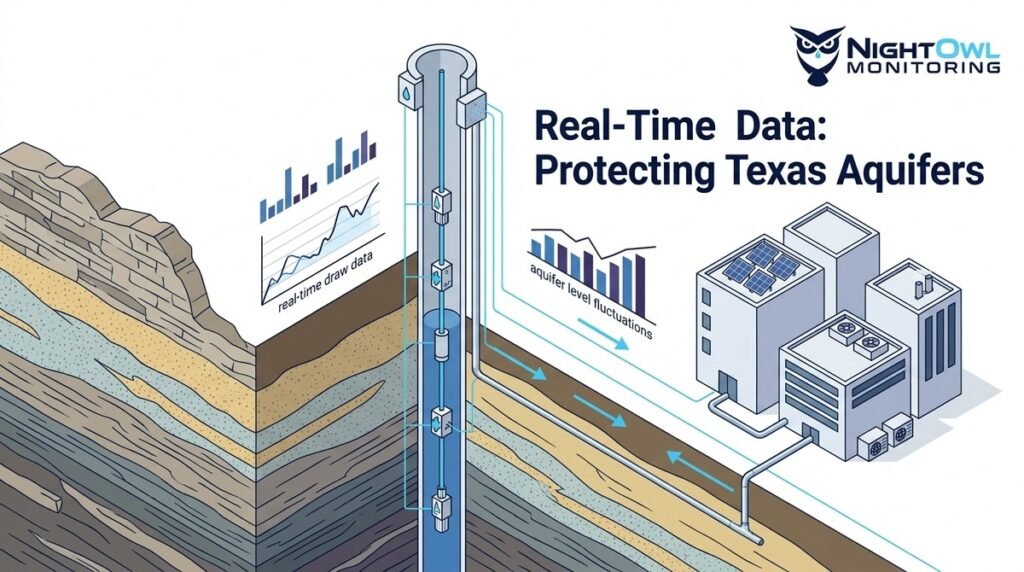
Data centers require massive volumes of cooling water to maintain safe operating temperatures for their servers. As these facilities expand across rural and suburban areas, their impact on local water tables becomes impossible to ignore. Producers, regulators, and neighboring communities all have a stake in ensuring this usage does not deplete shared groundwater reserves. Accurate, real-time draw data provides the transparency needed to balance industrial growth with community water security.
The need for precise data extends beyond basic tracking to proactive resource protection. When demand intensifies, the margin for error shrinks, making traditional manual measurements inadequate for modern challenges. Groundwater districts require continuous visibility into water levels, flow rates, and overall system health to make fast and effective decisions. This visibility forms the foundation of reliable water planning and long-term sustainability for every stakeholder involved.
The Growing Need for Texas Aquifer Management
Effective Texas aquifer management demands a clear understanding of exactly how much water is being extracted at any given moment. Without this clarity, districts risk over-pumping, which can lead to irreversible damage to geological formations and water quality degradation. Implementing smart monitoring systems allows facility managers and regulators to track usage patterns precisely and identify anomalies before they escalate into major problems. This level of oversight is particularly crucial when managing high-volume consumers.
Industry experts recognize the shift toward comprehensive monitoring as a critical evolution in groundwater oversight. Discussions at municipal events in places like San Marcos frequently highlight the necessity of remote monitoring to handle the complex needs of growing populations. Presenters continually emphasize that tracking water quality parameters, such as total dissolved solids and chlorine levels, is just as important as monitoring volume. For a deeper look into this specific challenge, reviewing approaches to monitoring data center water demands provides valuable context.
The fragmented tools of the past are no longer sufficient to meet modern regulatory and operational standards. A seasoned water pump professional with thirty years of experience recently noted that piecemeal systems fail to provide the complete picture needed for confident decision-making. Operators need unified platforms that integrate pump power, voltage, and amp draw alongside environmental factors like pump house temperatures. By understanding why water technology breaks down, operators realize that isolated, disconnected sensors simply cannot deliver actionable intelligence.
Moving Beyond Simple Alarms to Actual Data
Relying solely on basic alarms leaves operations vulnerable to sudden failures and unmanaged water loss. Modern infrastructure management requires continuous access to actual, live data so technicians can diagnose issues before dispatching teams to the field. This proactive approach saves time, reduces operational inefficiencies, and prevents emergency callouts that drain budgets. Seeing the real numbers allows operators to catch small issues early, ensuring equipment is protected and the water supply remains safe.
The scale of unmonitored infrastructure presents a massive vulnerability for local water districts. Estimates suggest there are between 100,000 and 250,000 unmonitored water wells across America, largely because older technology was neither affordable nor designed for these specific applications. Today, the landscape has changed, and accessible technology allows districts to implement comprehensive oversight across their entire networks. Exploring solutions for sustainable water use demonstrates how affordable technology is modernizing traditional water well systems.
Security and reliability are paramount when transmitting critical infrastructure data over cellular or internet connections. Implementing secure cloud telemetry ensures that telemetry data, such as water pressure and online status, remains protected from unauthorized access. The National Ground Water Association frequently discusses the importance of securing water infrastructure as digital transformation accelerates. By utilizing secure cloud connections, districts can aggregate compliance data safely and maintain total peace of mind regarding their network integrity.
Empowering Groundwater Districts and Regulators
Accurate data aggregation platforms serve as the backbone for modern compliance and regulatory reporting. When a district can easily compile and present real-time draw metrics, they build trust with neighboring communities and industrial partners. Transparency eliminates guesswork, allowing regulators to enforce limits fairly based on hard evidence rather than estimates. This capability ensures that high-demand facilities, including technology campuses, operate strictly within their allotted usage parameters.
The value of this technology extends to the longevity and efficiency of the pumping equipment itself. Continuous monitoring of motor temperatures, vibrations, and pressure prevents catastrophic failures that could disrupt service for thousands of residents. Publications like the Water Well Journal regularly feature insights on how predictive maintenance reduces downtime and extends the life of costly well infrastructure. Catching a failing pump house heater or a sudden drop in water pressure saves organizations from expensive and extensive repairs.
By adopting advanced remote monitoring, groundwater districts take charge of their water systems from anywhere. The transition from reactive emergency responses to proactive, data-driven management protects critical resources and supports environmental sustainability. NightOwl Monitoring delivers the real-time visibility and control required to navigate the challenges of modern water management. Knowing exactly what is happening across every well and storage tank allows communities to secure their future water supply with absolute confidence.