 ChatGPT
 Perplexity
 Claude
 Gemini
 Grok
Grok
To drill your own water well, first check local drilling and permit requirements, identify a suitable well location, choose the right drilling equipment, drill the borehole, install the casing and well screen, develop the well, install the pump, and test the water before use. DIY well drilling is generally more practical for shallow wells in suitable soil conditions, while deeper wells or difficult rock formations usually require professional drilling equipment and experience.
Drilling a well requires locating groundwater, selecting the proper well drilling equipment, installing a well screen, and setting up a well pump system to deliver water to the home. Before starting any DIY water well drilling project, it is important to understand the drilling process, required equipment, and legal considerations in your state.
Key Takeaways
- Check local well-drilling rules before starting.
- Choose a safe location away from contamination sources.
- Match the drilling method and equipment to the soil and well depth.
- Install proper casing and a well screen after drilling.
- Test the well yield and water quality before household use.
- Deeper or difficult wells are usually better handled by professionals.
Is It Legal to Drill Your Own Water Well?
Before attempting to drill your own well, check local and state regulations. In many parts of the United States, including Texas, homeowners are allowed to drill private wells on their property, but permits may still be required.
Local authorities may regulate:
- Well depth and location
- Distance from septic systems
- Water quality testing requirements
- Registration of private wells
Checking these rules ensures your residential water well drilling project complies with local guidelines.
How Water Wells Work
Understanding how wells work helps homeowners better plan the drilling process.
A typical water well system includes:
- Drilled well or borehole reaching underground aquifers
- Well casing to protect the well structure
- Well screen that filters sediment from groundwater
- Submersible or shallow well pump to move water to the surface
- Pressure tank to maintain water pressure in the home
A water well draws groundwater from an underground aquifer and moves it through the well casing, pump, pressure tank, and plumbing system to the property. If you want a complete breakdown of each component and how they work together, read our guide on how a water well works.
Tools and Equipment Needed for DIY Well Drilling
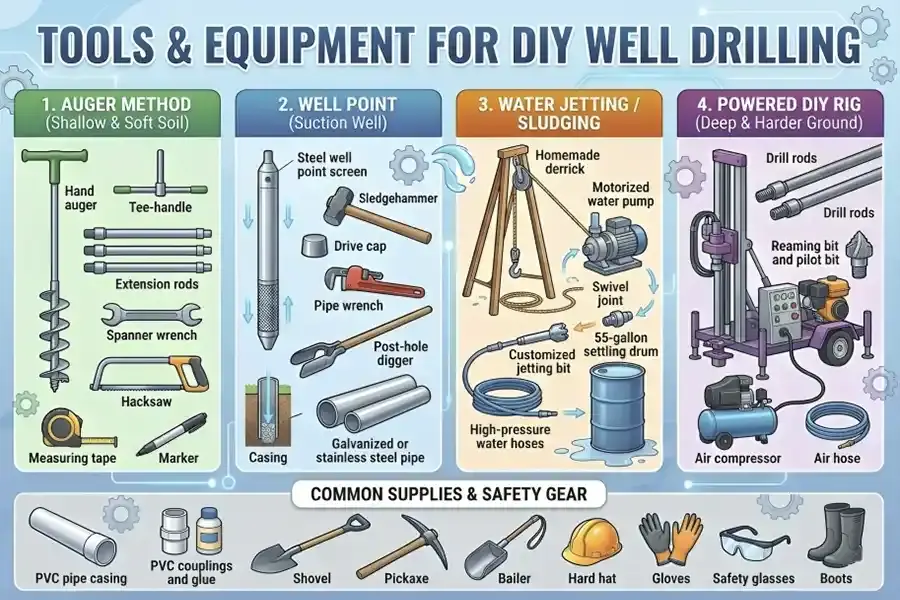
Drilling a well requires specialized water well drilling tools and equipment. The type of equipment depends on soil conditions, groundwater depth, and drilling method.
Common well drilling equipment includes:
- Water well drilling machine or portable drilling rig
- Auger drill bit for digging through soil
- Drill pipe and casing
- Well screen for sediment filtration
- Water well pump system
- DIY water well drilling kit
Some homeowners rent well drilling equipment or use portable rigs designed for small residential wells.
What Comes in a DIY Water Well Drilling Kit?
A DIY water well drilling kit typically includes basic tools for boring a shallow well and installing the casing. The exact components vary by drilling method, expected depth, and soil conditions, so a kit that works in loose soil may not be suitable for dense clay, gravel, or rock.
Common components can include:
| DIY Well Drilling Component | What It Does |
|---|---|
| Hand auger or drill bit | Cuts and removes soil while creating the borehole |
| Drill rods or extensions | Allow the drill to reach greater depths |
| Well casing | Supports the borehole and helps protect the well from collapse |
| Well screen | Allows groundwater to enter while reducing sand and sediment |
| Drive or drilling head | Helps advance the casing or drilling assembly |
| Connectors and fittings | Join drilling rods, casing, or other components during installation |
Before choosing a well drilling kit, consider the expected groundwater depth, soil and rock conditions, required casing diameter, and the limitations of the drilling equipment. Small DIY kits are generally intended for relatively shallow and accessible formations rather than deep residential wells.
Finding groundwater is only part of the process. A usable household well must also provide sufficient yield, recover after pumping, and meet local construction and water-quality requirements.
How to Find Water Before Drilling a Well
One of the most important steps in drilling a water well is locating groundwater.
Methods used to identify groundwater sources include:
- Reviewing geological maps
- Consulting local well drilling companies
- Checking nearby wells in your area
- Using groundwater surveys
- Evaluating soil and rock conditions
Understanding how to locate water for a well helps increase the chances of drilling a successful water source.
Step-by-Step Process to Drill Your Own Water Well
1. Choose the Well Location
Select a safe location away from septic systems, drainage areas, and potential contamination sources.
2. Start Drilling the Borehole
Using a water well drill or auger, begin drilling through soil and rock layers until reaching the groundwater table.
3. Install the Well Casing
A well casing pipe protects the well from collapse and prevents surface contaminants from entering the groundwater.
4. Install the Well Screen
The water well screen allows water to enter the well while blocking sand and sediment.
5. Develop the Well
Well development removes drilling debris and improves groundwater flow into the well.
6. Install the Well Pump
After drilling is complete, install a well pump system such as a shallow well pump or deep well pump depending on well depth.
7. Test the Water Supply
Finally, test the well to ensure it produces enough water and meets safety standards for household use.
How Deep Should a Water Well Be?
The depth of a drilled water well depends on local groundwater conditions. Some shallow wells reach water at 25 to 50 feet, while deeper wells may extend 100 to 400 feet or more.
There is no single correct depth for every property because groundwater levels, geology, water demand, and local conditions vary. For a deeper explanation of shallow and deep wells, regional differences, and the factors that determine drilling depth, see our guide on how deep water wells are.
Factors affecting well depth include:
- Aquifer depth
- Soil and rock formations
- Local groundwater levels
- Water demand for the property
Professional well drilling companies often conduct geological surveys to determine optimal well depth.
Shallow Well vs. Deep Well Drilling for a DIY Project
Whether you can realistically drill your own well depends heavily on how deep the groundwater is and what type of material must be drilled through. Shallow well drilling may sometimes be possible with portable or manual equipment, while deeper wells usually require larger drilling rigs and professional construction methods.
| Factor | Shallow Well | Deep Well |
|---|---|---|
| Typical drilling difficulty | Usually lower | Usually higher |
| Equipment | Small rig, auger, or suitable DIY equipment may work | Commercial drilling equipment is commonly needed |
| Ground conditions | Best suited to workable soil formations | May involve hard rock and multiple formations |
| Pump type | Often shallow-well or suitable surface pump | Commonly uses a submersible pump |
| DIY suitability | May be practical where legally permitted and conditions allow | Usually better suited to professional drilling |
| Construction complexity | Generally simpler | Casing, sealing, depth, and installation become more complex |
Do not choose a drilling depth simply because groundwater is first encountered. The completed well needs enough available water and recovery capacity for its intended use.
If local well records show that nearby residential wells are hundreds of feet deep or drilled through hard formations, a small DIY drilling rig is unlikely to be the appropriate solution.
Cost of Drilling a Water Well
Many homeowners attempt DIY well drilling to reduce costs. However, professional drilling services may still be necessary depending on well depth and soil conditions.
Typical costs include:
- $15 to $30 per foot for professional drilling
- $3,000 to $15,000 for a complete residential well system
Well drilling costs can vary significantly based on depth, geology, casing requirements, pump installation, access, and local labor rates. For a more detailed breakdown of these factors and typical expenses, read our guide to the cost of drilling a water well.
Safety Tips for DIY Water Well Drilling
If you plan to drill your own well, follow these safety guidelines:
- Use proper well drilling equipment
- Avoid drilling near septic tanks or drainage fields
- Wear protective gear during drilling
- Follow local well construction regulations
- Test groundwater for contamination
These precautions help ensure a safe and reliable water well installation.
When to Hire Professional Well Drilling Services
Although DIY water well drilling is possible, many homeowners choose professional services for deeper wells or difficult soil conditions.
Professional well drilling companies near you can:
- Conduct geological surveys
- Use advanced drilling machines
- Install well pumps and pressure systems
- Ensure the well meets safety regulations
Professional drilling also improves long-term reliability of the well water system.
Conclusion
Learning how to drill your own water well can provide homeowners with an independent water source and reduce reliance on municipal water systems. The process involves locating groundwater, drilling a borehole, installing casing and well screens, and setting up a pump system to deliver water to the home.
While DIY water well drilling may be suitable for shallow wells, deeper wells often require professional equipment and expertise. Proper planning, safety precautions, and compliance with local regulations are essential for building a reliable well system.
For homeowners seeking professional assistance with water wells, monitoring, or system inspections, NightOwl Monitoring provides expert support to help maintain safe and reliable well water systems.
FAQs
Can you drill your own water well?
Yes, in many areas homeowners can drill their own wells, but local permits and regulations may apply depending on your state or county.
How deep do you need to drill a water well?
Well depth varies depending on groundwater levels. Some wells are 25–50 feet deep, while others may reach 100–400 feet or more.
How long does it take to drill a water well?
Drilling a residential water well usually takes 1 to 3 days, depending on soil conditions and well depth.
What equipment is needed to drill a water well?
Common tools include well drilling rigs, auger drills, drill pipes, well casing, well screens, and water well pumps.
How much does it cost to drill a water well?
The cost of drilling a water well typically ranges from $3,000 to $15,000, depending on depth, location, and equipment used.
Protect and Monitor Your Well After Installation
Drilling and installing a well is only the beginning of managing a dependable water supply. Changes in groundwater levels, pump runtime, flow, or system performance can develop long after the well is placed into service.
NightOwl Monitoring provides remote visibility into well and pump performance, helping water-well professionals and system operators identify changing conditions before they develop into larger problems.
Explore NightOwl Flex to see how remote water-well monitoring can provide ongoing visibility into water levels, pump activity, flow, and other important system conditions.