 ChatGPT
 Perplexity
 Claude
 Gemini
 Grok
Grok
Rural water operators are being asked to cover more infrastructure with fewer people. A single operator may be responsible for several wells, storage tanks, booster stations, pump houses, distribution assets, and treatment points spread across many miles. The work still has to be done every day, but driving to every site just to find out whether everything is normal is becoming harder to justify.
The workforce pressure is real. Rural Community Assistance Partnership has warned that a shortage of certified operators is expected as experienced operators retire, with rural areas facing an especially difficult recruiting challenge. In Texas, the American Water Works Association has also highlighted workforce shortages tied to retirements, particularly in smaller rural systems.
At NightOwl Monitoring, we believe automation should not replace the operator. It should give the operator better information, earlier warnings, and fewer unnecessary truck rolls. That is the foundation of a practical water operator shortage rural solution: let people spend their time fixing problems, verifying critical conditions, and maintaining assets instead of repeatedly driving to healthy sites.
For utilities searching for a practical rural water utility automation operator shortage strategy, the goal is simple: create enough remote visibility that a small team can manage by exception instead of managing by mileage.
Rural Water Utility Automation Operator Shortage: Why the Staffing Model Has to Change
The rural water workforce shortage is not only a hiring problem. It is also an operating model problem.
For decades, many small systems have depended on route-based inspection. An operator drives to a well, reads a gauge, checks a tank, listens to a pump, writes down a number, and moves to the next location. That method still has value for physical inspection and verification, but it does not scale well when one person is covering a growing number of sites.
The operator certification shortage makes that limitation more serious. Certified operators cannot be created overnight, and experienced people carry years of system knowledge. When one retires, the utility may lose both labor capacity and institutional knowledge at the same time.
Automation helps by separating two different jobs:
- Work that requires a person physically on site
- Work that only requires knowing what the site is doing
A pump repair requires a person. Reading a tank level every hour does not. Resetting certain equipment may require local safety procedures, while checking whether power, pressure, flow, or pump runtime has changed can often be done remotely.
That distinction matters for rural water district staffing because every unnecessary trip consumes the same limited resource: operator time.
What Changes When Operators Can See Every Site Remotely?
Remote monitoring turns scattered infrastructure into a connected operating picture. Sensors collect information at the well, tank, pump, or utility site. Cellular telemetry moves that information to a cloud dashboard. Alerts notify the operator when a condition crosses a threshold.
NightOwl Monitoring is designed around this type of multi-site visibility. Depending on the configuration, the platform can monitor water level, tank level, flow, pressure, pump runtime, start counts, electrical conditions, vibration, temperature, and other operational conditions from connected sites.
For teams searching for remote water infrastructure management rural solutions, operations become easier to prioritize when an operator can answer three questions without starting the truck:
- Which sites are normal?
- Which site is changing?
- Which site needs attention now?
This is the practical idea behind one operator multiple sites technology. The operator does not stop managing the field. The operator gains a better way to decide where field time should go.
Manual Route-Based Management vs. Automation-Assisted Management
| Operating Task | Traditional Route-Based Approach | Automation-Assisted Approach |
|---|---|---|
| Tank level checks | Drive to each site and read locally | Review levels remotely and visit when conditions require |
| Pump status | Discover during inspection or after a complaint | Monitor runtime, starts, power, pressure, and alarms |
| After-hours response | Start with limited information | Review site data before dispatching |
| Multi-site prioritization | Follow a fixed route | Prioritize sites by alarm, trend, or risk |
| Reporting | Handwritten logs and manual data entry | Timestamped digital records and automated reporting |
| Troubleshooting | Diagnose after arrival | Review trends before leaving for the site |
Automation does not eliminate field inspection. It changes the ratio between routine checking and purposeful work.
Small Water System Staffing Automation Should Reduce Low-Value Trips First
The fastest operational gain usually comes from reducing trips that only confirm normal conditions.
A rural operator may spend hours driving between sites that are working exactly as expected. That travel still consumes labor, fuel, vehicle wear, and time that could have been used for preventive maintenance or higher-priority repairs.
A small water system staffing automation plan should start with repetitive checks that create the most windshield time, such as:
- Storage tank levels
- Well water levels
- Pump on/off status
- Pump runtime and start counts
- Line pressure
- Instantaneous and totalized flow
- Power status
- Pump house temperature
- Communication status
- Alarm history
NightOwl already focuses on this problem across rural and remote water operations. Our guide on how telemetry helps underfunded rural water systems explains why better visibility matters when budgets, staffing, and travel time are limited.
Manage by Exception Instead of Visiting Every Site on the Same Schedule
Manage by exception means the operator gives the most attention to sites showing abnormal behavior.
If ten sites are operating normally and one tank is dropping faster than expected, the dashboard should make that difference obvious. If one pump begins short cycling or drawing unusual current, the operator should be able to investigate that asset before it becomes an emergency.
This approach is useful for remote site visibility because it changes the daily question from “Which sites are on my route?” to “Which sites need me today?”
A practical exception-based workflow looks like this:
- Review the multi-site dashboard at the start of the shift.
- Confirm whether any alarms are active.
- Compare unusual readings with recent trends.
- Identify sites that require physical inspection.
- Dispatch to the highest-risk location first.
- Document the action.
- Continue watching the site remotely after service.
For utilities and districts with distributed wells and monitoring points, our groundwater monitoring systems for conservation districts show how continuous field data can be centralized while periodic manual verification remains part of the monitoring program.
What Should One Operator Monitor Across Multiple Rural Sites?
More data is not automatically better. The useful question is whether a measurement helps the operator make a decision.
Key Signals for Multi-Site Water Operations
| Signal | What It Can Reveal | Typical Operator Decision |
|---|---|---|
| Tank level | Falling supply, unusual demand, refill problems | Check demand, pump operation, leaks, or refill rate |
| Well level | Drawdown, recovery, declining source conditions | Adjust operation or investigate source performance |
| Pump runtime and starts | Short cycling, excessive operation, changing demand | Schedule inspection before failure |
| Pressure | Pump, valve, distribution, or supply problems | Compare with flow and pump status |
| Flow | Leaks, unexpected use, low production | Investigate abnormal consumption or output |
| Voltage and amperage | Electrical problems or changing motor load | Inspect power supply or pump condition |
| Vibration and temperature | Developing mechanical stress | Plan maintenance before breakdown |
| Site temperature and humidity | Freeze or overheating risk | Protect equipment before weather damage |
| Communications | Lost visibility at a remote site | Verify connectivity or dispatch if required |
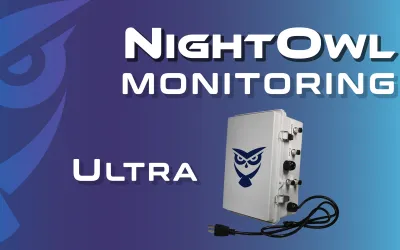
NightOwl Ultra is designed for municipal water systems, rural water supply, remote wells, and other critical applications. It supports cellular connectivity, multi-site dashboards, configurable alarms, automated reporting, data export, and selected remote control capabilities for pumps, valves, and power systems.
You can review the NightOwl Ultra monitoring and control platform to see where full monitoring plus control fits a rural utility.
Automation Helps the Operator Arrive Better Prepared
One of the biggest staffing gains happens before the service truck leaves.
Without remote data, an operator may arrive knowing only that “the tank is low” or “the pump is not working.” That can lead to a second trip for parts, additional diagnostic time, or a contractor call that could have been planned more efficiently.
With useful telemetry, the operator may already know:
- When the condition started
- Whether the pump is running
- How long the pump has been running
- Whether pressure changed first
- Whether flow dropped
- Whether power is present
- Whether the well level is recovering
- Whether the issue is isolated to one location
That is why automation can improve labor efficiency without reducing the importance of skilled people. It gives those people more context before they enter the field.
We have discussed the same shift in the well service industry in our article on IoT well monitoring and labor shortages. The principle is similar for a utility: use continuous data to help experienced people spend less time discovering the problem and more time solving it.
Is Remote Monitoring a SCADA Alternative for a Small Utility?
For some systems, the question is not whether SCADA is valuable. It is whether a full traditional SCADA deployment matches the size, staffing, budget, and technical needs of the utility.
Searches for a SCADA alternative small utility solution often come from teams that need remote alarms, data history, centralized dashboards, and multi-site monitoring without taking on more infrastructure than the application requires.
Remote telemetry has long been used in small water systems to reduce travel and labor requirements, provide faster alerts, and support remote troubleshooting.
A cloud-connected monitoring platform can be a strong fit when the utility needs:
- Remote site visibility
- Cellular telemetry
- Configurable SMS or email alerts
- Trend history
- Multi-site dashboards
- Data export
- Automated reports
- Integration with existing equipment
- Selected remote control functions
It is important to match the tool to the operational need. A complex treatment process may still require full PLC and SCADA architecture. A group of remote wells, tanks, or pump stations may only need reliable telemetry and clear alarms. In other cases, remote monitoring can complement an existing SCADA system rather than replace it.
A rural water utility automation operator shortage plan works best when the technology simplifies the operator’s job instead of creating another system that requires constant attention.
Automation Does Not Replace Certification, Judgment, or Field Verification
The water operator retirement crisis has created pressure to find better ways to cover more assets, but technology should not be treated as a substitute for licensed operators or required on-site procedures.
Automation is most useful when it removes repetitive observation and improves decision timing.
Operators are still needed to:
- Verify sensor accuracy
- Inspect physical infrastructure
- Collect required samples
- Perform maintenance
- Respond to alarms
- Follow regulatory procedures
- Make operational decisions
- Document corrective actions
- Protect public health
That distinction is important. Remote monitoring extends the operator’s reach. It does not remove the operator from the system.
For Texas utilities, accurate records and reliable field data can also support compliance workflows. Our article on Texas water utility compliance and telemetry explains how automated data collection can reduce manual reporting work while improving visibility into system performance.
Why This Matters for Texas Rural Water Systems
Texas combines large service areas, remote infrastructure, groundwater dependence, growing water demand, drought exposure, and a need for more trained water professionals. AWWA has specifically highlighted retirement-driven workforce challenges in smaller rural Texas systems.
That makes Texas a strong example of why the traditional “drive out and check it” model becomes harder to sustain as staffing tightens.
For a rural utility in the Texas Hill Country, West Texas, Central Texas, or another widely distributed service area, every hour behind the wheel is an hour that cannot be spent repairing equipment, reviewing water quality, maintaining compliance records, or planning preventive work.
The same challenge exists in rural communities across the United States. The geography changes, but the operational problem is familiar: too many assets, too much distance, and not enough qualified people.
A Practical Way to Start Without Automating Everything
A utility does not have to digitize every site at once.
Start where visibility has the greatest operational value.
Step 1: Identify the Sites Creating the Most Labor
Look for locations that require frequent routine visits, have long drive times, or generate repeated after-hours calls.
Step 2: Identify the Failure You Most Need to See Earlier
For one system, it may be a tank running low. For another, it may be pump failure, power loss, declining well level, pressure loss, or unexpected flow.
Step 3: Monitor the Minimum Useful Data
Do not collect ten measurements if three will tell the operator what action to take.
Step 4: Set Actionable Alarms
Every alarm should have an owner, a threshold, and a response plan. Too many low-value alarms defeat the purpose of automation.
Step 5: Keep Manual Verification in the Program
Use telemetry to reduce routine travel, then use scheduled field checks to validate sensors and inspect physical conditions.
Step 6: Expand After the First Sites Prove Their Value
Once the team knows which alerts, trends, and reports are useful, expand the same approach to additional wells, tanks, and pump stations.
At NightOwl Monitoring, this is how we think about practical automation: start with the problem, connect the data that matters, and give operators a clear way to act on it.
You can explore NightOwl Monitoring’s remote water monitoring and control solutions to see how our platform connects wells, tanks, pumps, sensors, alerts, reporting, and remote management.
Fewer People Does Not Have to Mean Less Visibility
The staffing challenge facing rural water systems is unlikely to be solved by hiring alone. Recruiting and training the next generation of certified operators remains essential, but utilities also need tools that help the people they already have cover distributed infrastructure more effectively.
Remote monitoring, cellular telemetry, centralized dashboards, alarms, trend data, and carefully selected automation can give one operator a clearer view of multiple sites without pretending that every task can be done from a screen.
The best result is not fewer operators. The better result is fewer wasted hours, earlier problem detection, better prioritization, and more time for the work that actually requires an experienced operator.
For rural water utilities in Texas and across the United States, that is how automation becomes a workforce multiplier rather than a workforce replacement.
Frequently Asked Questions
Can one operator manage multiple rural water sites with automation?
Yes. When sites have reliable remote monitoring and the operator has clear alarms, dashboards, and response procedures, automation can reduce routine inspection trips. Physical inspections, maintenance, sampling, verification, and regulatory tasks still require qualified personnel.
What is the best water operator shortage rural solution?
There is no single technology that solves a staffing shortage. A practical approach combines workforce development with remote monitoring, standardized alarms, better reporting, preventive maintenance, and clear operating procedures.
Can automation help a small rural utility without full SCADA?
Yes. Many small systems primarily need remote telemetry, alarms, historical trends, and multi-site dashboards. The right architecture depends on process complexity, existing controls, cybersecurity requirements, and whether remote control is needed.
What should a rural water utility monitor first?
Start with the conditions that create the greatest risk or the most unnecessary truck rolls. Tank level, well level, pump runtime, starts, pressure, flow, and power status are common priorities because they quickly show whether a site is operating normally.
Does remote monitoring replace certified water operators?
No. Remote monitoring gives certified operators better information and reduces repetitive travel. Licensing, judgment, maintenance, sampling, verification, and regulatory responsibilities remain human responsibilities.