 ChatGPT
 Perplexity
 Claude
 Gemini
 Grok
Grok
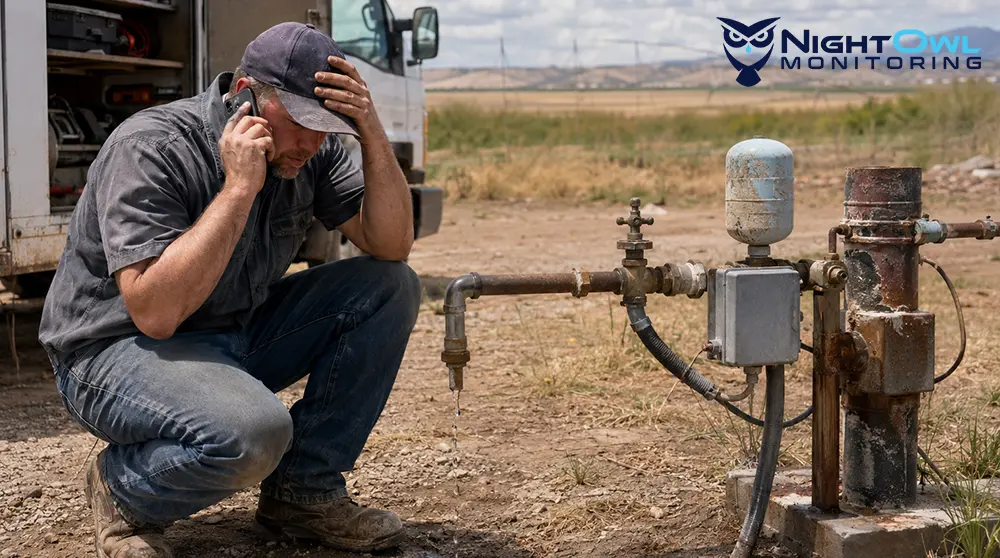
You drilled the well. You set the pump. You wired the control box and you signed the service agreement. Then the system disappeared from your view for the next eleven years, until a customer calls at 6:40 on a Saturday evening with no water and a house full of guests.
Here is the uncomfortable truth about how most well service companies operate: the driller is the last party in the chain to learn that a pump has failed. The homeowner knows first. Their neighbor often knows second. By the time the phone rings, the failure is already hours old and already emotional. Becoming a well pump remote diagnostics contractor is the only structural fix, because it replaces the customer phone call as your notification system with data that arrives while the pump is still running.
That single change moves your business from responding to failures to preventing them. Everything else in this article explains how the gap forms, what it costs you, and how to close it.
The Notification Lag: What Actually Happens Between Failure and Phone Call
Pump failure notification lag is the gap between the moment a well system starts behaving abnormally and the moment your service coordinator hears about it. That gap is almost never minutes. In our experience across residential, HOA, and light commercial accounts, it runs from several days to several weeks, and the customer spends all of it unaware.
A submersible pump sits hundreds of feet underground. Nobody sees it, nobody hears it, and nobody checks it. The system gives warning, but the warning is invisible without instrumentation.
| Stage | What is happening in the well | Who knows about it |
|---|---|---|
| Weeks before failure | Amp draw creeps upward, run times stretch, cycle counts climb | Nobody |
| Days before failure | Pressure sags at peak demand, faucets sputter occasionally | Homeowner notices, dismisses it |
| Hours before failure | Motor overheats, breaker trips, or windings burn | Homeowner notices, still no call |
| Failure | No water in the house | Homeowner, immediately |
| Plus 1 to 12 hours | Panic, internet search, calls placed | You, finally, and possibly your competitor first |
Look at that last row carefully. The homeowner searching “how to fix a well pump” or “my well pump quit working” at 9 PM is not necessarily searching your company name. Unmonitored well pump failure does not just create an emergency. It creates a moment where your customer is actively shopping.
Why Pump Failure Detection for Drillers Still Depends on a Phone Ringing
Pump failure detection drillers rely on is built almost entirely on customer reporting, because the traditional service model has no other input channel. You cannot dispatch on information you do not have.
Three structural problems keep the gap open:
- No telemetry on installed systems: Once the well cap goes back on, the system produces no data. Your CRM knows the install date. It knows nothing about the pump’s condition today.
- Annual service visits are snapshots, not surveillance: A once yearly check confirms the system was healthy on one specific afternoon. It says nothing about the following 364 days.
- Customers underreport: Homeowners tolerate declining pressure for months. They assume the well is “getting old.” They call when water stops, not when performance drops.
This is the service contract visibility gap. You have a contractual obligation to keep the system running and no mechanism to see whether it is running well. You are accountable for an asset you cannot observe.
What Unmonitored Well Pump Failure Actually Costs You
The cost is not one number. It stacks. According to Angi’s service data, well pump repair averages around $974 nationally, with a typical range of roughly $373 to $1,622 depending on components and labor. Industry service pricing commonly puts the trip charge alone at $150 to $300 before diagnosis begins.
Now add the costs that never appear on an invoice:
- The blind truck roll. You dispatch without knowing whether the problem is the pressure switch, the control box, the check valve, or the pump itself. You carry parts for all four possibilities.
- The second trip. You misdiagnose from a phone description, arrive with the wrong assumption, and return the next day.
- The overtime multiplier. Emergency work happens outside normal hours by definition.
- The schedule damage. One emergency pump pull displaces a full day of scheduled, profitable installation work.
- The relationship damage. Your customer went 14 hours without water while under a service agreement with you. That memory outlives the repair.
A pump that fails in July at 4 PM on a Friday is not a $974 job. It is a $974 job plus a displaced install, plus a strained relationship, plus a customer who now knows three of your competitors’ phone numbers.
The Signals a Failing Pump Sends Weeks in Advance
A failing pump degrades measurably before it stops, because motor wear, impeller wear, and bearing friction all change electrical and hydraulic behavior in ways that are trackable. This is the entire premise of submersible pump diagnostic remote work: the pump tells you it is dying, but only if something is listening.
Amp Draw Monitoring Is the Signal That Moves First
Amp draw monitoring is the single most predictive measurement available on a well system, because motor current responds to mechanical degradation before pressure at the tap does. As windings degrade and bearing friction rises, the motor compensates by pulling more current. Field guidance from well service technicians describes pumps that once drew 8 amps climbing to 12 or 14 amps as failure approaches.
That drift is invisible to a homeowner. It is unmistakable on a trend line.
Short cycling amplifies the damage fast. Every motor start pulls roughly three to seven times normal running amperage, and each surge generates heat. When the motor never cools between cycles, windings cook. A pump rated for 15 years of service can be destroyed in months of unaddressed cycling. If you can see cycle count climbing on a dashboard, you can monitor pump efficiency and intervene while the fix is still a pressure tank, not a pump pull.
Run Time, Water Level, and Pressure Fill In the Picture
Amperage tells you about the motor. The rest of the sensor stack tells you about the well.
- Run time per cycle: Extended time to reach cutout pressure means the pump is moving less water per minute than it should, or a check valve is leaking back down the drop pipe.
- Cycle count per hour: A jump from 10 starts per hour to 60 is a waterlogged pressure tank destroying a healthy pump in real time.
- Water level in the well: Drawdown outrunning recharge means the pump is at risk of breaking suction. Tracking well water levels separates a well problem from a pump problem before you ever load a truck.
- Discharge pressure: Gradual decline across weeks is wear. A sudden drop is a leak or a failed check valve.
- Motor temperature and vibration: Heat and vibration signatures reveal bearing and alignment problems early, which is why monitoring motor temperature and vibration is standard practice on higher value commercial sites.
The same principle applies across pump types. The early warning signs on irrigation systems follow the same pattern of amperage drift, pressure decline, and cycling changes.
Reactive vs Proactive Service Model: Same Truck, Different Business
The reactive vs proactive service model debate is not about technology preference. It is about who controls the timing of the work, because whoever controls timing controls margin, scheduling, and the customer relationship.
| Factor | Reactive model | Proactive model with remote diagnostics |
|---|---|---|
| Trigger | Customer calls with no water | Alert fires on abnormal amp draw or pressure |
| Timing | Nights, weekends, holidays | Scheduled during normal business hours |
| Diagnosis | Guesswork from a phone description | Data reviewed before dispatch |
| Truck loading | Carry parts for every possibility | Carry the correct part |
| Typical job | Emergency pump replacement | Planned component repair |
| Customer emotion | Frustrated, comparing vendors | Impressed you called them first |
| Revenue shape | Unpredictable, seasonal spikes | Monthly monitoring fees plus planned service |
| Retention effect | Neutral to negative | Strong, because you are visibly protecting them |
Ryan Jefferson, General Manager at Alsop and Muller, framed the shift plainly when describing remote monitoring as the opportunity to move from a reactive business model to a proactive one, where saving customers money makes those customers more competitive and more likely to keep engaging his company.
Well contractor customer retention improves for a reason that is almost psychological. When you call a customer to say their pump is drawing more amps than it did last spring and you would like to look at it Tuesday, you stop being a repair vendor. You become the company watching over their water. That customer does not shop.
How a Well Pump Remote Diagnostics Contractor Works a Service Call
A well pump remote diagnostics contractor changes the shape of every service call, because diagnosis happens before dispatch rather than after arrival. The sequence inverts.
Here is the same failure, handled both ways.
The reactive version: Saturday, 6:40 PM. Customer calls, no water. You ask questions over the phone. You dispatch a technician with a loaded truck and no information. He arrives at 8:15, tests the control box, finds a burned motor, and schedules a pull for Monday. The customer is without water for two days.
The remote diagnostics version: Eighteen days earlier, an alert fires: amp draw on leg two has risen 22 percent above the established baseline and cycle count is climbing. Your service manager reviews the trend from the dashboard on Tuesday morning, calls the customer, and books a Thursday visit. The technician arrives with the correct pressure tank and a replacement switch. Total downtime: 40 minutes. Total emergency calls: zero.
This is also why remote data changes the sales conversation. When you can answer customer questions with actual well data, you stop defending your recommendations and start demonstrating them. Currie Drilling described the difference in their own transition to remote monitoring, and Alexander Thompson at Dripping Springs put it directly: the system monitors every part of the well and has changed how they diagnose wells.
Building Well Contractor Pump Visibility Into Your Business
Well contractor pump visibility is built account by account, not all at once, because the goal is proving the model on systems where failure is most expensive before scaling it across your book.
Start With Your Highest Consequence Accounts
Not every residential well justifies a drilling contractor pump alert system on day one. These do:
- HOA and community water systems, where an outage affects dozens of households at once
- Commercial and industrial sites where downtime halts operations
- Agricultural and irrigation wells during growing season
- Any customer more than 45 minutes from your shop
- Wells with a documented history of repeat service calls
- Aging systems past the 10 year mark
Match the Hardware to the Site
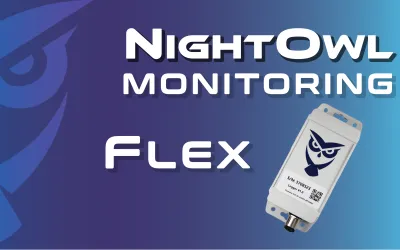
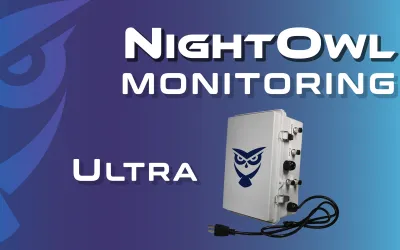
A single family residential well and a municipal wellfield do not need the same instrumentation. The NightOwl Flex handles multi sensor visibility across wells, tanks, and power systems for typical service accounts, while NightOwl Ultra adds remote pump control, remote power reset, and compliance grade reporting for operations that cannot tolerate downtime. Our system comparison guide walks through which configuration fits which site, and if you want to understand the plumbing behind the data, how the sensors communicate covers the transport layer.
Set Baselines Before You Set Alarms
This is the step most contractors skip, and it is the one that determines whether alerts are useful or ignored. Every well has its own normal. Run each monitored system for two to four weeks and record baseline amperage per leg, typical run time per cycle, starts per hour, static and pumping water level, and normal cutin and cutout pressure. Then set thresholds as deviation from that specific well’s baseline rather than from a generic number. Generic thresholds produce false alarms, and false alarms train your team to ignore the dashboard.
Price It as a Service, Not a Product
Sell monitoring as a recurring monthly service bundled with your maintenance agreement rather than as hardware with a markup. Recurring monitoring revenue is predictable, it survives slow drilling seasons, and it structurally reduces the emergency calls that were destroying your schedule. Our guide to preventing no water emergency calls covers the operational math in more depth, and if you are tired of being squeezed on equipment margins, the case for owning the customer relationship instead of the middleman position is worth reading.
Frequently Asked Questions
How far in advance can remote monitoring predict a pump failure?
Most failing pumps show measurable warning signs for weeks before complete failure. Amp draw drift, extended run times, and rising cycle counts typically appear two to six weeks ahead of the outage. Sudden electrical faults and lightning strikes remain unpredictable, but gradual mechanical and motor degradation is highly detectable in advance.
Does a monitoring system replace an on site diagnostic visit?
No. Remote diagnostics narrow the diagnosis before dispatch rather than eliminate the visit. Data tells you whether the fault sits in the pressure tank, the switch, the check valve, or the motor, so your technician arrives with the correct part. The repair still requires trained hands on site.
Will monitoring reduce my service revenue by preventing failures?
The opposite happens in practice. Emergency replacements are high stress and low margin once overtime, second trips, and schedule disruption are counted. Monitoring converts unpredictable emergencies into scheduled repairs, adds recurring monthly fees, and improves retention, which increases total revenue per account over the life of the well.
What does a drilling contractor pump alert system monitor?
A complete system tracks water level in the well, amperage and voltage on each power leg, pump start count and run time, discharge pressure, water flow, motor temperature and vibration, pump house conditions, and water quality parameters. Alerts can be configured for any of those conditions and delivered by text or email.
Can I try monitoring before committing to a full rollout?
Yes. Our equipment loaner program provides a 60 day trial so you can install on a few real accounts, demonstrate the value to your best customers, and prove the model before scaling it across your service territory.
The Bottom Line
Being the last to know is not a reflection of your skill as a driller. It is a structural flaw in how the industry has always operated, and it persists because the phone call has been the only notification channel available. The pump was always sending signals. There was simply nothing on the other end listening.
Operating as a well pump remote diagnostics contractor removes that flaw. You see the amp draw climb, you call the customer before they call you, and you arrive on Thursday with the right part instead of on Saturday night with a guess. That is a better business, a better schedule, and a customer who has no reason to look anywhere else.
If you want to see what your installed base actually looks like with visibility turned on, partner with NightOwl or reach out to our team and we will walk you through a live dashboard on a real well.